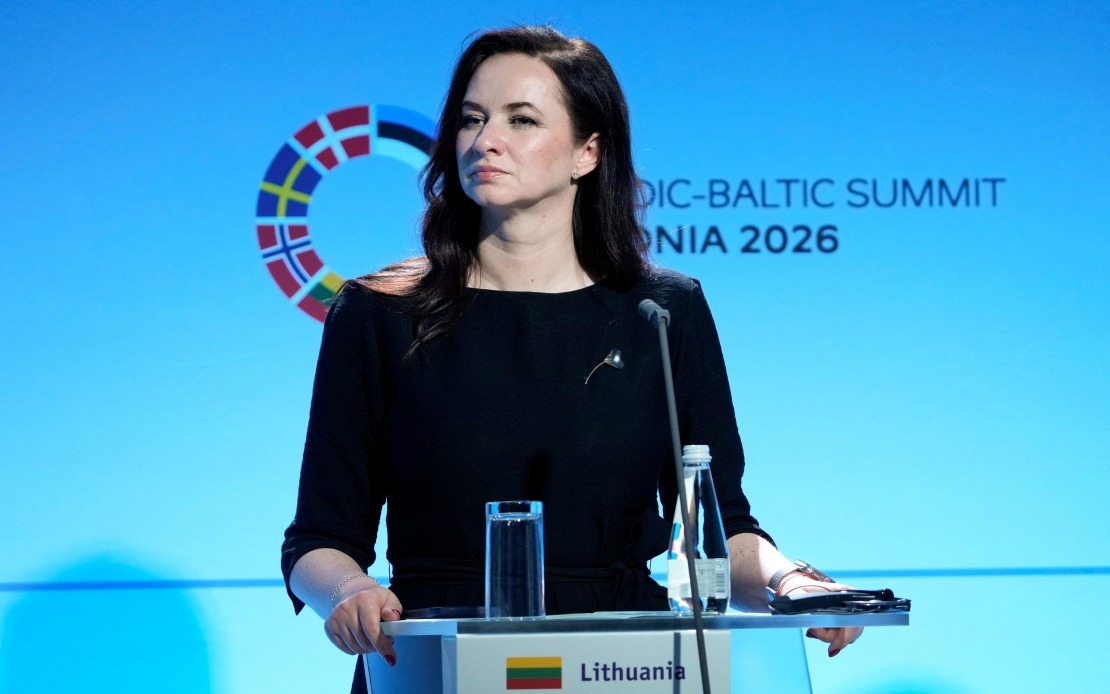
Lithuanian Prime Minister Inga Ruginiene has stepped down from her position, setting in motion the formal machinery for government transition in the Baltic nation. The resignation announcement, made on Tuesday, comes as part of shifting political dynamics within the ruling coalition that has governed the country since August of the previous year. This development marks another significant restructuring of Lithuania's executive branch, reflecting the fluid nature of coalition politics in the post-2024 electoral landscape.
Under Lithuania's constitutional framework, President Gitanas Nauseda now holds responsibility for identifying a successor within a 15-day window. The nominated candidate must subsequently navigate parliamentary approval through the Seimas, the country's unicameral legislature, before assuming office. This procedural timeline ensures that the legislative branch maintains its constitutional check on executive appointments, a safeguard common across Baltic democracies.
Mindaugas Sinkevicius, who chairs the Lithuanian Social Democratic Party, stands as the frontrunner for the position. Political observers and coalition partners view his nomination as the most probable outcome of the presidential selection process. Should the Seimas confirm his appointment, Sinkevicius would then have a fortnight to assemble his Cabinet team and outline the government's strategic policy direction. A subsequent 15-day period would follow for formal submission of the complete ministerial lineup to parliament for ratification.
The incoming administration will represent the third distinct coalition government to emerge from the Social Democrats since parliamentary elections took place in late 2024. This cycling through multiple governing arrangements within a single electoral cycle underscores the fragmented nature of Lithuania's current political landscape. The Social Democrats, despite their electoral performance, have been compelled to navigate complex coalition mathematics on more than one occasion, reflecting broader European trends toward multiparty governance.
The preceding government, which Ruginiene led, had itself been a recent creation. Her Cabinet came into being following the departure of former Prime Minister Gintautas Paluckas from the position just months earlier. That transition, occurring in August, had already necessitated rapid coalition realignment and ministerial reorganisation. The current resignation indicates that whatever political circumstances prompted Paluckas's departure remain unresolved, or that fresh pressures have emerged within the governing coalition structure.
President Nauseda has formally acknowledged the resignation and taken the procedural step of requesting that the outgoing Cabinet remain in operational capacity on a caretaker basis. This arrangement ensures governmental continuity during the transition period and prevents any administrative vacuum. Caretaker governments can handle routine administrative matters and essential governance functions, though major policy decisions typically await the formation and parliamentary approval of a permanent administration.
During its final meeting on Tuesday, the outgoing Cabinet unanimously endorsed a resolution formalising its resignation. Ruginiene addressed her colleagues at this session, acknowledging that despite the numerous obstacles the government encountered during its tenure, the administration had compiled a record of achievements worthy of recognition. Her remarks suggest that the resignation reflected political calculation or coalition dynamics rather than governmental dysfunction or policy failure.
The transition process unfolding in Lithuania offers a window into the complexities of small-nation coalition governance in contemporary Europe. With a population comparable to many Malaysian states, Lithuania's political dynamics demonstrate how proportional or mixed electoral systems across the European Union can generate fluid coalition arrangements. For Malaysian observers, the Lithuanian case illustrates how even established democracies with strong institutional frameworks must regularly accommodate shifts in political power and coalition composition.
The timeline for completing this transition remains compressed but manageable. Within approximately six weeks, Lithuania should have a fully constituted new government in place. However, the rapidity of successive government formations raises questions about governmental stability and policy continuity, factors that may influence investor confidence and public perception of institutional effectiveness. The Social Democratic Party's repeated positioning at the centre of coalition negotiations suggests its resilience as an electoral force despite multiple government turnovers.

