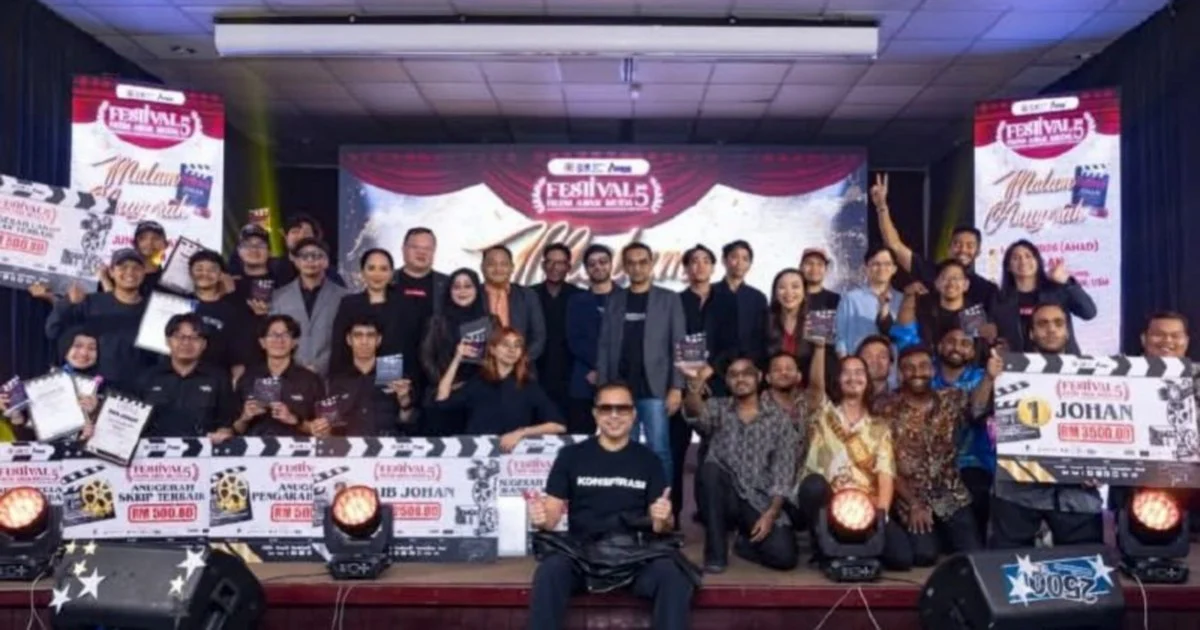
The Malaysian Anti-Corruption Commission (MACC) is deepening its commitment to fostering a culture of integrity among young Malaysians by partnering in the organisation of the 5th Youth Film Festival (FFAM) at Universiti Sains Malaysia (USM) in Penang. This strategic alliance represents a deliberate shift in how the nation's premier anti-corruption watchdog engages with younger audiences, recognising that creative mediums often resonate more powerfully with Gen Z and millennial populations than traditional enforcement or policy announcements alone.
The festival provides an unconventional platform for the MACC to articulate its anti-corruption messaging by tapping into the universal language of cinema. Young filmmakers are increasingly becoming agents of social change, and by channelling support through the Youth Film Festival, the commission acknowledges that youth-led storytelling can crystallise complex ethical concepts into narratives that peers understand and internalise. This represents a modernisation of anti-corruption advocacy that moves beyond legislative frameworks and public sector reforms to address the foundational attitudes that drive integrity or compromise it.
The choice of venue at Universiti Sains Malaysia underscores the MACC's intention to embed anti-corruption consciousness within academic institutions. Universities serve as intellectual crucibles where young Malaysians develop their professional values and ethical foundations before entering the workforce. By establishing a presence at this educational flagship, the MACC signals that integrity is not merely a bureaucratic concern but a cornerstone value that should inform every sector and career trajectory. USM's location in Penang, a state with its own governance dynamics and economic significance, also extends the campaign's reach beyond the federal capital.
Film festivals themselves occupy a unique position in youth culture and public discourse. They attract creative individuals, student organisers, and audiences who are already inclined toward critical thinking and cultural engagement. The festival environment encourages dialogue and reflection in ways that formal public campaigns often cannot achieve. When anti-corruption messaging is woven into the fabric of such an event rather than imposed as an external message, it becomes part of the cultural conversation rather than didactic preaching. This peer-to-peer influence can prove more durable than top-down communications.
The MACC's involvement in the festival represents a pragmatic acknowledgment that corruption risks have evolved. Digital age Malaysians are exposed to more complex forms of bribery, conflicts of interest, and institutional abuse than previous generations. Through film narratives, the commission can illustrate how corruption infiltrates educational institutions, government procurement, professional licensing, and other domains that directly affect young people's futures. Storytelling allows the exploration of moral grey areas and situational pressures that reinforce why integrity matters at every decision point.
This collaborative approach also reflects international best practice in anti-corruption work. Many advanced democracies and developing nations alike have recognised that youth engagement through cultural channels multiplies the effectiveness of enforcement-based strategies alone. When young Malaysians see their peers creating compelling narratives about why corruption undermines society, the message gains authenticity and emotional weight. The festival format also creates opportunities for dialogue between the MACC and student audiences, generating feedback that can inform future anti-corruption initiatives.
For USM and Malaysian universities broadly, the partnership signals institutional commitment to governance and ethical leadership. Academic institutions are sometimes vulnerable to various forms of corruption, from plagiarism and research fraud to procurement irregularities and nepotism in hiring. Hosting the Youth Film Festival with MACC support positions the university as proactive in addressing these challenges and creating a generation of professionals who recognise and resist such practices. This is particularly important in fields like engineering, business, law, and public administration where graduates will directly influence institutional practices.
The festival also offers practical benefits to the MACC's broader anti-corruption mandate. Film submissions on anti-corruption themes become valuable archival resources, documentary evidence of how young Malaysians perceive integrity challenges, and potentially source material for future awareness campaigns. The talent pool of young filmmakers who engage with the festival can become advocates and allies for the commission's work, amplifying messages through their own networks and future professional endeavours. This represents investment in social infrastructure for accountability.
For Malaysian youth broadly, the festival presents an opportunity to channel creative energy toward civic purposes. Rather than viewing anti-corruption as a stern bureaucratic domain, young people can engage with it as a subject worthy of artistic exploration and critical examination. This can transform potential cynicism about governance into constructive participation. Young filmmakers who grapple with corruption themes through their craft often develop deeper understanding of institutional dynamics and personal agency in resisting corruption—knowledge they carry throughout their careers.
The partnership also reflects recognition that corruption often flourishes in environments of institutional opacity and weak civic engagement. By creating spaces where young people can articulate concerns about integrity and hold up examples of ethical behaviour, the MACC is helping build social pressure toward accountability. Film audiences are often more receptive to messages delivered through narrative than through statistics or policy papers, making the festival an efficient vehicle for norm-setting.
As the 5th Youth Film Festival unfolds at USM, the MACC's involvement signals that combating corruption requires sustained engagement across generations and mediums. The initiative recognises that young Malaysians will inherit institutions shaped by decisions made today regarding governance, ethics, and accountability. By embedding anti-corruption values in youth cultural spaces now, the commission is working to reshape the ethical landscape that future leaders will navigate. This preventative approach—investing in integrity consciousness among young people—may ultimately prove as consequential as any enforcement action.

