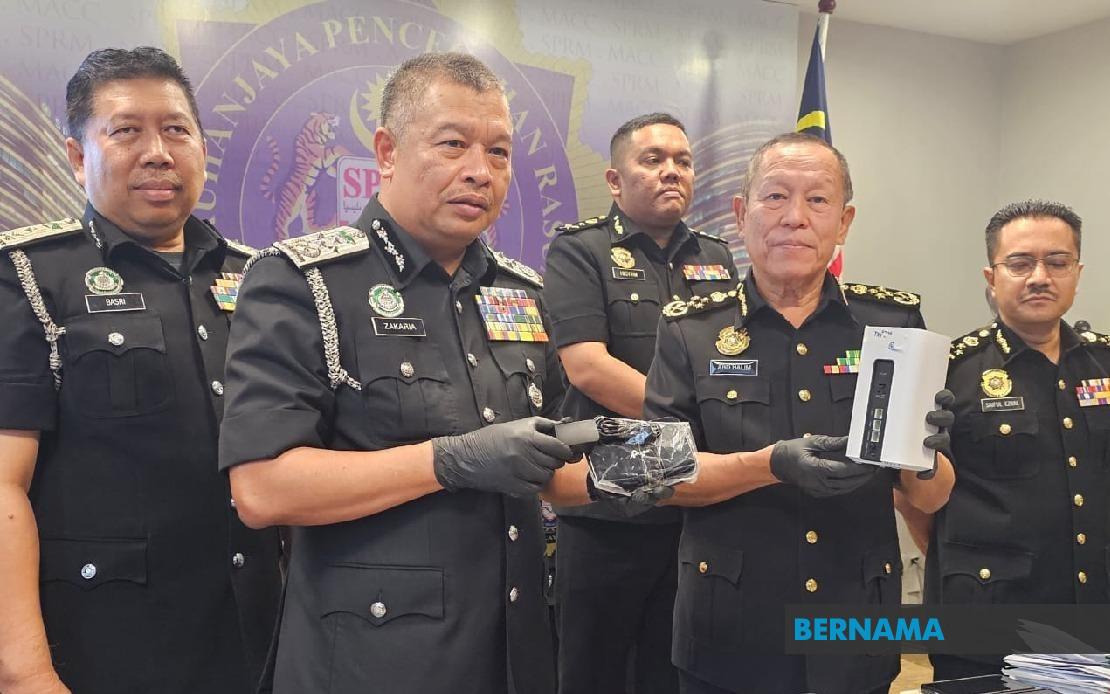
The Malaysian Anti-Corruption Commission moved swiftly this morning to launch an active investigation into Tabung Haji, deploying an eight-member team to the institution's headquarters in response to the damning Royal Commission of Inquiry report that became public this week. MACC chief commissioner Datuk Seri Abd Halim Aman confirmed the deployment during a press conference at MACC headquarters in Putrajaya, explaining that the enforcement action followed Prime Minister Datuk Seri Anwar Ibrahim's directive for relevant agencies to pursue appropriate legal measures based on the RCI's findings.
The RCI report, which examined Tabung Haji's management and operational practices across the 2014 to 2020 period, uncovered a troubling pattern of governance failures and questionable financial decisions that precipitated the institution's severe decline in asset value. The commission identified suspicious transactions, deliberate concealment of critical information, and a series of problematic investment choices that warrant closer scrutiny through forensic audit procedures. For Malaysian depositors who entrust their savings with Tabung Haji for hajj pilgrimage purposes, these revelations carry profound implications regarding the custodianship of their funds and the oversight mechanisms supposedly guarding their interests.
Abd Halim elaborated on the investigation's methodology, stressing that officers had begun the painstaking process of identifying and examining all documentation pertinent to matters highlighted in the RCI report. The investigation would extend beyond documents alone; the MACC team is simultaneously identifying individuals who will be summoned to record formal statements as part of the fact-gathering exercise. This dual approach—combining documentary evidence with witness testimony—reflects standard anti-corruption investigative practice and signals the seriousness with which authorities are treating the commission's conclusions.
Notably, the MACC chief indicated that no temporal boundaries would constrain the investigation, meaning the team would not limit its focus to any specific timeframe but would instead follow the evidentiary trail wherever the RCI's findings and recommendations directed them. This flexibility suggests authorities anticipate that the roots of TH's troubles may extend across multiple years and potentially involve numerous transactions. When pressed on whether all institutional leaders, including retired senior management figures, would face questioning, Abd Halim confirmed that anyone identified through the investigation process would be called to provide statements, leaving open the possibility of multiple layers of accountability extending to decision-makers no longer serving the organisation.
The MACC had already established a specialised task force dedicated to reviewing the RCI report's contents, with the investigation division's senior director Datuk Mohd Hafaz Nazar assuming leadership. This team's mandate encompasses examining potential violations spanning corruption, embezzlement, document forgery, abuse of official authority, and money laundering, drawing upon the legal frameworks of the MACC Act 2009 and the Anti-Money Laundering and Anti-Terrorism Financing Act of 2001. The breadth of this mandate indicates that investigators anticipate discovering offences spanning multiple criminal categories rather than isolated incidents.
For observers tracking the governance transformation agenda championed by the current administration, the Tabung Haji investigation represents a concrete demonstration of institutional accountability mechanisms. The government's willingness to pursue enforcement action against a major religious endowment body—one of Malaysia's largest hajj financing institutions—underscores its commitment to applying anti-corruption standards uniformly across institutional categories, including those with religious or charitable missions. This approach differs markedly from earlier periods when such bodies operated with considerably less external scrutiny.
The Tabung Haji situation also carries implications extending beyond individual prosecutions or internal reforms. The institution manages savings belonging to millions of Malaysian Muslims preparing for or planning hajj pilgrimages, making it not merely a financial entity but a custodian of religious aspirations and family savings accumulated over years or decades. When such an institution faces documented management failures and asset deterioration, the downstream effects ripple through depositor confidence and broader perceptions regarding institutional reliability.
The forensic audit recommendation embedded within the RCI report suggests that investigators will ultimately require specialised expertise to reconstruct investment decision-making processes, trace fund flows, and establish whether financial losses resulted from incompetence, negligence, or deliberate wrongdoing. Such audits typically consume considerable time and resources but provide the detailed evidentiary foundation necessary for potential prosecutions or disciplinary proceedings.
As the investigation unfolds over coming weeks and months, Malaysian stakeholders will be observing whether the enforcement machinery can translate the RCI's documentary findings into actionable legal consequences. The case will test whether institutions traditionally granted considerable operational autonomy can be held to the same standards of financial accountability and governance rigour expected of other major Malaysian entities. For Tabung Haji depositors, the investigation's progress carries direct relevance to their personal financial security and their confidence in institutions entrusted with managing their savings.

