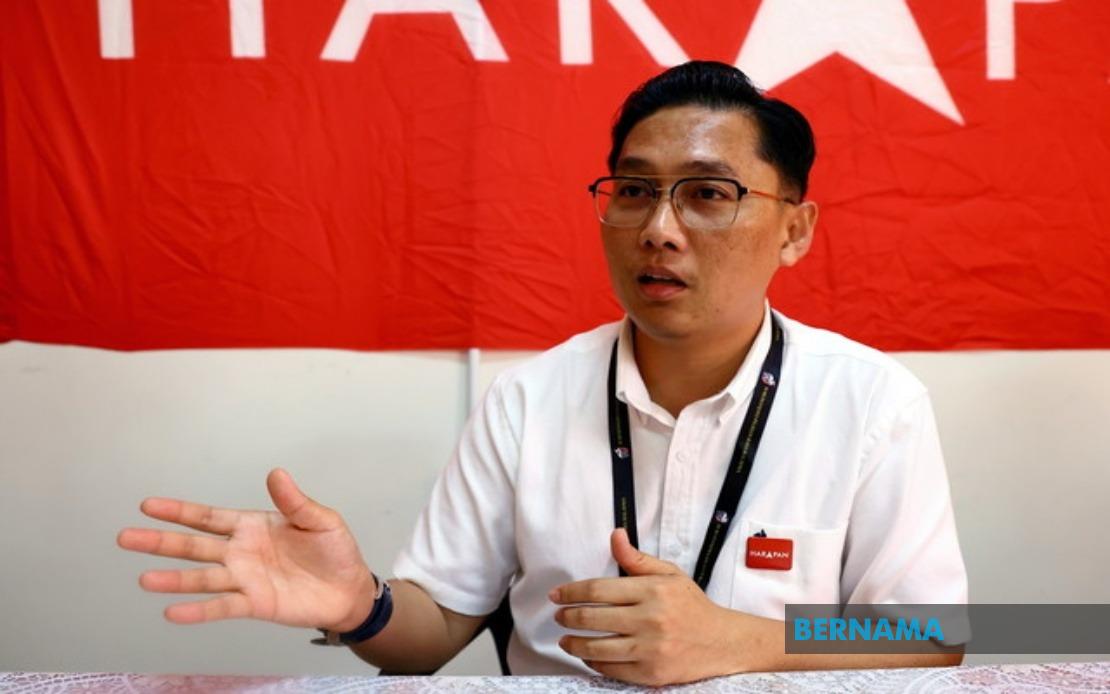
Nur Hafiz Roslan, the Pakatan Harapan candidate for Machap, has dismissed concerns about facing an uphill electoral battle against Johor Menteri Besar Datuk Onn Hafiz Ghazi in the July 11 state election. Speaking at PH's constituency operations centre in Simpang Renggam, the legal professional expressed confidence in his campaign despite Machap's status as a longstanding Barisan Nasional bastion and the incumbent's considerable political standing as the state's chief minister.
The challenger's optimism rests partly on his professional credentials. With 18 years of experience in the legal field, Nur Hafiz brings a background in navigating complex regulatory frameworks and advocating within institutional systems—skills he intends to transfer to legislative work. However, his confidence extends beyond personal qualifications to a broader reading of electoral history. He pointed to precedents in which prominent political figures, including former Johor Menteri Besars Tan Sri Abdul Ghani Othman and Datuk Seri Khaled Nordin, have suffered unexpected defeats despite their seniority and established strongholds.
This historical perspective carries weight in Malaysian electoral contexts, where demographic shifts, local grievances, and shifting voter sentiment have periodically overturned seemingly entrenched positions. The 2018 general election saw numerous such reversals across the country, demonstrating that no seat is genuinely impregnable. Nur Hafiz's invocation of these examples suggests a sophisticated understanding of electoral volatility, even as he acknowledges the genuine difficulty of his task. Machap delivered Datuk Onn Hafiz a majority of 6,543 votes in 2022, a substantial cushion that would require significant voter movement to overcome.
What distinguishes Nur Hafiz's candidacy, however, is his explicit pivot away from the rhetorical frameworks that have dominated Malaysian electoral competition for decades. He has committed to rejecting what he terms politics driven by perception, public shaming, and what he refers to as the exploitation of "3R sentiments"—race, religion, and royalty. This framing characterises such approaches as outdated and incompatible with the contemporary needs of a diverse electorate. For Malaysian observers, the positioning carries implications beyond Machap itself. It represents a conscious strategy to claim the centre ground of Malaysian politics by rebranding divisive identity-based appeals as relics unsuitable for a modern electorate.
His advocacy for "mature politics" centred on policy and solutions to everyday concerns reflects a recalibration of how opposition candidates are attempting to compete in Johor. Rather than attempting to outbid Barisan Nasional on sectarian grounds—terrain on which established parties retain structural advantages—Nur Hafiz's approach emphasises governance competence and responsiveness to material needs. He questions the sustainability of campaigns rooted in fear among different ethnic communities, suggesting instead that voters across Malaysia's diverse landscape share common interests in effective service delivery, economic opportunity, and responsive representation.
The Machap race itself functions as a microcosm of broader competitive dynamics in Johor, where Pakatan Harapan has sought to build electoral momentum following the 2022 general election results. The straight fight between Nur Hafiz and incumbent Onn Hafiz eliminates the complication of three-way contests that characterised some previous elections, potentially sharpening the choice before voters. Early voting is scheduled for July 7, with the main poll on July 11, providing a compressed campaign timeline in which messaging clarity becomes particularly valuable.
Nur Hafiz has also expressed confidence in his party's organisational readiness. He characterised the PH election machinery in Machap as organised, stable, and notably free from internal conflict since the nomination stage. This emphasis on internal cohesion carries significance given past episodes of intra-coalition tensions within Pakatan Harapan, particularly in Johor, where factions have occasionally competed for positioning ahead of elections. A unified campaign apparatus, by contrast, concentrates resources and messaging rather than diffusing them across competing narratives.
The candidate's stated aspiration to serve as a bridge between state and federal governments introduces another dimension to his pitch. This framing acknowledges the fragmented nature of contemporary Malaysian governance, where different levels of administration may be controlled by different coalitions. It implicitly recognises voters' potential frustration when state and federal authorities work at cross-purposes, and positions Nur Hafiz as capable of transcending such institutional friction in the interest of Machap constituents. Whether federal governance arrangements would in practice enable such bridging remains an open question, but the rhetoric addresses real governance challenges that voters encounter.
For Malaysia's broader political landscape, the Machap contest illustrates how opposition candidates are adapting their strategies in stronghold territories. Rather than conceding such seats entirely or relying on traditional mobilisation patterns, candidates like Nur Hafiz are attempting to reframe electoral competition around competence and responsiveness rather than identity. This shift in rhetorical strategy, even if it does not immediately translate into electoral gains, potentially signals longer-term realignment in how Malaysian politics operates at the state and local levels.
The question remains whether voters in Machap will respond to this appeal to elevated political discourse, or whether the incumbent's formidable position as Menteri Besar—with attendant control over state resources and policy apparatus—will prove decisive. The outcome will offer indicators of how receptive Johor voters are to such reframing, and whether material grievances might outweigh the advantages normally conferred by incumbency and established party structures. The narrowness of the race in the final weeks of campaigning will determine the extent to which Nur Hafiz's mature politics message gains traction against Datuk Onn Hafiz's institutional advantages.

