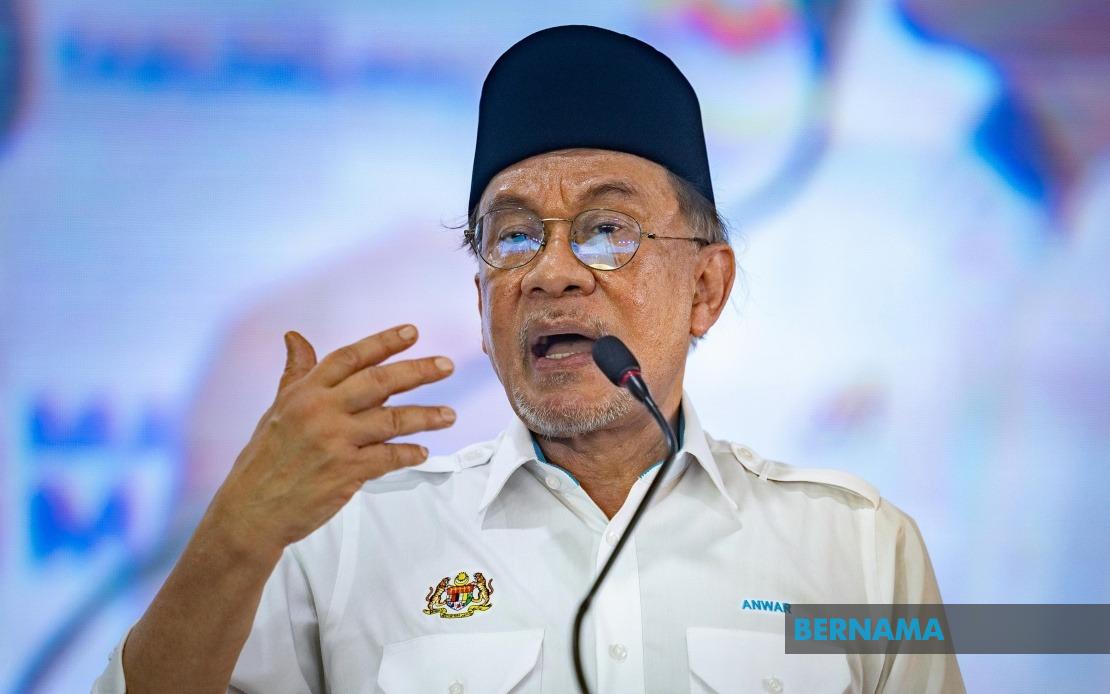
Prime Minister Datuk Seri Anwar Ibrahim has pledged the MADANI Government's continued dedication to advancing religious and pondok schools throughout Malaysia, speaking at the 2026 Perak Pondok and Religious Schools Gathering in Ipoh on July 19. His remarks underscore the administration's broader educational vision, which seeks to balance the preservation of Islamic knowledge with contemporary skill development in emerging fields.
Historically, pondok schools served as vital educational institutions within Malaysian communities, transmitting Islamic learning and cultural values across generations. However, these institutions faced significant challenges during periods of rapid modernization, when the broader economy and job market shifted toward technical competencies that traditional curricula did not emphasize. The Prime Minister acknowledged this gap directly, noting that pondok schools initially struggled to keep pace with developments in secular and applied disciplines, creating a perceived disconnect between traditional Islamic education and the practical knowledge required in contemporary Malaysia.
Anwar's statement reflects a notable policy shift toward integration rather than separation. He expressed particular appreciation for the leadership and dedication of religious teachers, pondok school principals, and senior Islamic scholars—collectively referred to as tok guru—who have begun exploring how to weave advanced subjects such as computer technology and artificial intelligence into their educational frameworks. This openness to curricular expansion, while maintaining fidelity to classical Islamic texts and religious traditions, represents a pragmatic middle path that many observers believe could revitalize these institutions.
The government has mobilized institutional support to translate these commitments into concrete outcomes. The Malaysia Digital Economy Corporation (MDEC) and the Implementation Coordination Unit (ICU) within the Prime Minister's Department have been actively cooperating with pondok and religious schools to facilitate their technological upgrading. These partnerships signal that modernization efforts are receiving adequate resource allocation and coordination at the federal level, moving beyond rhetorical endorsement toward measurable intervention.
Anwar specifically referenced his discussions with Sheikh Wazir Che Awang Al-Makki, a prominent religious scholar from Kelantan, underlining that enhancement and uplift of religious schools would continue provided economic conditions remain stable and the nation maintains good health. This conditional language, while seemingly diplomatic, also reflects the genuine fiscal constraints that governments face when sustaining multiple developmental initiatives simultaneously. The Prime Minister's confidence in Malaysia's economic trajectory, however, appears robust enough to justify his assurances.
The 2026 gathering itself carries symbolic importance. Convening pondok and religious school leaders and educators at a national level provides a platform for sharing best practices, discussing implementation challenges, and building consensus around modernization strategies. The presence of key government figures—including Perak Menteri Besar Datuk Seri Saarani Mohamad, Minister in the Prime Minister's Department (Religious Affairs) Dr Zulkifli Hasan, and Chief Secretary to the Government Tan Sri Shamsul Azri Abu Bakar—demonstrates that these initiatives enjoy cross-departmental backing and are integrated into broader state policy frameworks.
The Minister for Religious Affairs, in particular, plays a critical intermediary role. His presence and support signal that religious education is not viewed as a peripheral concern but as integral to national identity and social cohesion. This positioning carries implications for resource allocation, regulatory frameworks, and coordination with Malaysia's federal and state religious authorities, which exercise considerable influence over Islamic educational standards and curriculum approval.
From a regional perspective, Malaysia's approach to modernizing Islamic education offers a case study for other Southeast Asian nations grappling with similar tensions. Countries such as Indonesia, Thailand, and the Philippines contain significant Muslim populations whose educational institutions face comparable pressures to remain culturally rooted while preparing students for global competitiveness. Malaysia's willingness to demonstrate that technological integration and religious preservation are not mutually exclusive could influence educational policy conversations across the region.
The emphasis on artificial intelligence and digital skills also positions religious schools to benefit from broader government investment in Malaysia's digital economy. As the nation pursues Vision 2050 and leverages emerging technologies, ensuring that all educational segments—including historically marginalized pondok institutions—participate in digital transformation could reduce educational disparities and expand economic opportunity for graduates from these backgrounds. This has multiplier effects for social mobility and economic participation among communities that have traditionally relied on religious education.
Challenges remain, however. Translating government commitment into sustainable institutional change requires sustained funding, teacher training programs, and curriculum development expertise. Many pondok schools operate with limited budgets and may lack the technical capacity to independently implement advanced technological curricula. The success of MDEC and ICU partnerships will depend on their ability to provide not just one-off technology donations but ongoing professional development and pedagogical support.
Moreover, questions persist about how to assess learning outcomes when integrating AI and coding alongside Quranic studies and Islamic jurisprudence. Educational standards, examination frameworks, and credential recognition must evolve to reflect this hybrid approach, and coordination among federal education authorities, religious authorities, and educational institutions will be essential. Without clear standards and recognition pathways, graduates may still face employment discrimination or credential mismatches in the broader job market.
The government's framing of this initiative as both a cultural preservation effort and an economic development strategy reflects sophisticated political communication. By emphasizing continuity with Islamic traditions alongside modernization, the administration appeals to both religious constituencies concerned about cultural erosion and secular progressives advocating for competitiveness. This dual messaging, if backed by genuine resource commitment and implementation rigor, could represent a genuine breakthrough in reconciling long-standing tensions within Malaysian education policy.

