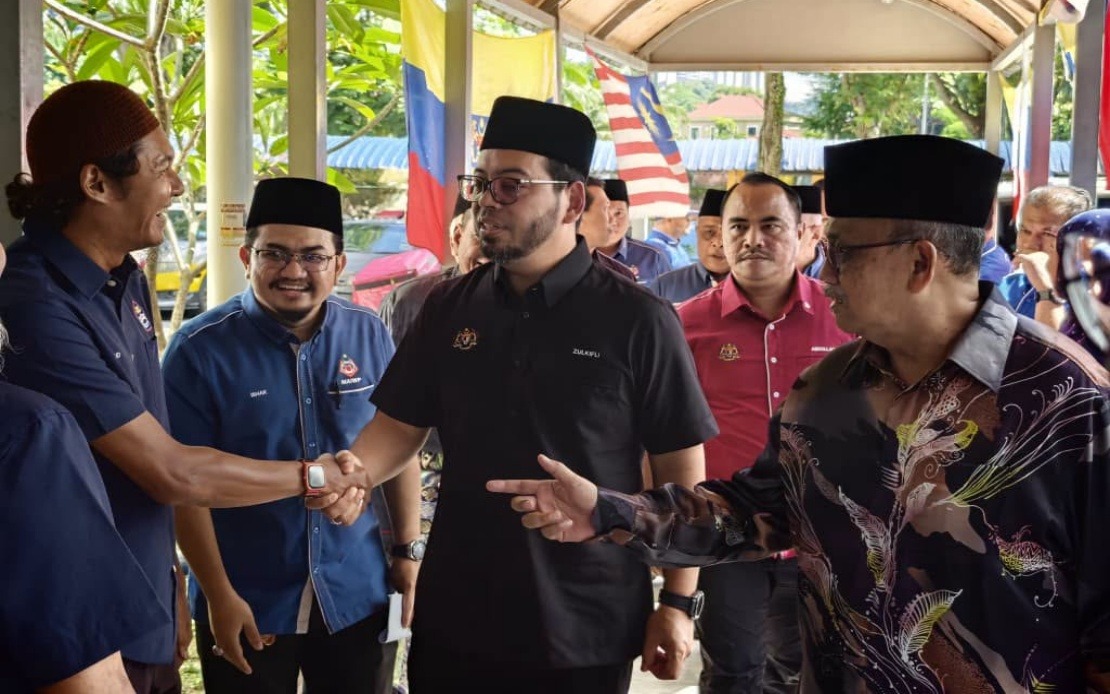
The Federal Territories Islamic Religious Council (MAIWP) has taken a significant step forward in modernising its zakat distribution framework by launching the Zakat Distribution Centre (PAZA) Batu branch at Jalan Pelangi 10, Taman Pelangi, in Kuala Lumpur. The facility represents an evolution in how the council delivers religious endowment assistance to the growing Muslim population across the federal capital, reflecting a broader institutional commitment to enhancing operational efficiency in welfare service delivery.
Minister in the Prime Minister's Department (Religious Affairs) Senator Dr Zulkifli Hasan underscored the strategic importance of the new centre, emphasising that it transcends the conventional role of a service counter. Instead, PAZA Batu functions as a comprehensive community hub designed to accelerate the zakat distribution process while ensuring recipients experience streamlined, comfortable interactions with government personnel. By relocating zakat services to dedicated, purposefully designed facilities, MAIWP addresses longstanding challenges related to accessibility and processing times that have historically constrained the reach of Islamic welfare programmes in densely populated urban areas.
The operational scope of PAZA Batu extends beyond transactional service delivery. The centre actively engages with neighbourhoods through targeted welfare initiatives and community outreach programmes, positioning itself as a bridge between the council and residents who may otherwise remain disconnected from available support mechanisms. This community-centric approach reflects evolving expectations within Malaysian civil society regarding how government agencies should interface with citizens, particularly in matters affecting vulnerable populations dependent on social safety nets.
Since mid-June, MAIWP has channelled RM505.6 million in zakat resources through thirty-eight distinct assistance schemes and human capital development programmes. This substantial distribution demonstrates the scale of MAIWP's charitable operations and underscores why infrastructure improvements prove essential for managing such high-volume transactions effectively. The diversification across multiple assistance categories—ranging from emergency relief to skills training—indicates a sophisticated understanding of poverty's multidimensional nature and the council's commitment to addressing root causes rather than merely providing temporary relief.
The inauguration ceremony itself served as an occasion for immediate community benefit. MAIWP distributed fifty food baskets valued at RM100 each to recipients identified through its welfare assessment systems, providing tangible support during the distribution centre's launch. This symbolic gesture reinforced the centre's purpose while generating positive sentiment within neighbourhoods targeted for outreach, particularly those experiencing persistent economic vulnerability in the federal territories.
Complementing the distribution activity, MAIWP conducted a "Ziarah Kasih" courtesy visit programme that extended personalised engagement to zakat recipients within their domestic environments. This initiative particularly focused on residents of the Pekan Batu People's Housing Scheme (PPR), a densely populated residential complex where concentrations of lower-income households create both significant need and logistical complexity for welfare agencies seeking to identify and reach eligible beneficiaries. Such home visits allow councils to gather qualitative feedback about programme effectiveness and identify emerging welfare concerns that quantitative data alone might obscure.
For Malaysian readers, the opening of PAZA Batu carries broader implications regarding the institutionalisation of Islamic social welfare infrastructure within Malaysia's federal structure. Unlike purely state-based zakat systems, MAIWP operates under federal oversight, potentially allowing greater coordination and resource efficiency across Kuala Lumpur, Labuan, and Putrajaya. The expansion of PAZA facilities suggests MAIWP recognises that digital systems alone prove insufficient for serving populations with limited online literacy or without consistent internet access, necessitating physical infrastructure that remains integral to comprehensive social policy.
From a regional perspective, Malaysia's approach to integrating zakat distribution infrastructure into modern service delivery frameworks merits attention. Neighbouring countries across Southeast Asia increasingly acknowledge the role that religious institutions can play in complementing state welfare systems, and Malaysia's experience demonstrates how professional management systems, dedicated facilities, and integrated programming can enhance both the efficiency and dignity of assistance delivery. The centre model potentially offers replicable elements for other organisations seeking to strengthen the administrative capacity of faith-based social services.
The timing of the PAZA Batu opening reflects broader post-pandemic recalibration of social welfare priorities across Malaysia. Economic pressures resulting from successive crises have increased demand for zakat assistance, requiring councils to expand distribution capacity precisely when household vulnerabilities remain elevated. By investing in modern infrastructure, MAIWP signals confidence in its institutional trajectory while demonstrating responsiveness to constituent needs—a positioning particularly relevant for government agencies seeking to maintain public trust during economically uncertain periods.
Moving forward, the success of PAZA Batu will likely inform MAIWP's expansion plans for additional distribution centres across the federal territories. Measuring success will require attention to metrics beyond transaction volume—including recipient satisfaction, programme reach among marginalised communities, and demonstrable improvements in beneficiary socioeconomic circumstances over extended timeframes. The centre's community engagement functions provide opportunities to gather such qualitative data that purely bureaucratic assessments might overlook, potentially enriching MAIWP's understanding of how welfare interventions actually influence daily life within the communities it serves.

