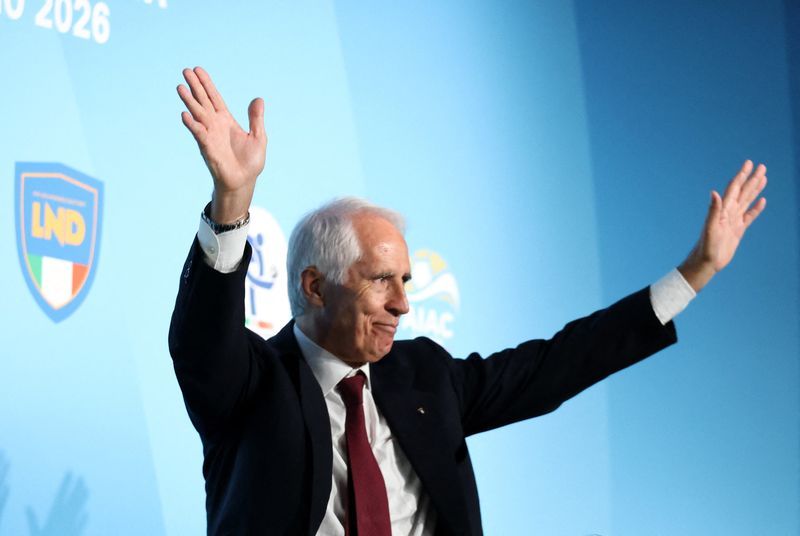
Giovanni Malago has assumed leadership of Italian football at one of its darkest hours, elected president of the Italian Football Federation on Monday with a mandate to resurrect a once-dominant footballing nation. The 67-year-old businessman secured 68.58 per cent of votes at the FIGC assembly in Rome, defeating rival Giancarlo Abete to lead the federation through what many observers describe as its most critical period in four decades. Italy's failure to qualify for a third consecutive World Cup, capped by an April playoff elimination at the hands of Bosnia & Herzegovina, exposed systemic failings that extend far beyond the national team's recent misfortunes.
Malago arrives at the position following recent success managing Milan's Winter Olympics organising committee in February, an appointment that demonstrated his capacity to handle major institutional challenges. He replaces Gabriele Gravina, who stepped down following widespread public anger and political backlash over the World Cup qualification collapse. That single match defeat triggered a cascade of consequences: head coach Gennaro Gattuso resigned almost immediately, goalkeeper Gianluigi Buffon departed as delegation chief, and Italian clubs subsequently suffered their own European competition exits, compounding what has become a national sporting embarrassment.
The new FIGC president brings experience from his previous role as head of the Italian National Olympic Committee and a background as a futsal player, though his administrative pedigree takes precedence over playing credentials in this appointment. Speaking after his election victory, Malago acknowledged the magnitude of expectation placed upon him. "I am not afraid but I am highly mindful of the responsibilities. The expectations are absurdly high but that is also the case within the Federation itself," he remarked, demonstrating awareness that internal institutional challenges match external pressure for immediate results.
Malago's immediate agenda is formidable. Appointing a new men's national team coach stands as the most pressing priority, as Italy requires a fresh leadership voice to stabilise the dressing room and chart a credible path forward. Beyond the senior coaching structure, youth development represents a critical area demanding urgent intervention. Roberto Baggio and other prominent former players had publicly warned that Italy's talent pipeline had grown obsolete, unable to compete with contemporary standards in player development. This structural weakness explains why the national squad has deteriorated despite historical resources and institutional infrastructure that should theoretically maintain competitive advantage.
Italy's World Cup disasters have assumed a particularly humiliating character. Missing qualification for one tournament represents an anomaly; twice becomes a crisis; three times signals systemic collapse. The Bosnia & Herzegovina playoff defeat in April dealt the final blow to whatever confidence remained after failing to qualify for Qatar 2022, itself shocking for a nation with four World Cup titles. Each successive failure has compounded the previous, creating a psychological burden that extends throughout Italian football at all levels.
Malago has articulated his vision of transformation around a central theme: converting historical achievement into inspiration rather than allowing it to become an anchor. "Our roots must not be a source of nostalgia or a burden; we must turn them into an incentive to look toward a new season—one that is courageous, victorious, humble yet ambitious," he stated before the voting began. This framing suggests he recognises the delicate balance required between respecting Italy's football heritage and acknowledging that past glories cannot substitute for present reconstruction.
The federation itself requires institutional renewal alongside coaching and development reforms. Malago has emphasised that the FIGC must transcend administrative functions and become "a source of inspiration." He describes football as Italy's "largest social institution," suggesting his mandate extends beyond selecting players and coaching strategies toward reshaping how the federation engages with the Italian public and clubs at all levels. This broader perspective may prove essential, as confidence in Italian football has eroded not just among supporters but within the professional ecosystem itself.
Looking ahead, the 2032 European Championship presents both opportunity and deadline. Italy will co-host alongside Turkey, meaning domestic advantage and home support will magnify expectations. The tournament provides a near-term objective around which Malago can organise institutional renewal, though the timeline is relatively compact for implementing the comprehensive changes he has outlined. Success in 2032 would represent meaningful progress toward restoring Italy's football credibility, though most observers acknowledge that genuine reconstruction requires sustained commitment across multiple World Cup and continental cycles.
Gravina's departure brought some reflection on his eight-year tenure. The outgoing president acknowledged to reporters that "I should have left earlier," suggesting he recognised that his continued presence had become counterproductive after the Bosnia defeat. His comment underscores how completely the World Cup failure had delegitimised existing leadership structures, making Malago's fresh start symbolically important beyond his individual capabilities.
Malago concluded his election address with an appeal to unity: "Alone I can do nothing, together we can do everything." The statement encapsulates the challenge facing Italian football. The federation's problems are sufficiently deep that no individual leader, however capable, can resolve them without cooperation from clubs, coaches, and the broader footballing community. Whether Malago can forge this consensus while simultaneously driving the urgent institutional changes the federation clearly requires will determine whether Italy's football renaissance begins under his watch or remains deferred to his successor. For Malaysian followers of European football, Italy's struggles serve as a reminder that even historically dominant nations face genuine vulnerability in the modern game's unpredictable competitive landscape.

