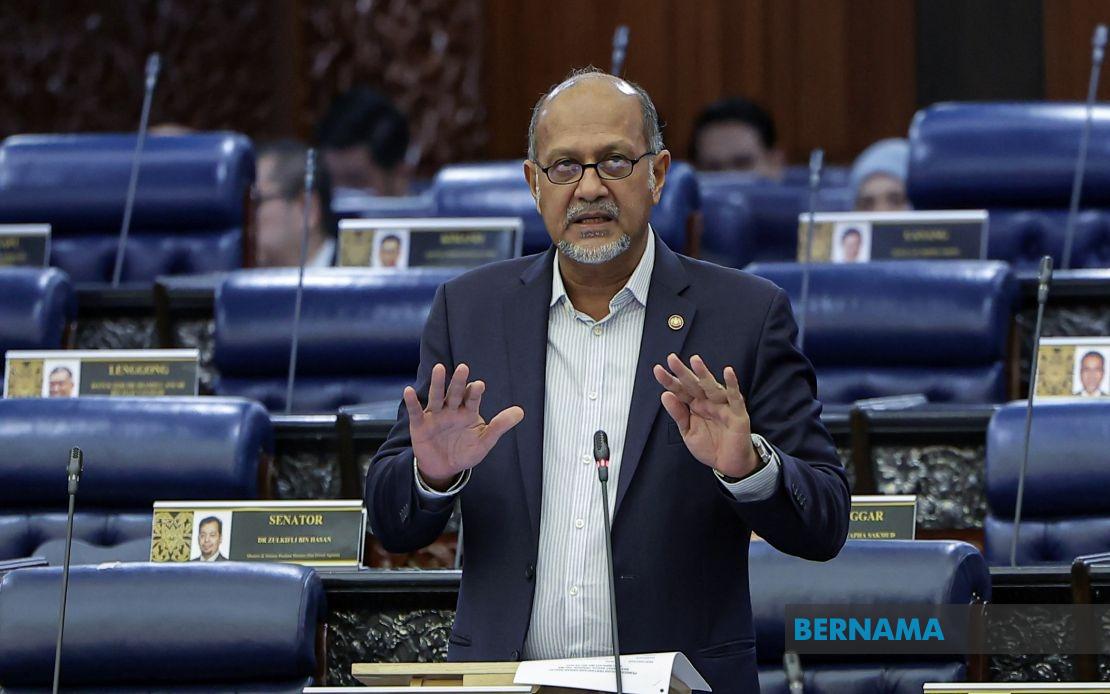
The Malaysian government is moving to combat the growing menace of artificial intelligence-enabled content abuse through a carefully calibrated two-track approach, combining the enforcement of established legal frameworks with the development of purpose-built legislation specifically designed for the digital age. Digital Minister Gobind Singh Deo outlined this strategy during parliamentary proceedings on June 22, emphasising that the government recognises the urgent need to address emerging threats posed by increasingly sophisticated technologies such as deepfakes, synthetic media and identity manipulation schemes that have proliferated rapidly across Southeast Asia.
The first pillar of this strategy involves deploying existing criminal and civil statutes to prosecute those who exploit AI technologies for illegal purposes. This approach leverages laws that were written before artificial intelligence became commonplace but remain applicable to content-based crimes including child sexual exploitation material, non-consensual intimate imagery, identity fraud and harassment. By immediately utilising these established legal instruments, Malaysian authorities can pursue offenders without waiting for new legislation to be drafted, debated and enacted—a process that typically requires several years in most democracies.
Complementing this immediate enforcement action, the government is developing a dedicated Artificial Intelligence Governance Bill that will create a comprehensive legal architecture specifically tailored to address the unique challenges posed by AI systems. This proposed legislation will not merely respond to misuse after the fact, but will establish preventive frameworks governing how AI technologies are developed, tested, deployed and monitored throughout their entire lifecycle. The bill reflects a recognition that AI governance cannot be retrofitted onto pre-existing legal structures alone, but requires forward-looking regulatory mechanisms designed with the technology's distinctive characteristics in mind.
Gobind's parliamentary remarks reveal that the government conceives of this approach as fundamentally "layered," with each component addressing different aspects of the AI risk spectrum. While existing laws provide immediate deterrence and punishment mechanisms for those who commit crimes using AI tools, the new governance bill will establish what the minister termed a "safe from the outset" framework, requiring developers to build security and safety features into AI systems before deployment rather than attempting to contain problems after they emerge. This preventive orientation acknowledges that many AI harms result not from deliberate criminal intent but from systems that were deployed without adequate safeguards or oversight.
The parliamentary exchanges reveal that lawmakers and government officials are particularly concerned about several specific threat vectors that have emerged from AI capabilities. Deepfake technology—which uses machine learning to create convincing fabricated video and audio—presents singular dangers when applied to create non-consensual sexual imagery or impersonate political and business figures. Identity manipulation through AI-generated content has already resulted in fraud and harassment incidents across the region. The creation of synthetic child exploitation material represents perhaps the most disturbing application, combining AI's replicative capabilities with the most serious forms of criminal abuse. Gobind's framing positions the governance bill as a mechanism to address these harms across the entire innovation pipeline rather than merely punishing creators of harmful content after publication.
Minister Gobind's statement that "AI cuts across all sectors" reflects a mature understanding that artificial intelligence governance cannot be compartmentalised into discrete regulatory domains. AI systems increasingly influence decisions in finance, healthcare, employment, law enforcement and public administration across Malaysia and the broader region. A governance framework must therefore coordinate across multiple government agencies and industry sectors, establishing common standards for transparency, accountability and safety regardless of the specific application domain. This holistic conception distinguishes Malaysia's approach from more narrowly tailored regulations that address only specific industries or use cases.
The emphasis on data protection and model safety before deployment suggests that the governance bill will incorporate requirements for third-party auditing and assessment of AI systems prior to market release. Such pre-deployment scrutiny would shift responsibility for safety verification upstream in the development process, requiring AI companies to demonstrate compliance with security and fairness standards before their systems can be commercially deployed or integrated into critical infrastructure. This contrasts with purely reactive regulatory approaches that wait for harms to materialise and consumer complaints to accumulate before intervening.
For Malaysia's technology sector and regional AI development initiatives, the governance bill represents both opportunity and constraint. Companies developing AI systems face the prospect of more stringent regulatory requirements, but also potential competitive advantage if they position themselves as compliance leaders in a region increasingly concerned about AI safety. Southeast Asian governments are watching Malaysia's legislative process closely, and successful implementation of comprehensive AI governance could position the country as a regional standard-setter for responsible AI innovation, potentially attracting investment from multinational firms seeking jurisdictions with established trust frameworks.
The parliamentary discussion also touches on what Gobind termed "AI sovereignty," referencing concerns that foreign-developed AI systems might not adequately reflect Malaysian values, legal standards or cultural considerations. Building a secure AI ecosystem requires not merely importing pre-trained models and systems developed elsewhere but cultivating domestic AI capability development with embedded governance mechanisms. This dimension of the strategy aligns with broader regional trends toward technological self-sufficiency and reducing dependence on foreign technology platforms for critical services.
Implementing this two-pronged approach will require significant coordination among multiple government agencies. The Digital Ministry must collaborate with law enforcement agencies, prosecutors, child protection authorities, telecommunications regulators and cybersecurity bodies to ensure consistent application of both existing laws and new governance provisions. Additionally, the government will need to develop technical expertise within the civil service to assess AI systems for compliance, a capability gap that currently exists across most government bureaucracies in Southeast Asia. Building this institutional capacity will require investment in training, recruitment and infrastructure.
The proposed framework also implies emerging international dimensions, as AI-generated harmful content frequently crosses borders instantaneously through digital networks. Deepfakes created in one jurisdiction may cause reputational harm or facilitate crimes in Malaysia, yet perpetrators may be physically located elsewhere. The governance bill's effectiveness will partly depend on international cooperation mechanisms, mutual legal assistance treaties and coordination with technology platforms that host and distribute AI-generated content. Regional cooperation through ASEAN could amplify enforcement effectiveness and create consistent standards across Southeast Asia.
Looking forward, the practical impact of Malaysia's approach will depend on implementation fidelity and enforcement resources. Well-intentioned legislation without adequate funding, staffing and technical capacity often achieves limited real-world results. Prosecutors and police must understand AI technologies sufficiently to investigate crimes enabled by them. Courts require technical expertise to adjudicate cases involving deepfakes and synthetic content as evidence. The technology sector needs clear guidance about compliance pathways. Successful implementation will thus demand sustained investment in capacity building alongside legislative reform, representing a significant but necessary commitment to protecting Malaysian citizens in an increasingly AI-mediated digital environment.