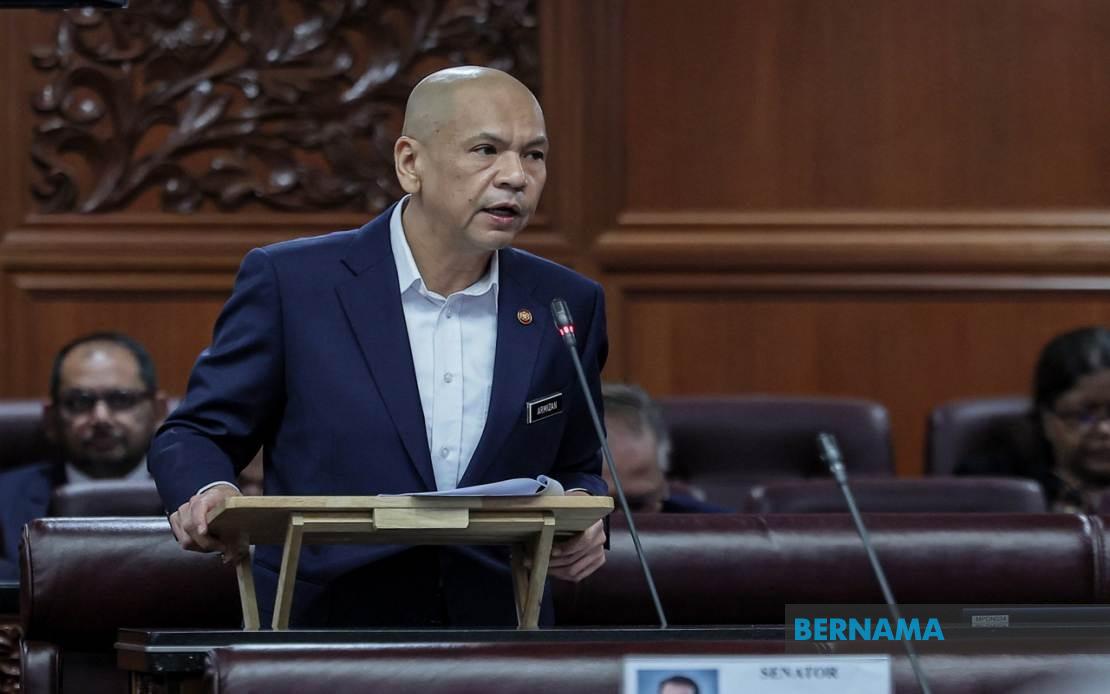
Parliament took its first legislative step toward overhauling Malaysia's competition framework on June 23 when the Domestic Trade and Cost of Living Ministry tabled the Competition (Amendment) Bill 2026 and the Competition Commission (Amendment) Bill 2026 for initial debate in the Dewan Rakyat. Minister Datuk Armizan Mohd Ali, steering both measures through their opening stages, signalled the government's intent to accelerate the reform process by scheduling second reading during the current parliamentary sitting, indicating these are priority pieces of legislation.
The Competition (Amendment) Bill 2026 represents a substantial recalibration of Malaysia's competition enforcement architecture. The current Competition Act 2010 has governed competition matters for over a decade and a half, yet business conditions and technological disruption have evolved dramatically in that period. By strengthening investigative and enforcement mechanisms at the Malaysia Competition Commission (MyCC), legislators are responding to calls from regulators and market observers for more robust tools to detect and deter anti-competitive conduct across an increasingly complex economy.
One of the most significant changes involves the jurisdictional scope of competition law itself. Clause 3 proposes broadening Act 712 to encompass all economic activities rather than limiting coverage to commercial activities alone. This shift carries profound implications for Malaysian business. It signals that non-commercial sectors—including government-linked entities, state-owned enterprises, and publicly mandated activities—will come under competition scrutiny. Regulators will gain authority to examine whether state bodies are abusing their positions or creating unfair competitive advantages, a particular concern in Malaysia's mixed economy where government participation remains substantial.
Informational asymmetries have long hampered competition enforcement globally. Clause 7 of the amendment addresses this by granting MyCC explicit authority to demand information and documentation from private individuals and government entities during market review investigations. Previously, obtaining such materials required more cumbersome procedures. The expanded power reflects a modern enforcement reality: competition investigations into digital platforms, supply chains, and complex commercial structures often require access to data held by competitors, suppliers, logistics providers, and state authorities. Without this authority, MyCC's ability to understand market dynamics remains incomplete.
The bills also respond to a tactical problem that has frustrated enforcement agencies worldwide: the destruction or concealment of evidence. Clause 13 introduces a dedicated offence for anyone who intentionally destroys, conceals, defaces, or alters data or materials with the purpose of deceiving MyCC or obstructing its investigative work. This provision acknowledges that sophisticated actors may attempt to sanitise their records once an investigation looms. By criminalising such conduct directly, the amendment creates an additional deterrent and legal pathway for prosecution, strengthening the commission's hand when pursuing cases against well-resourced defendants.
The Competition Commission (Amendment) Bill 2026 addresses institutional architecture. Clause 8 clarifies and formally recognises MyCC's advisory function regarding competition policy with government ministries, public authorities, and regulatory bodies. This is more than procedural window-dressing. It establishes MyCC's standing to shape competition-related policy decisions across government, ensuring that competition principles filter into decisions on transport policy, utilities regulation, telecommunications licensing, and other areas where regulatory choices profoundly affect competitive dynamics.
Governance improvements feature prominently in the second bill. Clause 10 permits MyCC to delegate functions and powers to its chairman, committees, officers, and employees—a practical measure that allows the commission to operate more flexibly and responsively. As investigations and market reviews grow in sophistication, empowering mid-level staff and specialised committees to exercise delegated authority accelerates decision-making. Crucially, Subclause 12(a) proposes that officer appointments be made by the commission itself upon the chief executive's recommendation, rather than through external appointment mechanisms. While framed as enhancing transparency and accountability, this measure also reduces external political influence over staff composition, potentially insulating the regulator from pressure.
For Malaysian businesses, these amendments carry several practical consequences. Enterprises will face a wider regulatory perimeter, with government-owned competitors now subject to competition law disciplines previously unavailable. Companies engaged in investigations should anticipate more aggressive information demands and should ensure data retention policies protect evidence against destruction allegations. The bills suggest MyCC intends to modernise its investigative approach, likely adopting techniques borrowed from leading authorities like Singapore's CCCS or Australia's ACCC.
The amendments also signal institutional confidence. By clarifying MyCC's advisory role and strengthening its enforcement architecture, parliament is endorsing a vision of the regulator as a sophisticated actor capable of shaping broader economic policy, not merely reacting to complaints. This reflects international best practice and positions MyCC more prominently within Malaysia's regulatory ecosystem.
Regionally, Malaysia's legislative movement toward stronger competition standards mirrors trends across Southeast Asia, where jurisdictions including Singapore, Vietnam, and Thailand have progressively expanded competition enforcement capabilities. These amendments keep Malaysia competitive within the region and support the National Logistics Council and broader government initiatives to improve competitiveness metrics. A more robust competition regime, paradoxically, can enhance investor confidence by signalling transparent rules and reduced tolerance for anti-competitive abuse.
The path forward hinges on parliamentary approval during second reading and subsequent passage. If adopted without substantial modification, these bills will represent the most significant overhaul of Malaysia's competition framework since 2010, expanding the regulator's remit, reinforcing its institutional independence, and positioning competition law as a tool for broader economic governance.

