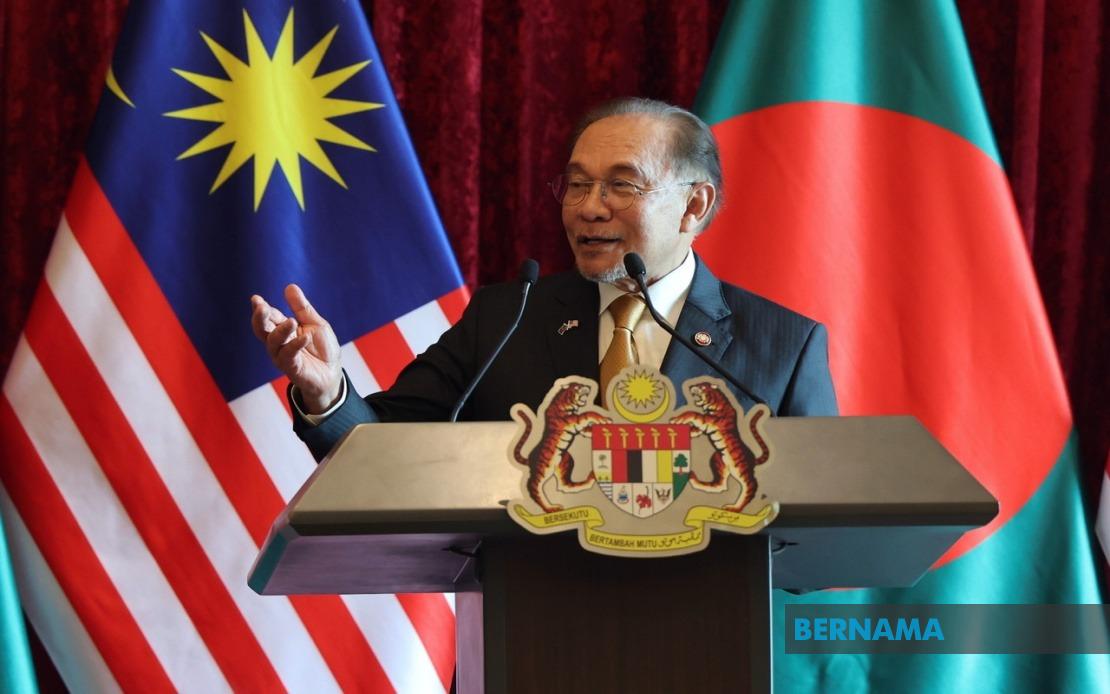
Prime Minister Datuk Seri Anwar Ibrahim and visiting Bangladesh Prime Minister Tarique Rahman have signalled a fresh momentum in bilateral relations, pledging to resurrect critical institutional frameworks that have languished without regular engagement. During Tarique's two-day official visit to Putrajaya, the two leaders outlined plans to restore the Joint Commission Meeting and Bilateral Consultations, mechanisms designed to provide systematic oversight of the multifaceted relationship between the two nations. The commitment reflects growing recognition that formalised channels are essential for managing the complexities of contemporary bilateral affairs, particularly in domains ranging from trade and investment to labour mobility and security.
The restoration of these institutional structures carries particular significance for Malaysia's regional diplomacy. Bangladesh, with a population exceeding 170 million and increasingly prominent role in South Asian geopolitics, represents a consequential partner for Malaysian interests. The resumption of regular high-level dialogue creates space for both nations to synchronise policy positions on regional matters and coordinate responses to shared challenges. For Malaysia, engagement with Bangladesh also strengthens its standing within multilateral forums where both countries participate, from the Organisation of Islamic Cooperation to ASEAN-related mechanisms where Bangladesh holds observer status.
Central to the renewed engagement is the vexed question of labour migration, an issue that touches upon fundamental economic interests for both nations. Malaysia relies substantially on Bangladeshi workers across construction, manufacturing, domestic service, and hospitality sectors, while Bangladesh depends on remittances from overseas workers to sustain foreign exchange earnings and support household incomes. The joint statement acknowledges this interdependence, noting that Bangladeshi expatriates have materially contributed to Malaysia's development trajectory while simultaneously benefiting their home economy through financial transfers. Yet this mutual advantage has been complicated by recurring concerns about recruitment transparency, worker exploitation, and compliance with labour standards.
The two leaders' commitment to establishing a Joint Working Group dedicated to migration issues signals an intent to move beyond ad-hoc management toward structured governance of worker flows. This mechanism will undertake a comprehensive evaluation of the existing Memorandum of Understanding governing labour movement between the nations, an instrument that has evidently become outdated relative to current labour market conditions and regulatory requirements in both countries. The prospective negotiation of a refreshed MoU presents an opportunity to embed contemporary standards for worker protection, recruitment fairness, and dispute resolution mechanisms into the formal bilateral framework.
Malaysia's measured position on fresh worker quotas reflects both fiscal prudence and domestic labour market considerations. The joint statement emphasises that any approval of additional foreign worker allocations will proceed on a case-by-case basis, rigorously assessed against verified employer requirements and sectoral capacity constraints. This approach protects Malaysian workers from displacement while signalling flexibility where genuine labour shortages persist in sectors unable to fill positions through domestic recruitment. For Bangladesh, the statement's reference to Malaysia's "current policy" subtly acknowledges that quota expansion remains contingent upon broader economic and labour market conditions rather than automatic approval of stated recruitment needs.
The emphasis on transparency and credibility in recruitment processes addresses longstanding vulnerabilities in bilateral labour migration that have generated criticism from human rights organisations and worker advocacy groups. Both nations have committed to ensuring that any approved labour movements utilise only qualified and credible recruitment agencies, a provision intended to eliminate informal, predatory intermediaries that have historically exploited workers through fraudulent fee arrangements and misrepresentation of employment terms. By anchoring this commitment to formal bilateral mechanisms, Malaysia and Bangladesh create accountability structures that can be monitored through their institutional frameworks.
The people-to-people dimension of this bilateral relationship deserves particular attention for Malaysian policymakers. Beyond official channels and labour arrangements, Bangladeshi residents in Malaysia—numbering in the hundreds of thousands—constitute a living bridge between the two societies. These communities facilitate cultural exchange, entrepreneurial networks, and informal knowledge transfer that enriches both societies. Recognising their contributions within an official joint statement elevates the status of diaspora engagement from mere demographic fact to strategic asset, positioning migrant communities as contributors to bilateral relationship-building rather than merely economic actors.
For Malaysia's broader South Asian engagement strategy, this bilateral renewal sits within a wider pattern of diplomatic recalibration. As Malaysia seeks to deepen relationships across South Asia and balance its various strategic partnerships, Bangladesh represents both an important economic partner and a bridge to broader regional conversations. The resumption of formalised dialogue with Dhaka signals continuity in Malaysian commitment to systematic engagement with major population centres across the region, complementing existing relationships with India and Pakistan.
The timing of Tarique's visit and the bilateral outcomes carry implications for Malaysia's credibility as a labour destination. In an increasingly competitive market for skilled and semi-skilled workers, where multiple destinations vie for migrant talent, clarity around recruitment standards and worker protections enhances Malaysia's reputation. Bangladesh has positioned itself as a source of disciplined, motivated workers, and strengthening the institutional framework governing their employment in Malaysia supports both nations' interests in sustaining this mutually beneficial arrangement. The joint commitment to fair, non-discriminatory recruitment processes also addresses potential friction points that could otherwise accumulate and damage the relationship.
Looking forward, the success of these revived mechanisms will depend substantially on implementation consistency. The Joint Commission Meeting and Bilateral Consultations will require sustained political commitment and adequate resource allocation to function effectively. Both nations must ensure that working-level officials can access these forums without unnecessary bureaucratic impediment, enabling regular review of progress across agreed cooperation areas. The proposed Joint Working Group on migration must move expeditiously from evaluation to negotiation and implementation of the updated MoU, maintaining momentum that can be easily lost through procedural delays or competing domestic priorities.

