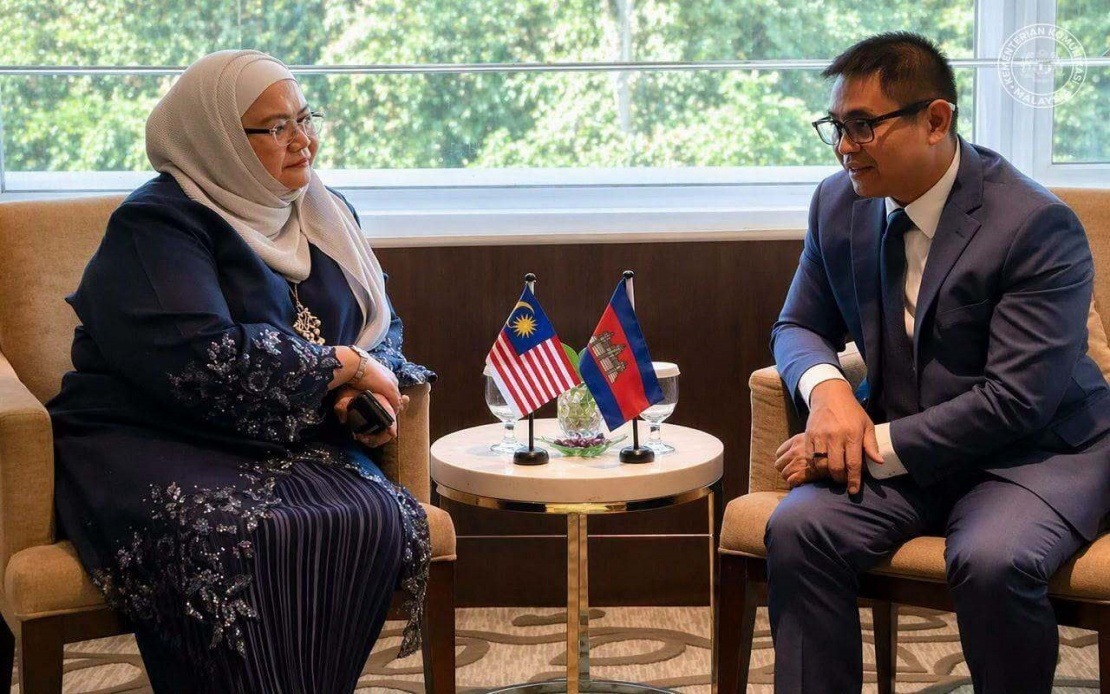
Malaysia and Cambodia are moving forward with concrete plans to deepen their partnership in the information and media sectors following a bilateral meeting held on the sidelines of ASEAN's senior officials gathering in Bandar Seri Begawan this week. The discussion centred on operationalizing the Memorandum of Understanding on Information and Media Development Cooperation that the two nations inked earlier this month, signalling a shared commitment to navigating the complexities of modern media landscapes across Southeast Asia.
The bilateral engagement brought together Datuk Bahria Mohd Tamil, Deputy Secretary-General overseeing Strategic Communications and Creative Industry at Malaysia's Ministry of Communications, and Prak Thaveak Amida, Secretary of State at Cambodia's Ministry of Information. This pairing of senior officials underscores the significance both governments place on the initiative, positioning information policy and media development as matters requiring ministerial-level attention and sustained dialogue. The meeting occurred during the 23rd ASEAN Senior Officials Responsible for Information forum, providing a regional platform where both countries could affirm their commitment to regional media standards and cooperation protocols.
The original agreement was formalized on June 20 when Communications Minister Datuk Fahmi Fadzil and Amida signed the MoU on behalf of Cambodian Information Minister Neth Pheaktra. The signing took place alongside Malaysia's celebration of National Journalists' Day in Penang, embedding the media cooperation framework within a context that honours journalistic contributions to democratic discourse. This ceremonial backdrop reflects the understanding that media development partnerships carry implications beyond bureaucratic procedure—they touch upon fundamental questions of public information, press freedom, and the role of communications infrastructure in nation-building.
During the Brunei discussions, both delegations explored multiple dimensions of their prospective collaboration. Information exchange mechanisms represent a foundational element, allowing the two countries to share best practices, regulatory insights, and strategic communications expertise. Media development cooperation encompasses capacity-building initiatives that could strengthen journalism training, editorial standards, and professional development opportunities for communicators in both nations. This avenue offers particular relevance for Cambodia, where media sector modernization remains an ongoing priority, and Malaysia, which positions itself as a regional hub for communications excellence and digital innovation.
Digital transformation emerged as a central theme in the bilateral conversation, reflecting broader imperatives facing Southeast Asian media ecosystems. Both countries confront similar pressures—the accelerating migration of audiences to digital platforms, the proliferation of online content sources, and the technical challenges involved in regulating information flows across borderless digital spaces. By coordinating on digital strategy, Malaysia and Cambodia can develop complementary approaches to media licensing, online platform accountability, and the integration of traditional broadcast standards with emerging digital distribution models.
Addressing information integrity and combating misinformation featured prominently in the officials' discussions. This priority aligns with regional and global concerns about disinformation campaigns, particularly during election cycles and moments of geopolitical tension. Malaysia's experience managing information challenges in a diverse, multicommunal society offers instructive lessons, while Cambodia brings perspectives from a media environment navigating its own complexities. Collaborative frameworks for fact-checking, rapid-response protocols for addressing false narratives, and coordinated messaging during crises could strengthen both nations' resilience against information manipulation.
The Malaysian Ministry of Communications characterized the bilateral engagement as evidence of Kuala Lumpur's strategic commitment to deepening ties with Cambodia through initiatives that simultaneously advance sectoral development and bilateral friendship. This framing reflects a diplomatic approach that integrates practical institutional cooperation with relationship-building at the interpersonal and governmental level. By anchoring the partnership in concrete media sector goals, both countries create durable structures that transcend individual administrations and political cycles, establishing continuity in cooperation.
The cooperation framework carries implications for the broader ASEAN mediascape. As individual member states strengthen bilateral information partnerships, they contribute to a more densely networked regional information ecosystem. Enhanced coordination between Malaysian and Cambodian media authorities could establish precedents for similar arrangements among other Southeast Asian pairs, gradually building institutional architecture for regional media governance. Such interconnections become increasingly important as transnational issues—from public health communication to environmental reporting to security concerns—demand synchronized information strategies across borders.
For Malaysian stakeholders, the Cambodia partnership offers opportunities to export communications expertise and establish Malaysia as a knowledge provider in the region's media development agenda. Universities, media organizations, and digital firms based in Malaysia could partner with Cambodian counterparts on training programmes, technology transfer initiatives, and joint content ventures. This economic and intellectual engagement reinforces Malaysia's competitive positioning within Southeast Asia's growing digital economy while creating tangible benefits for Malaysian institutions seeking regional expansion.
The implementation phase will test both governments' commitment to operationalizing the ambitious cooperation agenda outlined in the MoU. Establishing working groups, defining timelines for capacity-building programmes, and allocating resources for joint initiatives represent practical next steps. Success will depend on sustained political will, adequate budgetary allocation, and willingness by media organizations in both countries to participate in bilateral initiatives rather than viewing them as peripheral to core operations.
Cambodia's engagement with this media cooperation framework also reflects its broader efforts to modernize information infrastructure and establish professional standards across government communications. As Southeast Asian nations increasingly recognize media and information policy as strategic state capacity, partnerships like the Malaysia-Cambodia arrangement enable smaller or less-resourced governments to access expertise and technology that might otherwise require substantial domestic investment. This collaborative approach represents practical regionalism—using ASEAN frameworks and bilateral mechanisms to solve common challenges through shared effort rather than isolated national initiatives.

