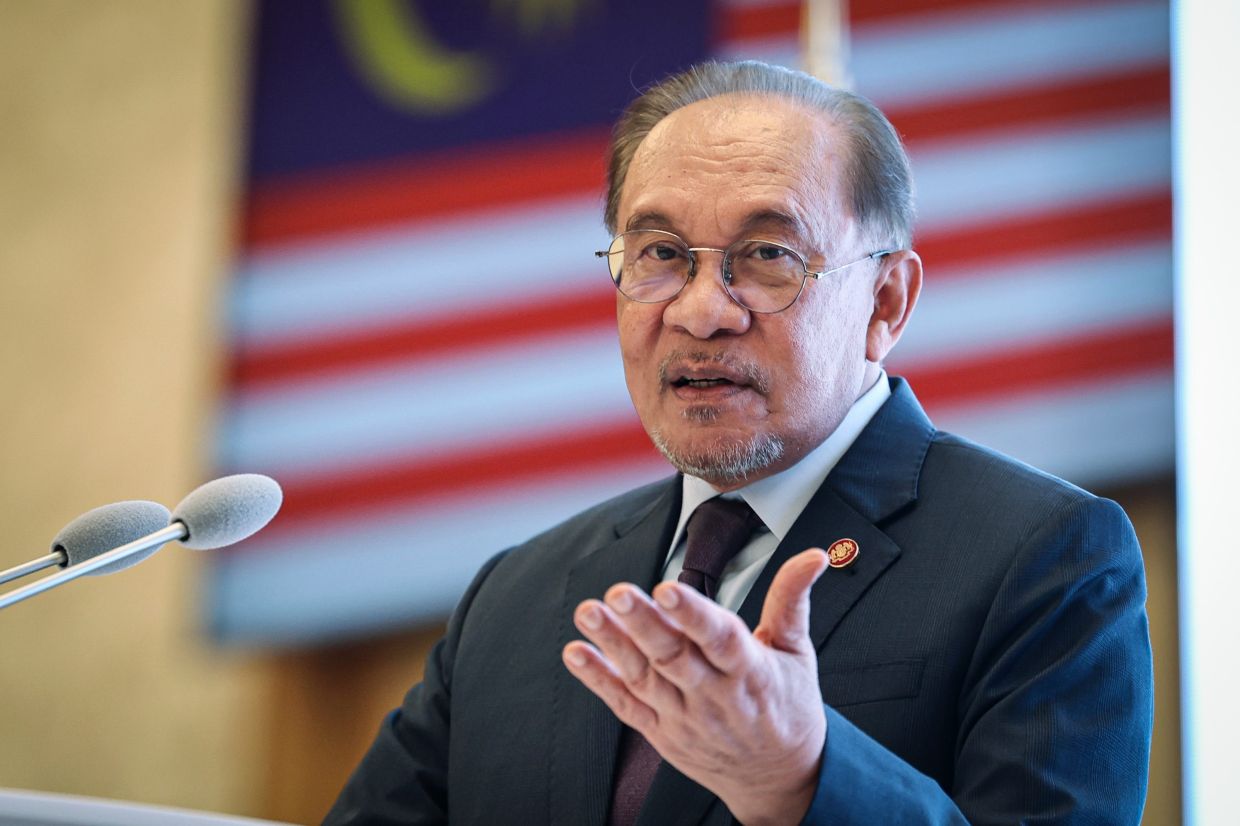
Prime Minister Datuk Seri Anwar Ibrahim has indicated that the long-awaited master plan for the Johor-Singapore Special Economic Zone will be finalised in the near term, underscoring accelerating momentum in one of Southeast Asia's most significant cross-border economic initiatives. The statement came during high-level discussions between Anwar, who also holds the finance portfolio, and Singapore President Tharman Shanmugaratnam, whose three-day state visit to Malaysia from July 13 to 15 focused on deepening bilateral ties and regional partnership.
The JS-SEZ represents a strategic undertaking designed to unlock economic potential across the Johor-Singapore border through coordinated development, innovation infrastructure, and seamless cross-border commerce. For Malaysia, the initiative holds considerable weight as it promises to position Johor as a competitive economic hub while attracting foreign investment and creating employment opportunities in one of the country's most developed states. Singapore, meanwhile, views the project as essential for maintaining its role as a regional economic anchor despite spatial constraints, leveraging Johor's land resources and labour pool to sustain long-term growth.
Anwar's remarks during the courtesy call with Tharman reflected optimism about tangible progress across multiple fronts in Malaysia-Singapore relations. The two leaders discussed not only the JS-SEZ but also broader regional developments and issues of mutual concern, signalling that bilateral engagement extends well beyond this single initiative. The timing of Tharman's visit, at the invitation of His Majesty Sultan Ibrahim, King of Malaysia, carries diplomatic significance as it demonstrates the high-level political commitment both governments are investing in strengthening cooperation.
Beyond the JS-SEZ, both leaders acknowledged positive movement in resolving several outstanding bilateral matters that have historically required patient negotiation. Malaysia and Singapore have long carried a complex relationship marked by periodic tensions over issues ranging from water supply agreements to maritime boundaries and labour practices. The emphasis during these discussions on constructive dialogue guided by mutual respect suggests both nations are committed to clearing these contentious issues through transparent and systematic engagement rather than allowing disagreements to derail broader cooperation.
The reaffirmation of commitment to resolving remaining issues through dialogue carries particular importance for regional stability and economic integration. In an era when Southeast Asia faces external pressures and internal development challenges, the ability of its two most economically advanced members to maintain functional relations provides a stabilising anchor. Any escalation between Malaysia and Singapore would ripple across ASEAN, affecting supply chains, investment flows, and confidence in regional mechanisms. Conversely, deepened cooperation creates positive externalities that benefit other Southeast Asian economies.
For Malaysian stakeholders, the JS-SEZ finalisation represents an opportunity to participate in a modernised economic zone that could compete with other regional initiatives. The project's success depends on clear regulatory frameworks, transparent dispute resolution mechanisms, and provisions that balance the interests of both nations while protecting Malaysian labour and environmental standards. How the master plan addresses these concerns will determine investor confidence and ultimate project viability. The finalisation timeline is therefore critical—delays would signal uncertainty to potential participants, while timely completion would demonstrate political will and administrative capability.
From an ASEAN perspective, the JS-SEZ carries symbolism beyond its economic dimensions. It represents a model for how developed economies within the bloc can structure cross-border collaboration that benefits both sides without requiring one partner to compromise core interests. Success would provide a template that other pairs of ASEAN members, particularly those with shared borders or maritime zones, might seek to emulate. Conversely, if the project struggles, it could reinforce scepticism about regional integration efforts.
Anwar's emphasis on outcomes rooted in trust and mutual benefit reflects a diplomatic approach that acknowledges past sensitivities while focusing forward momentum. Such language signals to both domestic constituencies and international observers that negotiations are progressing on a foundation of genuine partnership rather than leverage or concessions extracted under duress. This framing is essential for sustaining political support within Malaysia, where public opinion regarding Singapore remains mixed given historical disputes and competitive dynamics.
The involvement of Singapore's President in state visit protocols also underscores the gravity with which both governments treat this relationship. Presidential visits typically occur during periods when nations wish to elevate diplomatic engagement or consolidate gains made through technical negotiations. Tharman's presence in Kuala Lumpur, therefore, serves as visible commitment to the JS-SEZ and bilateral relations more broadly, sending signals to investors, civil society, and other regional actors that both nations are serious about implementation.
Moving forward, the critical phase involves translating the master plan into operational frameworks that address implementation timelines, governance structures, dispute settlement procedures, and benefit-sharing arrangements. Each of these elements requires careful negotiation and political consensus to survive the scrutiny of both nations' respective stakeholders. The next phase will test whether the goodwill demonstrated during state visits and high-level meetings can survive the granular discussions required to build functional cross-border institutions.
For Malaysian readers and investors, the approaching finalisation of the JS-SEZ master plan signals an opportunity to monitor emerging details about participation, investment requirements, and operational frameworks. Companies, particularly those in logistics, manufacturing, technology, and services, should prepare to engage with the formal consultation processes that typically follow master plan completion. Regional observers should also track whether the finalised plan includes provisions addressing environmental sustainability, labour standards, and community impact—increasingly important considerations for investors assessing reputational risk in cross-border developments.

