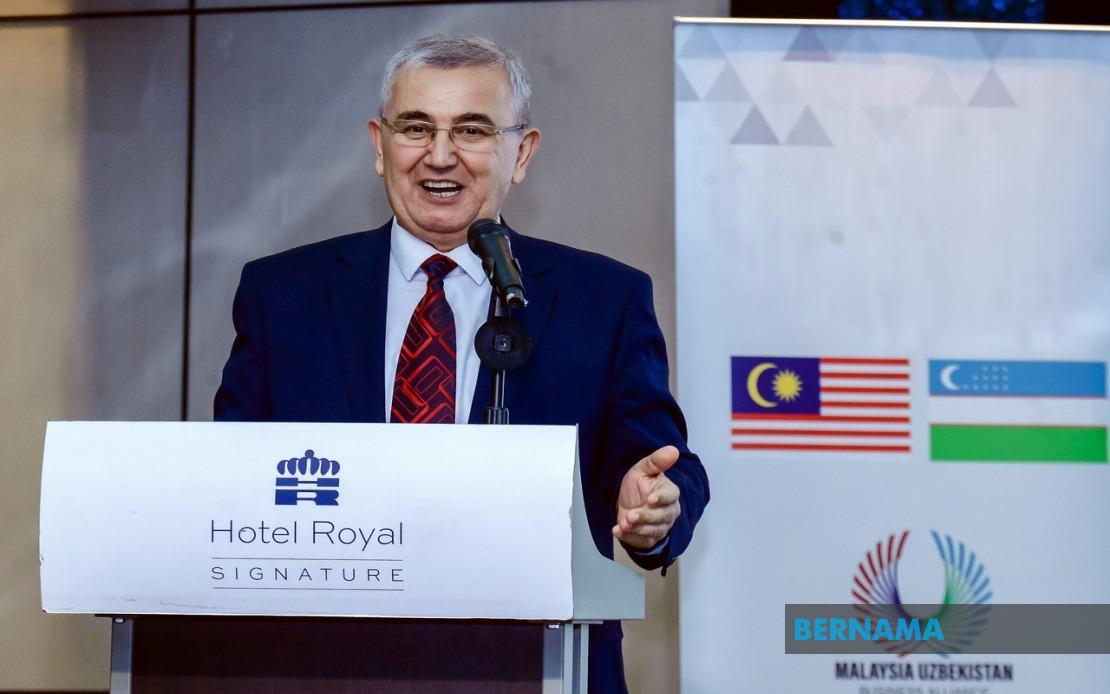
Malaysia and Uzbekistan are positioning themselves to forge a comprehensive agricultural alliance that capitalises on their distinct but complementary capabilities in farming technology and food production. The partnership, which has gained momentum following high-level visits between the countries' leadership, represents a strategic response to regional food security challenges and the growing global demand for innovative agricultural solutions. By combining Malaysia's advanced technological prowess with Uzbekistan's vast agricultural heritage and resources, both nations aim to create a mutually beneficial framework that strengthens their economies whilst addressing pressing concerns about food stability in an increasingly volatile world.
The diplomatic groundwork for this expanded cooperation was laid during significant state visits between the two countries. Malaysian Prime Minister Datuk Seri Anwar Ibrahim visited Uzbekistan in May 2024, whilst President Shavkat Mirziyoyev travelled to Malaysia in February of the previous year. These exchanges underscored agriculture's centrality to bilateral relations and demonstrated that both governments view the sector not merely as a commercial opportunity but as a pillar of national development strategy. The subsequent visit by Malaysia's Agriculture and Food Security Minister Datuk Seri Mohamad Sabu to Uzbekistan further crystallised the commitment, signalling an operational shift from general discussions to concrete implementation.
At the heart of this partnership lies a strategic recognition of complementary strengths. Malaysia possesses world-leading expertise in paddy cultivation, aquaculture, fisheries, and cutting-edge agricultural research and development, whilst simultaneously maintaining innovation pipelines in smart farming technologies. Uzbekistan, conversely, brings formidable capabilities in energy-efficient irrigation systems, horticulture, and large-scale agri-food processing infrastructure. For Malaysian stakeholders, Uzbekistan's position as a developing agricultural superpower in Central Asia offers access to technologies and practices that could enhance domestic productivity, whilst providing a gateway to distribute Malaysian products and expertise across a vast continental market.
The integration of digital innovation stands as a cornerstone of the proposed collaboration. Both countries recognise that artificial intelligence and advanced digital technologies are transformative forces in modern agriculture, enabling significant productivity gains and enhancing resilience against supply shocks. Uzbekistan has explicitly stated its intention to absorb Malaysian experience in deploying these systems, whilst Malaysia sees an opportunity to export its technological solutions and expertise to a market of nearly 40 million people hungry for modernisation. The deployment of agricultural drones exemplifies this trajectory; Malaysian company Miracule has already established its first agricultural drone showroom in Uzbekistan, with plans to expand into field-based operations and local assembly of advanced unmanned systems.
Aquaculture represents a particularly promising frontier for bilateral expansion. Uzbekistan's landlocked geography and rapidly growing population have created acute demand for seafood products that cannot be satisfied through domestic production alone. Malaysian firms have begun exploring investments in shrimp farming and fisheries ventures in Central Asia, leveraging their proven expertise in biofloc technology—an innovative approach that reduces feed costs by up to 30 percent whilst simultaneously increasing productivity and minimising environmental footprint. This technology transfer addresses both economic and sustainability imperatives, demonstrating how cooperation can simultaneously advance profitability and responsible resource management.
Traditional trade in agricultural commodities already forms a substantive foundation for bilateral commerce. Agri-food trade between Malaysia and Uzbekistan reached more than RM338 million in 2025, with Malaysian palm oil and palm oil-derived products dominating the export composition. Importantly, both nations perceive this figure as merely the starting point rather than a ceiling. Analysts and officials anticipate that expanded collaboration could double or even triple bilateral agri-food commerce over the next five to ten years, particularly as new market access points open and value-added product categories emerge. Strategic positioning could see Malaysia establish crude palm oil processing hubs in Uzbekistan to service Central Asian distribution networks, whilst Uzbek enterprises expand their shipments of premium fresh fruits, dried products, and processed foods to Malaysian and regional markets.
The Malaysian Agricultural Research and Development Institute (MARDI) has already begun collaborative ventures with Uzbekistani counterparts to identify and develop agricultural innovations suited to both regional contexts. This institutional collaboration creates a foundation for sustained knowledge exchange and technology development, moving beyond one-off commercial transactions toward systematic advancement of sectoral capabilities. Such partnerships typically generate spillover benefits extending beyond the immediate commercial parties, enriching domestic research ecosystems and creating broader competitive advantages throughout participating economies.
Geopolitically, this agricultural partnership reflects Malaysia's strategic positioning as a Southeast Asian bridge to Central Asia, a region of increasing economic and geopolitical significance. By establishing strong agricultural ties with Uzbekistan—the region's most populous nation and a critical hub for continental trade corridors—Malaysia enhances its influence along the Belt and Road Initiative whilst diversifying its international economic partnerships. For Uzbekistan, engaging with Malaysian expertise and capital provides access to proven technologies and management practices from a region with sophisticated agricultural capabilities and established export networks. The partnership thus transcends simple bilateral commerce to constitute part of broader regional integration narratives.
Malaysia's invitation to Uzbekistan to participate in the Malaysia Agriculture, Horticulture and Agrotourism Exhibition (MAHA) 2026 serves as both a practical platform and a symbolic statement of partnership commitment. Such exhibitions function as critical venues for introducing agricultural sectors to new audiences, facilitating business introductions, and showcasing innovation ecosystems. For Uzbekistan, MAHA 2026 offers unparalleled exposure to Malaysian businesses and consumers, positioning the nation's agricultural products and capabilities within a leading Southeast Asian marketplace. The exhibition thereby crystallises abstract cooperation frameworks into tangible commercial relationships and consumer awareness.
Food security imperatives underscore the urgency of this partnership. Global supply chain disruptions, climate volatility, and geopolitical tensions have elevated food security from a peripheral concern to a central preoccupation for policymakers across Asia. Malaysia and Uzbekistan's collaboration directly addresses these anxieties by expanding production capacity, diversifying supply sources, and deploying technologies that enhance agricultural resilience. By strengthening their capacity to feed their respective populations and regional neighbours, both nations contribute to continental stability and prosperity, even as they pursue narrower commercial interests.
The partnership's emphasis on technology transfer and innovation adoption reflects modern realities of agricultural development. Unlike previous eras when productivity gains derived primarily from land expansion or labour intensification, contemporary advancement depends upon technical sophistication, data analytics, and biological innovation. Malaysia's proven track record in these domains positions it as a trusted partner for Uzbekistan's modernisation agenda, whilst Uzbekistan's vast territory and growing population offer Malaysian technology providers substantial commercial opportunity. This dynamic creates genuine mutual advantage rather than extractive relationships characterised by one party's dependence upon another.
Looking forward, the trajectory of Malaysia-Uzbekistan agricultural cooperation will likely expand beyond current parameters. As initial projects deliver measurable success, additional collaboration sectors may emerge—perhaps encompassing agricultural finance, training and capacity building, or third-country market development initiatives. The foundational institutional relationships already established through MARDI and ministerial-level engagement create infrastructure capable of supporting expanding ambitions. Moreover, success in this bilateral context could catalyse broader Central Asian engagement by Malaysia and other Southeast Asian nations seeking to access these burgeoning markets.

