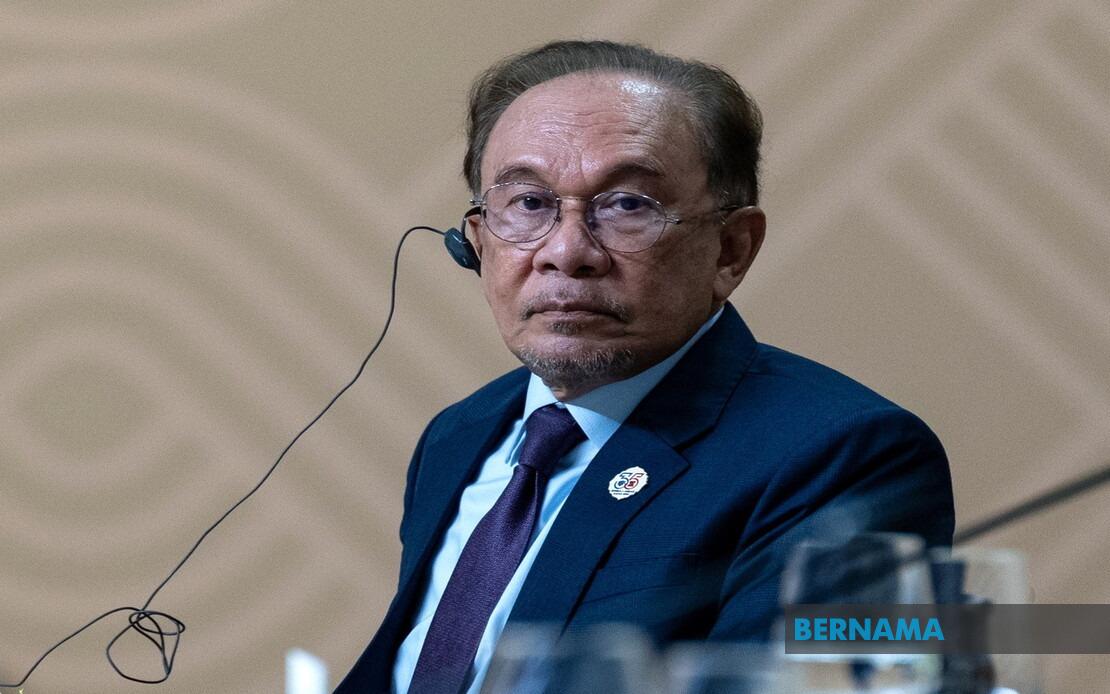
Malaysia has aligned itself with international efforts to broker peace between the United States and Iran, with Prime Minister Datuk Seri Anwar Ibrahim expressing measured optimism about the prospects of a memorandum of understanding that could reshape the geopolitical landscape of West Asia. Speaking at the 35th ASEAN-Russia Commemorative Summit in Kazan on Thursday, Anwar outlined Malaysia's hopeful stance while acknowledging the compressed timeline and inherent uncertainties surrounding the negotiations.
The 60-day deadline established for finalising a comprehensive agreement represents a critical window for resolving decades of hostility between Washington and Tehran. This timeframe, though tightly compressed, reflects the urgency both parties perceive in addressing the underlying tensions that have destabilised the broader Middle Eastern region and contributed to multiple proxy conflicts, energy market volatility, and humanitarian crises. For Southeast Asia, including Malaysia, regional stability in West Asia carries significant implications for shipping routes, energy security, and investment flows that reverberate across the global economy.
Anwar's confidence appears anchored in intelligence gathered from high-level diplomatic channels rather than public pronouncements. He specifically credited Pakistan Prime Minister Shehbaz Sharif as a trusted intermediary whose first-hand involvement in the negotiating process has provided credible insights into the trajectory of talks. Sharif's pivotal mediating role underscores how nations with historical connections to both Washington and Tehran, coupled with geographic proximity and strategic importance, have become essential facilitators in resolving intractable international disputes. Pakistan's willingness to invest political capital in this mediation effort reflects broader South Asian interests in preventing further destabilisation that could generate spillover effects from the Persian Gulf.
The Malaysian Prime Minister revealed that his assessment also incorporates perspectives shared by Russian President Vladimir Putin during bilateral discussions at the summit. Putin's expressed outlook—apparently supportive of the peace initiative—signals that major powers beyond the direct parties to the conflict perceive mutual benefit in de-escalation. Russia's backing, despite its own geopolitical competition with the United States, suggests that even adversarial powers recognise that perpetual US-Iran tension serves few strategic interests and could generate unpredictable outcomes. This convergence of views among key international players creates what Anwar characterised as a growing momentum toward successful conclusion of negotiations.
Yet the Prime Minister tempered his optimism with a measured acknowledgment of complicating factors, particularly the involvement of the Trump administration in the American negotiating position. The transition to a new US presidential administration introduces variables that earlier phases of diplomacy may not have fully accounted for. Administrative changes can bring shifting priorities, revised strategic assessments, or different negotiating philosophies that either accelerate or obstruct progress. Anwar's careful phrasing—noting the need to account for such contingencies—reflects the diplomatic prudence required when commentating on negotiations involving actors whose behaviour patterns remain subject to domestic political considerations and leadership preferences.
For Malaysia and ASEAN more broadly, a successful US-Iran peace accord would carry substantial implications. A stabilised West Asia would reduce the risk of military escalation that could draw in regional allies and threaten international commerce. The Strait of Hormuz, through which roughly one-third of global maritime petroleum trade transits, remains vulnerable to disruption should US-Iran tensions intensify. Malaysian shipping companies, energy importers, and exporters all depend on freedom of navigation and predictable energy markets. Beyond immediate economic considerations, a durable peace framework could create space for developing inclusive regional dialogue mechanisms that address legitimate grievances and security concerns across the Persian Gulf, potentially reducing the appeal of proxy conflicts and sectarian competition.
The diplomatic setting itself—an ASEAN-Russia summit—highlights Malaysia's positioning within a multipolar international system. By voicing support for US-Iran peace efforts while maintaining active engagement with Russia, Malaysia exemplifies ASEAN's traditional non-alignment doctrine adapted to contemporary geopolitics. This balancing act allows Southeast Asian nations to benefit from constructive relationships with major powers while avoiding entrapment in zero-sum great power competition. Anwar's public endorsement of the peace process, delivered in Kazan alongside Russian leadership, demonstrates how regional forums can serve as platforms for amplifying support for global stability initiatives.
The 60-day window that Anwar repeatedly referenced warrants closer examination for its symbolic and practical significance. This relatively short timeframe suggests that negotiators have narrowed outstanding disputes to manageable differences, or that one or both parties sense momentum that recent months did not provide. Conversely, it may represent an artificial deadline imposed to prevent negotiations from endlessly extending. Regardless, the existence of a defined endpoint creates pressure on all parties to move beyond posturing toward concrete compromises. For observers in Malaysia and Southeast Asia, this deadline serves as a natural checkpoint for assessing whether diplomatic initiatives can actually yield results or whether deeply entrenched positions will ultimately prevail.
Anwar's invocation of prayer and collective hope underscores the human dimension of international diplomacy. While geopolitical analysis emphasises strategic interests and power calculations, successful resolution of conflicts also requires political will, goodwill, and sufficient domestic support within each nation for accepting negotiated settlements that inevitably involve compromise. The Prime Minister's framing acknowledges that the technical elements of any agreement must ultimately be embedded within broader narratives of national interest and domestic legitimacy that resonate with populations in both countries. This recognition reflects mature diplomatic understanding that sustainable peace requires more than elite-level consensus.
The broader context of Malaysian foreign policy suggests that Anwar's optimism aligns with Malaysia's consistent advocacy for dialogue-based conflict resolution and opposition to military interventionism. Malaysia has historically championed the principle that regional disputes should be addressed through negotiation rather than coercion, and that international mechanisms should prioritise dialogue. By publicly backing US-Iran peace initiatives, Malaysia reinforces its diplomatic positioning as a constructive actor interested in regional and global stability. This posture enhances Malaysia's credibility in future multilateral forums and positions the country as a reliable voice for pragmatic, consensus-oriented solutions to international disputes.

