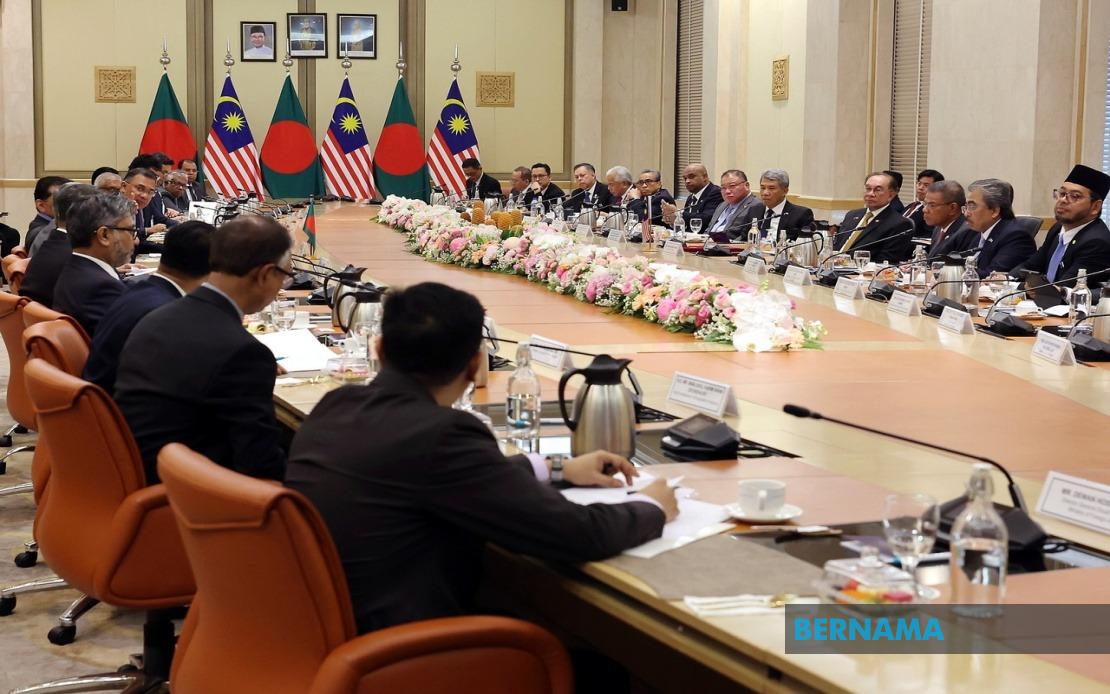
Prime Minister Datuk Seri Anwar Ibrahim has called for Malaysia and Bangladesh to venture into frontier economic territories, identifying artificial intelligence, renewable energy, and semiconductor production as strategic priorities for the two nations moving forward. Speaking at a joint press conference in Putrajaya with visiting Bangladesh Prime Minister Tarique Rahman, Anwar underscored that while investment partnerships remain essential, the relationship must transcend conventional agricultural ties and embrace technology-driven sectors that will shape regional competitiveness in the coming decades.
The bilateral engagement, marked by Rahman's two-day official visit, signals a maturing relationship between the two Muslim-majority nations that have long maintained cordial ties. However, Anwar's emphasis on emerging sectors reflects a conscious pivot toward industries where both countries can develop comparative advantages and create high-value economic opportunities. His remarks indicate that policymakers in Kuala Lumpur recognize the need to move beyond commodity-dependent partnerships and position Malaysia-Bangladesh cooperation as a catalyst for regional innovation and technological advancement.
Artificial intelligence has emerged as a focal point in Anwar's vision for the partnership. The technology represents one of the defining challenges and opportunities of the 21st century, with applications spanning manufacturing, healthcare, financial services, and governance. For Malaysia, collaborating with Bangladesh on AI research and development could help diversify the nation's innovation ecosystem while supporting Bangladesh's digital transformation ambitions. The sector also aligns with Malaysia's broader efforts to position itself as a regional technology hub and innovation leader in Southeast Asia.
Semiconductor manufacturing constitutes another pillar of the expanded cooperation framework. This sector carries particular significance given the global semiconductor supply chain disruptions experienced in recent years and the strategic importance of chip production for national security and economic resilience. Malaysia already possesses established semiconductor expertise and manufacturing capacity, while Bangladesh's growing industrial base and large workforce present opportunities for downstream production and assembly operations that could benefit both nations. Enhanced collaboration in this domain could strengthen Southeast Asian self-sufficiency in this critical technology.
Energy cooperation opens additional avenues for mutual benefit. As both nations grapple with expanding energy demands driven by economic growth and industrialization, exploring renewable energy solutions, energy efficiency innovations, and potentially hydrogen technology could address sustainability imperatives while creating bilateral commercial opportunities. Bangladesh's vulnerabilities to climate change impacts make energy transition particularly urgent, while Malaysia's experience in oil and gas coupled with growing renewable capacity offers relevant expertise and technological know-how.
The digital economy represents a cross-cutting theme threading through these sectoral initiatives. Both countries are witnessing rapid digital adoption among their populations and businesses, yet significant untapped potential remains in e-commerce, fintech, digital logistics, and digital governance. Facilitating knowledge transfer and collaborative ventures in these areas could accelerate digital maturation across both economies and create employment opportunities in high-skill service sectors.
Beyond bilateral economics, the partnership carries regional implications. Strengthened Malaysia-Bangladesh cooperation in technology and energy could contribute to ASEAN and South Asian connectivity initiatives, potentially creating bridges between Southeast Asia and South Asia—two dynamically growing regions that have historically maintained limited economic integration. Such deepening ties might inspire broader regional frameworks for technology cooperation and investment in innovative sectors.
The formal exchanges accompanying the announcement underscore the comprehensive nature of the partnership. The Memorandum of Understanding on Cultural Cooperation acknowledges that economic partnerships function most effectively when supported by people-to-people connections and mutual cultural understanding. Simultaneously, the Exchanges of Notes addressing counter-terrorism research and investment promotion demonstrate that the two governments recognize contemporary security challenges and institutional frameworks necessary for sustaining robust bilateral engagement.
For Malaysia specifically, enhanced technology cooperation with Bangladesh offers strategic advantages in workforce development and innovation ecosystems. Bangladesh possesses a young, tech-savvy demographic increasingly engaged in software development, information technology services, and digital entrepreneurship. Formal collaboration mechanisms could facilitate knowledge exchange, joint research initiatives, and even talent mobility that strengthens innovation capacity in both nations. Such arrangements also position Malaysian companies to access emerging opportunities in Bangladesh's rapidly growing digital sector.
The emphasis on advanced manufacturing within the expanded cooperation framework reflects recognition that both nations must move beyond low-value assembly toward sophisticated production processes. This transition requires investment in skills development, technology transfer, and supply chain integration. Malaysia, drawing on decades of manufacturing expertise and existing industrial clusters, can support Bangladesh's journey up the value chain while accessing competitive advantages afforded by Bangladesh's demographic dividend and lower input costs.
Institutional mechanisms will prove crucial for translating these ambitions into tangible outcomes. Beyond formal agreements, both governments should establish dedicated working groups, research consortiums, and investment facilitation bodies to translate sectoral priorities into concrete projects. Public-private partnerships could accelerate technology adoption and commercial viability, particularly in emerging sectors where market risks remain significant.
The timing of this expanded cooperation agenda reflects broader geopolitical and economic currents. As global supply chains reorient and technology competition intensifies among major powers, mid-sized nations like Malaysia and Bangladesh have strategic incentives to deepen regional partnerships and reduce dependence on distant suppliers. By positioning themselves as partners in technology innovation and energy transition, both countries enhance their relevance in an increasingly multipolar economic landscape while addressing shared development challenges.
Looking ahead, the success of this expanded partnership will depend on sustained political commitment, institutional capacity, and genuine commercial incentives for private sector engagement. The commitments announced represent important diplomatic foundations, yet translating goodwill into functioning research collaborations, semiconductor joint ventures, and AI innovation centers requires persistent effort and aligned business interests. Nevertheless, the vision articulated by Anwar and Rahman—of a partnership transcending traditional boundaries and embracing transformative technologies—offers a compelling blueprint for how neighboring nations can create mutual prosperity in an increasingly digital and energy-conscious world.

