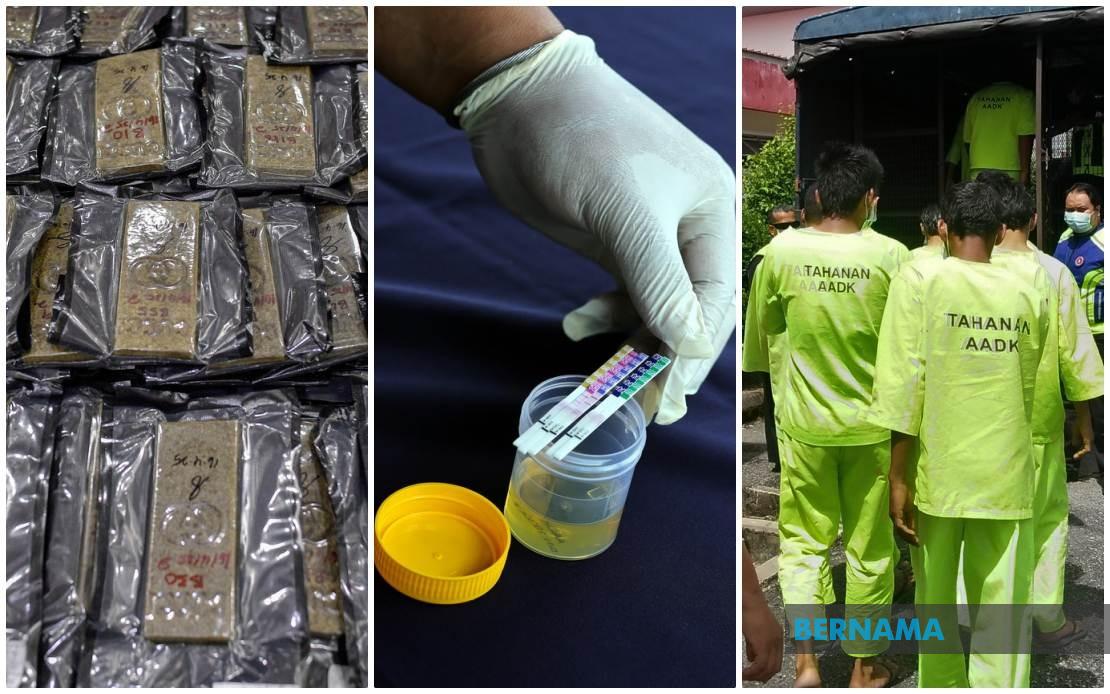
The nation's battle against synthetic drug abuse has intensified dramatically, with Home Minister Datuk Seri Saifuddin Nasution Ismail revealing that 141,817 cases were documented last year—a troubling escalation that underscores the evolving nature of Malaysia's drug crisis. The figures represent a persistent upward trajectory in substance abuse across the country, with data gathered from the Ministry of Health, National Anti-Drugs Agency, rehabilitation centres, and the Royal Malaysia Police painting a picture of a challenge that continues to outpace intervention efforts. This represents a significant jump from the 145,526 cases recorded in 2023, and follows an even more alarming 192,852 cases documented in 2024, suggesting the problem has entered a critical phase that demands urgent strategic reassessment.
Synthetic substances have become the dominant drug of choice among abusers nationwide, accounting for approximately 70 per cent of all documented drug abuse cases. Amphetamine-type stimulants, particularly methamphetamine locally known as syabu, dominate this synthetic drug landscape and have become the preferred substance across nearly all demographics and regions. This shift represents a fundamental change in Malaysian drug consumption patterns, moving away from traditional substances like heroin, cannabis, ketum, and morphine towards highly potent laboratory-produced chemicals. The transition reflects both the changing global illicit drug market and the ease with which modern manufacturing and distribution networks can supply these synthetic alternatives to local users.
The geographic distribution of synthetic drug abuse reveals particular vulnerability in Malaysia's east coast states, where the concentration of cases has reached alarming levels. Districts such as Pendang, Kuala Krai, Bachok, Besut, and Mersing have emerged as epicentres of the synthetic drug problem, with Pendang recording the highest incidence rate among Malaysian districts. This regional concentration suggests that enforcement gaps, economic factors, population demographics, or supply chain vulnerabilities may be creating conditions where synthetic drugs proliferate more readily than in other parts of the country. The fact that the east coast corridor's drug crisis now centres almost entirely on synthetic substances rather than traditional narcotics indicates how rapidly drug use patterns can shift in vulnerable communities.
Fentanyl represents an emerging and particularly dangerous new threat that has begun appearing in Malaysian markets, though officials stress that its prevalence remains limited compared to established synthetic drugs. This powerful opioid, which possesses potency dozens of times greater than morphine and carries extreme overdose risk, has been detected in adulterated vape products during recent police operations. The government has moved swiftly to add fentanyl to the list of scheduled substances through amendments to the Drug Dependants Act and the Dangerous Drugs Act 1952, enabling enforcement authorities to pursue cases involving its manufacture, distribution, and consumption. However, the fact that authorities have only recently begun detecting fentanyl suggests the substance may represent a harbinger of future trends rather than an immediate mass-market crisis.
Young Malaysians bear a disproportionate burden in the synthetic drug crisis, with nearly 75 per cent of all recorded cases involving individuals aged between 15 and 39 years. This demographic concentration means that entire cohorts of workers, students, and young professionals face heightened exposure to these substances during their most formative and productive years. The prevalence among young people raises urgent questions about education, prevention, and early intervention strategies, as well as the adequacy of support systems designed to redirect vulnerable youth away from substance abuse. The concentration in this age group also has profound implications for Malaysia's human capital development and the future productivity of the workforce.
The criminal justice system reflects the scale of the drug problem, with drug-related cases dominating Malaysia's prisons. Approximately 70 out of every 100 inmates carry drug-related convictions or face drug-related charges while on remand, a ratio that increases dramatically in certain facilities. In Machang Prison, nearly all cases involve drug-related offences, indicating that incarceration capacity is being increasingly consumed by drug-related criminality rather than other offences. This concentration places enormous strain on the prison system and raises questions about the effectiveness of incarceration as a strategy for addressing the underlying drivers of drug abuse.
Since the start of the current year, approximately 192,000 drug abuse cases involving all drug types have been recorded nationwide, equivalent to roughly 560 cases per 100,000 Malaysians. This per-capita rate illustrates the pervasiveness of drug abuse across the general population and suggests that no segment of Malaysian society remains insulated from the crisis. The consistency of these figures across different data collection periods indicates that the problem has stabilised at an alarmingly high level rather than showing signs of meaningful decline. The rate suggests that drug abuse has evolved from a public health concern affecting marginalised populations into a mainstream social challenge affecting middle-class and affluent communities as well.
The government has implemented a multi-pronged strategy involving community prevention initiatives, school-based educational programmes, and family and workplace intervention efforts coordinated across the National Anti-Drugs Agency, Royal Malaysia Police, and Customs Department. These approaches recognise that supply-side enforcement alone cannot address the complex social, economic, and psychological factors that drive synthetic drug demand. Community-based prevention programmes aim to identify risk factors and build protective factors in vulnerable communities, while educational initiatives seek to inoculate young people against drug experimentation. Family intervention programmes attempt to mobilise relatives as forces for prevention and recovery, recognising that social networks significantly influence substance use behaviour.
The emergence of online drug markets presents an increasingly difficult enforcement challenge that requires new regulatory approaches and international cooperation. Digital platforms facilitate drug transactions without implementing product verification or quality controls, creating a parallel illicit marketplace that operates beyond traditional law enforcement oversight. The anonymity and geographic distance provided by online transactions make it difficult for authorities to trace suppliers, intercept shipments, and prosecute offenders. This challenge has become particularly acute for substances like fentanyl and novel synthetic drugs that can be manufactured in multiple locations and shipped globally through conventional parcel services.
While evidence of Malaysia functioning as a major international drug transit hub remains limited according to official statements, the country's strategic geographic position on major regional trafficking routes and its role as a manufacturing and consumption hub suggest that the distinction between domestic and transnational aspects of the drug problem may increasingly blur. The ease of online purchasing suggests that Malaysian drug users now access global illicit supply chains rather than relying solely on locally-sourced substances. This internationalisation of Malaysia's drug problem requires coordination with regional and international partners to address supply sources and disrupt trafficking networks before they reach local consumers. The challenge extends beyond national borders and demands recognition that sustainable solutions require regional cooperation and upstream interventions in source countries.
The statistics reveal that Malaysia faces a drug crisis that has fundamentally shifted in character, moving from traditional narcotics to synthetic substances that pose greater health risks and prove more difficult to regulate through conventional enforcement approaches. The age profile of users, the regional concentration of cases, and the dominance of synthetic drugs indicate that multiple distinct drug epidemics are unfolding simultaneously across different communities and regions. Addressing this challenge requires simultaneously strengthening supply-side enforcement, expanding demand reduction and treatment capacity, implementing evidence-based prevention, and building resilience in vulnerable communities. The government's recognition of fentanyl as an emerging threat suggests preparedness for evolving dangers, yet the persistence and growth of synthetic drug abuse indicates that current strategies have not achieved the scale of impact necessary to reverse the crisis.

