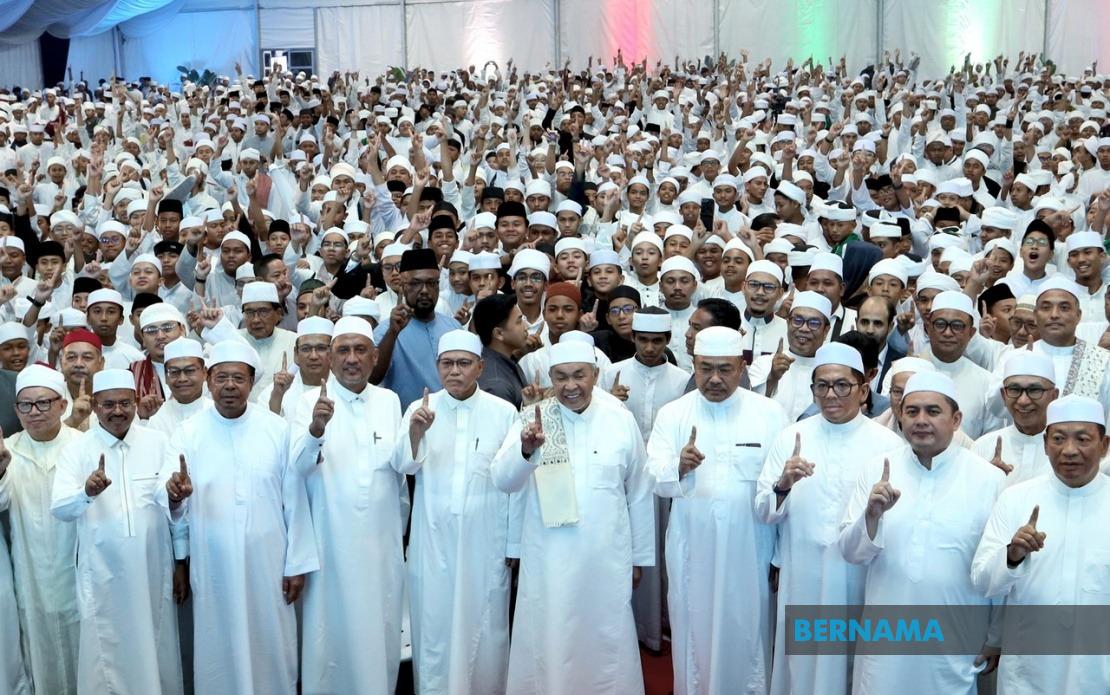
The Malaysian government has greenlit the formation of a National Tahfiz Council, a landmark development that seeks to bring coherence and professional standards to Quranic memorisation education throughout the nation. Deputy Prime Minister Datuk Seri Dr Ahmad Zahid Hamidi announced the Cabinet approval during the Pahang State Huffaz Gathering 2026 in Kuantan, where over 5,000 Quranic memorisers convened. The initiative represents a significant policy shift toward recognising and integrating tahfiz education into Malaysia's broader educational ecosystem, rather than treating it as a marginal pursuit disconnected from mainstream academic and vocational advancement.
Ahmad Zahid, who has been tasked by Prime Minister Datuk Seri Anwar Ibrahim to serve as the council's chairman, framed the establishment as a transformative opportunity for the tahfiz sector. The council's primary mandate centres on establishing unified standards for curriculum design, teaching methodologies, student recognition, and the academic progression of huffaz. This coordination mechanism had been absent, leaving individual tahfiz institutions to operate largely independently without common benchmarks or quality assurance frameworks. By creating such institutional architecture, the government aims to remedy fragmentation that has historically limited the mobility and credibility of tahfiz qualifications within Malaysia's formal education system.
A central ambition articulated by Ahmad Zahid is repositioning tahfiz education as a legitimate and valued pathway within Malaysia's education structure. Currently, many huffaz face barriers when attempting to transition from madrasah to university or when seeking employment in secular professional fields, as their qualifications often lack formal recognition equivalent to conventional academic credentials. The deputy prime minister expressed a vision wherein tahfiz students can progress seamlessly from foundational memorisation through advanced study, then into tertiary institutions and skilled employment, carrying with them both spiritual knowledge and market-ready competencies. This represents a departure from a narrower conception of tahfiz as training solely for religious roles, instead positioning it as compatible with technical skills and diverse career pathways.
Pahang State has emerged as a pilot exemplar for this expanded vision of tahfiz education. Ahmad Zahid highlighted how the state has constructed a coherent trajectory beginning with early-childhood Quranic exposure through Tadika Tahfiz Negeri Pahang, an initiative inspired by Sultan Al-Sultan Abdullah Ri'ayatuddin Al-Mustafa Billah Shah. From these foundational programmes, Pahang has progressively developed more sophisticated structures extending to international recognition, demonstrating that tahfiz need not be isolated from broader educational architecture but can instead form a continuous knowledge journey. This model provides a template that other states may replicate, especially given that religious education carries substantial cultural significance across Malaysian society and that demand for quality tahfiz training remains robust.
The government is simultaneously implementing improvements to the National Tahfiz Policy 2.0, a framework encompassing multiple targeted initiatives. These include TVET Tahfiz, which integrates vocational and technical education with Quranic memorisation; the Malaysian Tahfiz Certificate 2.0, intended to provide standardised national qualification; the Graded Hafazan Certification system for hierarchical skill recognition; and the Huffaz Financing Scheme designed to remove financial barriers to tahfiz education. Additionally, the Malaysian Tahfiz Recognition Standard establishes benchmarks for institutional accreditation, while strategic partnerships with higher learning institutions and skills training organisations create direct pathways for huffaz to access university programmes and professional development opportunities. Together, these measures constitute a comprehensive ecosystem recognising that educational mobility requires not merely policy statements but concrete mechanisms, financial support, and institutional coordination.
The role of established government agencies in advancing tahfiz education has also been formalised through collaborative agreements. During the Pahang gathering, Yayasan Pahang signed a memorandum of understanding with the Community Development Department (KEMAS) and Majlis Amanah Rakyat (MARA), formalising institutional partnerships intended to strengthen tahfiz curriculum development and expand vocational opportunities for huffaz. Such agreements signal that tahfiz education is no longer peripheral to mainstream development objectives but increasingly central to government strategy for human capital development and skills training. MARA's involvement is particularly significant, as the agency has traditionally focused on economic empowerment and entrepreneurship, suggesting that huffaz may soon have improved access to business training and startup financing.
For Malaysian and Southeast Asian contexts, this policy evolution carries broader implications. Throughout the region, Islamic education has faced tension between traditional roles and contemporary labour market demands. By systematising pathways that marry theological knowledge with employable skills, Malaysia may offer a model that other Muslim-majority nations explore. Countries like Indonesia, with even larger tahfiz populations, might observe how the National Tahfiz Council develops standards and recognition mechanisms, potentially informing their own policy discussions. Furthermore, as Malaysia's economy increasingly emphasises digital skills and TVET credentials, integrating tahfiz into these frameworks rather than maintaining artificial separation addresses practical concerns of huffaz seeking meaningful livelihoods beyond traditional Islamic employment.
The political dimensions of this initiative deserve attention. Ahmad Zahid's appointment as council chairman elevates tahfiz education within the government hierarchy, signalling that the issue commands high-level attention and resources. Given that tahfiz education resonates strongly with Malaysia's Muslim majority and that educational policy carries electoral implications, the government's investment in this sector reflects both genuine policy commitment and recognition of its constituencies' priorities. The staging of the announcement at the Pahang Huffaz Gathering, with attendance exceeding 5,000, provided a public platform demonstrating government support for this community and validating their concerns through tangible institutional response.
Challenge areas remain, however. The practical implementation of unified standards across diverse tahfiz institutions—ranging from well-resourced private madrasahs to smaller community-based centres—will require careful calibration to avoid imposing one-size-fits-all requirements that undermine institutional autonomy or quality at smaller centres. Convincing universities and employers to recognise tahfiz credentials as equivalent or complementary to conventional qualifications demands sustained engagement and evidence of graduate competency. Additionally, ensuring that financial support through the Huffaz Financing Scheme reaches economically disadvantaged students requires transparent allocation mechanisms resistant to political patronage. The council's effectiveness will ultimately depend on how comprehensively these structural and cultural obstacles are addressed in practice.
Moving forward, the National Tahfiz Council's success will be measured not merely by its establishment but by tangible outcomes: measurable increases in huffaz pursuing tertiary education, demonstrable employment outcomes in skilled sectors, and growing institutional partnerships. The government's framing suggests long-term commitment rather than a symbolic gesture, particularly given the range of supporting policies and financial mechanisms already in place. For the regional audience, this Malaysian initiative represents a significant attempt to reconcile religious educational traditions with contemporary skill requirements, potentially reshaping how Islamic societies approach the interface between spiritual formation and economic participation.

