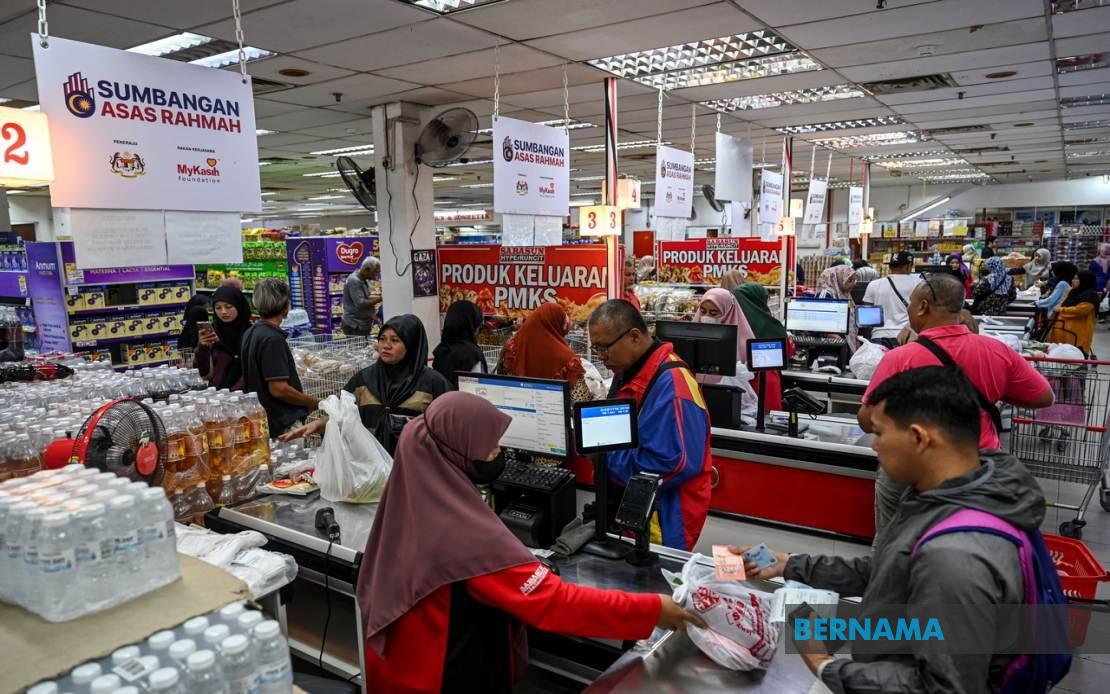
Prime Minister Datuk Seri Anwar Ibrahim has indicated that the MADANI administration is actively exploring the possibility of enhancing financial assistance provided through two major welfare schemes—the Sumbangan Tunai Rahmah (STR) and Sumbangan Asas Rakmah (SARA)—contingent upon whether Malaysia's economic performance can sustainably support such increases. Speaking during a community engagement initiative in Ipoh on July 19, the Prime Minister emphasised that expanding these popular cash transfer programmes remains a priority for his government, though implementation hinges on fiscal capacity.
The consideration of higher payouts reflects ongoing dialogue within government circles about balancing social welfare obligations with macroeconomic prudence. Anwar revealed that Treasury secretary-general Tan Sri Johan Mahmood Merican had been engaged in substantive discussions about the feasibility of such enhancements, signalling that deliberations have moved beyond preliminary conceptual stages into more detailed financial planning. These conversations directly feed into the development of the upcoming national budget, where concrete decisions about allocation adjustments will be made. For current recipients of STR and SARA assistance, the signal from the Prime Minister effectively amounts to a conditional promise that improvements may materialize if economic indicators remain favourable.
As both Prime Minister and Finance Minister, Anwar occupies a uniquely influential position in determining whether increased welfare spending can be accommodated within the government's fiscal framework. His dual portfolio means he personally navigates the delicate equilibrium between responding to popular demand for expanded social protection and maintaining the macroeconomic discipline necessary for long-term stability and investor confidence. This balancing act has become increasingly important as Malaysia manages post-pandemic economic recovery while contending with global uncertainties including supply chain pressures and geopolitical tensions affecting commodity-dependent economies in Southeast Asia.
The STR and SARA schemes themselves have become central pillars of the MADANI government's social contract with Malaysian voters. These targeted cash transfer programmes deliver direct financial support to lower-income households and vulnerable populations, functioning as a tangible manifestation of government commitment to inclusive growth. Previous increases to these schemes have been welcomed by beneficiaries, and suggestions of potential further enhancements typically resonate positively among the electorate, making the topic politically significant beyond its immediate budgetary implications.
Palestinian leaders have consistently emphasised that economic growth must translate into improved living standards for ordinary citizens rather than remaining abstract statistical improvements. By publicly entertaining the prospect of larger STR and SARA allocations, the Prime Minister is positioning the government as responsive to grassroots concerns about affordability and rising cost-of-living pressures that continue to preoccupy Malaysian households. This messaging strategy acknowledges that despite overall economic recovery, many citizens still experience financial strain in their daily lives.
Beyond welfare assistance, Anwar used the Ipoh gathering—which formed part of the broader MADANI KITA Together community programme organised by the Malaysian Volunteer Corps Department (RELA)—to underscore government commitment to personnel welfare across the security sector. The remarks directed toward RELA members, who volunteer in disaster response and security operations, highlighted an often-overlooked constituency within national defence and emergency management frameworks. Anwar acknowledged that RELA volunteers deserve enhanced support commensurate with the risks and demands of their roles, which extend far beyond conventional law enforcement into humanitarian and disaster relief operations.
The government's allocation of RM3 million annually for RELA member welfare, though maintained at the same level as the previous year, prompted the Prime Minister himself to acknowledge that this figure represents an insufficient commitment to adequately safeguard these volunteers' wellbeing. This admission—that current resourcing falls short of actual needs—carries implications for how the broader security apparatus is resourced and valued within national budgeting priorities. RELA's multifaceted contributions to both security maintenance and community service provision merit greater recognition, and Anwar's comments suggest receptiveness to gradually expanding support if economic circumstances permit.
The emphasis on security personnel welfare also reflects broader regional security challenges affecting Malaysia and its Southeast Asian neighbours. Transnational threats including trafficking, cross-border terrorism, and climate-related disasters increasingly demand sophisticated, well-resourced voluntary and professional security responses. Countries investing adequately in such personnel tend to develop more resilient security infrastructures capable of handling complex, evolving threats. Malaysia's commitment to progressively improving RELA support therefore carries significance beyond individual welfare, touching upon national security preparedness more broadly.
For Malaysian households navigating contemporary economic circumstances, any expansion of STR and SARA assistance would directly affect disposable income and financial resilience during challenging periods. These schemes function as built-in stabilisers during economic downturns, automatically providing relief when broader growth slows. Dependent families, elderly persons, and individuals experiencing employment disruption rely substantially on these transfers to maintain basic consumption and avoid sliding into poverty traps. The prospect of enhancement thus carries considerable weight for millions of Malaysians.
The fiscal sustainability question remains paramount, however. While Anwar's conditional optimism suggests confidence in Malaysia's medium-term economic trajectory, global uncertainties continue to cloud precise forecasting. Commodity price volatility, potential currency fluctuations, and regional economic dynamics could rapidly alter the fiscal space available for enhanced welfare spending. The government's prudent approach—conditioning any increases on verified economic improvement rather than committing unconditionally—reflects mature fiscal management principles that have served Malaysia's development ambitions well historically.
Looking ahead, the upcoming Budget presentation will reveal the extent to which preliminary discussions translate into actual policy changes. Budget allocations represent the definitive expression of government priorities and fiscal capacity, so announcements regarding STR and SARA will signal clearly whether Anwar's July remarks represent genuine possibility or rhetorical positioning. Malaysian households, security personnel, and broader policy observers will scrutinise these decisions as indicators of genuine commitment to social welfare enhancement versus continuity at existing levels. The outcome will carry implications extending beyond immediate beneficiary populations to shape perceptions of MADANI government credibility and capacity to deliver on social promises.

