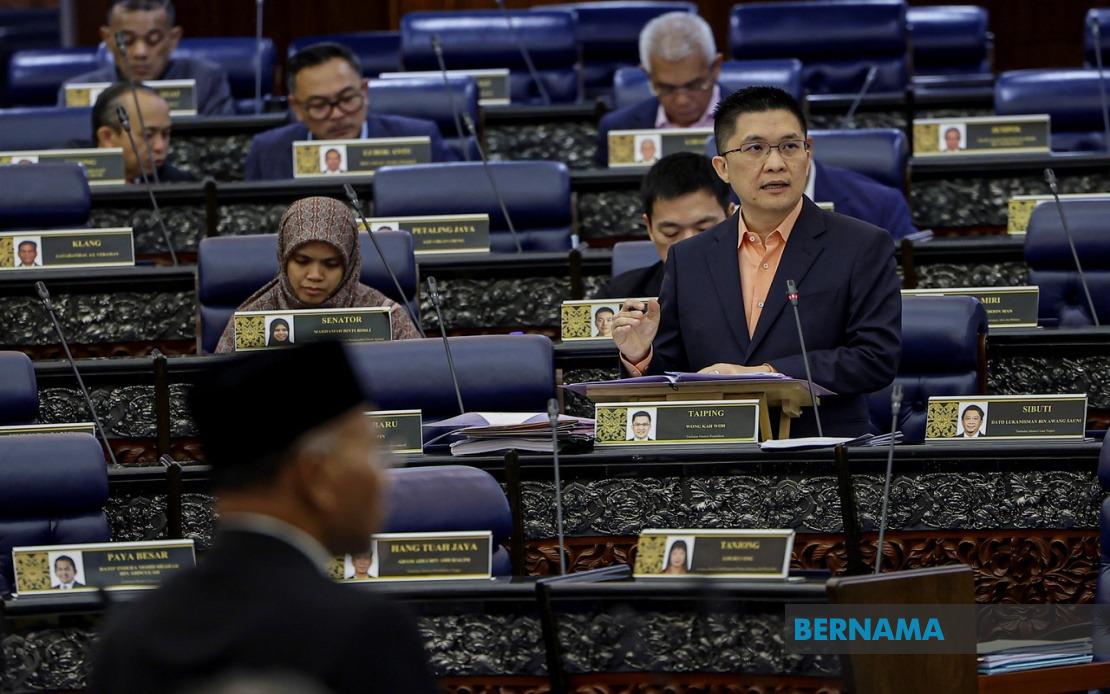
Malaysia's Education Ministry is executing an unprecedented expansion programme ahead of a structural overhaul to its primary education system scheduled for 2027. The dual intake of six-year-old and seven-year-old Year One cohorts next year has prompted the Ministry of Education to undertake simultaneous construction and recruitment efforts on a scale rarely seen in the nation's recent educational planning. Deputy Education Minister Wong Kah Woh outlined the scope of these preparations during parliamentary question time, revealing that 2,596 new classrooms must be built and 3,150 contract teachers hired to accommodate the anticipated student surge.
The demographic picture behind this initiative reflects substantial demand for early primary education. Current registration data shows that 73,386 applications have been lodged for six-year-old children, while the traditional seven-year-old cohort has generated 405,033 registrations. When combined, these figures yield a total of 478,419 applications—a jump of 12.07 per cent over 2026's Year One enrolment, which involved only the older age group. This growth trajectory underscores both the expanding school-age population and changing parental attitudes toward formal education entry points in Malaysia.
The infrastructure response has been carefully designed for speed and efficiency. The Ministry of Education is coordinating the construction of new classrooms across 838 schools nationwide, employing the Industrialised Building System (IBS) modular construction method rather than traditional brick-and-mortar approaches. This methodology allows for faster assembly, reduced on-site disruption, and standardised quality across diverse locations. According to the Deputy Minister, these projects are expected to reach completion by the end of this year, leaving several months for final preparation before the 2027 school session begins. The geographic distribution across 838 institutions suggests a deliberate effort to spread capacity increases equitably rather than concentrate them in urban centres.
Beyond bricks and mortar, the human dimension represents an equally formidable challenge. The recruitment of 3,150 contract of service teachers signals the Ministry's intention to avoid overburdening existing permanent staff while maintaining manageable pupil-to-teacher ratios. Wong indicated that these contracted positions represent only part of the hiring strategy; the Ministry will also deploy reserve candidates from the Education Service Commission (SPP) to fill gaps and meet fluctuating demand across different states and districts. This multi-layered approach acknowledges that teacher shortages vary geographically, with some regions facing more acute deficits than others. The Ministry has developed five-year projections for educator requirements at both national and state levels, suggesting that planners view 2027 not as an isolated event but as the beginning of a sustained period of elevated staffing needs.
Training and curriculum readiness have become equally pressing concerns. The transition to dual-cohort entry demands that teachers grasp the developmental differences between six-year-olds and seven-year-olds, necessitating strengthened professional development. Wong confirmed that the Ministry is intensifying training programmes to equip educators with strategies suited to younger pupils' cognitive and emotional maturity levels. The 2027 school curriculum itself will be recalibrated to reflect these developmental distinctions, ensuring that learning objectives, teaching methods, and assessment approaches align with what children at each age can reasonably achieve. A dedicated Year One transition programme will further scaffold the adjustment period for new entrants, easing the cultural and academic shift from pre-school or kindergarten into formal primary schooling.
Parental choice has been embedded into the policy framework, recognising that families may hold different views about their child's readiness for formal education. Rather than imposing a strict age-based rule, the Ministry permits parents to opt for their child to join either the six-year-old or seven-year-old cohort, contingent on demonstrated developmental readiness. This flexibility acknowledges variation within age cohorts—some children mature earlier than peers, whilst others benefit from an additional year of play-based or exploratory learning. The decision ultimately rests with families in consultation with educators, embodying a child-centred philosophy that departs from rigid chronological sorting.
A significant expansion of pre-school provision forms another pillar of the strategy. The Ministry has increased the number of pre-school classes by 350 this year alone, compared with the historical average of roughly 150 classes annually. This dramatic acceleration is designed to widen access to structured early childhood education, particularly for B40 households—Malaysia's bottom 40 per cent income bracket—who cannot afford private kindergartens. By making quality pre-schooling more available at public institutions, the Ministry aims to ensure that children from lower-income families enter Year One with comparable preparation to their more affluent peers, helping narrow educational disparities from the outset of primary schooling.
The policy shift has triggered broader concerns within Malaysia's private education sector. Private kindergarten operators face potential revenue loss as one cohort transitions into the government school system, threatening business viability and employment. Recognising these implications, the Ministry has undertaken to review the sustainability challenges facing private kindergartens and to engage with stakeholders through ongoing dialogue sessions. These consultations signal an awareness that the 2027 transition, whilst educationally progressive, carries economic consequences for private providers that warrant thoughtful management rather than abrupt disruption.
From a regional perspective, Malaysia's dual-cohort entry model represents an ambitious departure from conventional single-entry systems. While several countries have experimented with flexible school entry policies, few Southeast Asian nations have attempted simultaneous intake of two age groups at the primary level. The success or failure of this initiative will likely influence conversations about educational access and equity across the region. If the 2027 reform achieves its goal of improving early-years outcomes and reducing socioeconomic disparities, it may inspire neighbouring countries to consider similar restructuring. Conversely, implementation challenges could serve as cautionary lessons for other systems contemplating wholesale age-based reforms.
The financial and logistical dimensions of this undertaking are substantial. Beyond the 2,596 classrooms and 3,150 teachers, the Ministry must coordinate curriculum materials, learning resources, and administrative systems across hundreds of schools. The compressed timeline—essentially one year to construct facilities and prepare staff—leaves little margin for delay or complications. Supply chain disruptions, construction challenges, or slower-than-expected teacher recruitment could cascade into readiness gaps by 2027. The Ministry's reliance on IBS construction methods and its five-year teacher planning framework suggest confidence in execution, yet success ultimately hinges on sustained political commitment and budget allocation.
The 2027 Year One reform fundamentally reshapes how Malaysia thinks about primary education access and developmental appropriateness. By simultaneously enrolling six and seven-year-olds, the system acknowledges that readiness for formal schooling varies and that earlier entry, when developmentally sound, can yield cognitive and social benefits. The parallel expansion of pre-school provision aims to democratise access to quality early education, reducing the advantage conferred by private kindergarten fees. For Malaysian families, particularly those with modest means, this shift promises more equitable pathways into formal schooling. For the Ministry of Education, it represents a bet that comprehensive infrastructure investment, teacher development, and curriculum adaptation will translate policy ambition into classroom reality.

