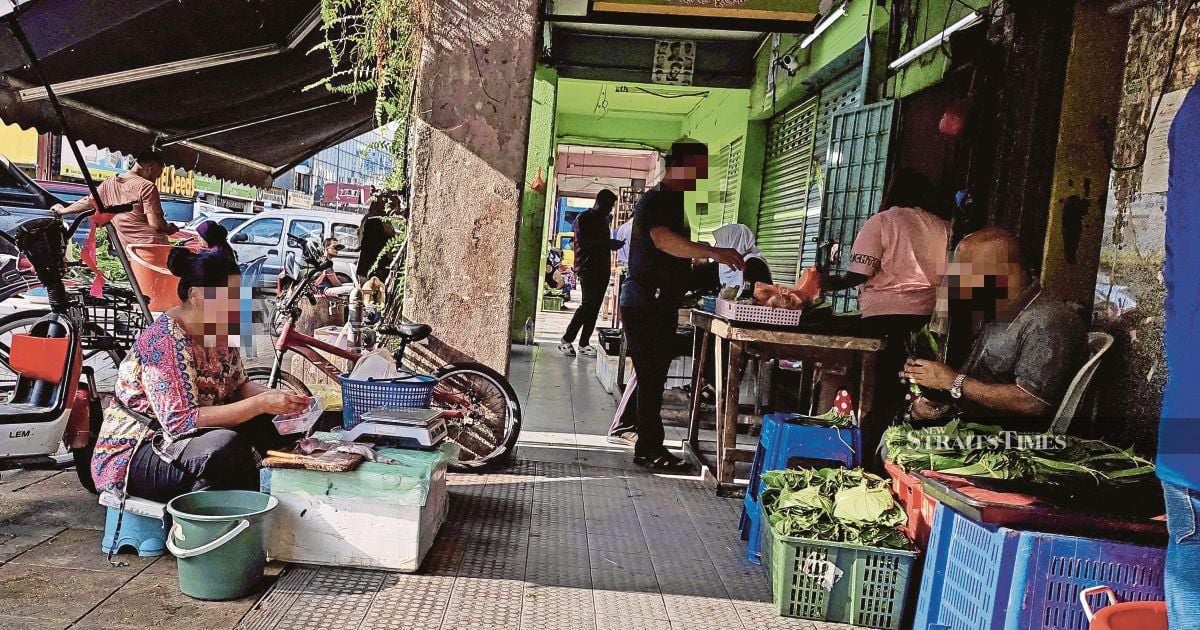
The Malaysian government has issued a fresh appeal for citizens to maintain perspectives grounded in both humanitarian principles and legal responsibility when considering the Rohingya population within the country, even as public discourse surrounding the community becomes increasingly polarized. The statement from government leadership in Putrajaya reflects growing recognition that Malaysia's approach to one of the region's most intractable humanitarian crises requires careful calibration between enforcement of immigration law and acknowledgment of the vulnerability facing the stateless ethnic group.
The timing of this public reminder underscores escalating social tensions and media scrutiny focused on the Rohingya presence in Malaysia. Over recent years, the country has hosted one of the largest Rohingya populations outside camps in neighbouring Bangladesh, with estimates suggesting more than 180,000 individuals are living in Malaysia—many in urban areas and informal settlements. This concentration has generated considerable debate about resource allocation, social integration, and the parameters of Malaysian citizenship and national identity.
The minister's intervention signals that within government circles, there is concern that public discourse has tilted predominantly toward questions of security, resource competition, and border management, potentially overshadowing the foundational humanitarian realities. The Rohingya crisis emerged from systematic persecution in Myanmar, where members of this Islamic ethnic minority faced military campaigns, property confiscation, and restrictions on movement and economic participation. These antecedents remain central to understanding why international actors and humanitarian organizations maintain that the Rohingya qualify for special protections under global refugee conventions.
Malaysia's geopolitical position adds complexity to this balancing act. As a Muslim-majority Southeast Asian nation and a signatory to the Convention on the Rights of the Child, Malaysia has historical obligations to protect vulnerable populations. Simultaneously, the country faces genuine administrative challenges: overstretched social services, housing pressures in cities, and education infrastructure constraints that limit absorption capacity. These practical limitations cannot be dismissed as irrelevant to policy formulation, yet they must be weighed against the immediate welfare of individuals who have experienced displacement and loss.
The emphasis on upholding compassion and human dignity reflects a broader regional conversation occurring across Southeast Asia. Countries including Thailand, Indonesia, and Bangladesh have absorbed Rohingya populations under varying legal frameworks and with differing levels of international support. Malaysia's relative prosperity compared to these neighbors places it in a different category of responsibility, yet the government has consistently resisted the UNHCR's characterization of Malaysia as a host country capable of permanent settlement. This creates a structural tension: individuals are present and have built lives, yet official policy treats them as temporary residents pending third-country resettlement.
Media coverage amplifying particular incidents involving Rohingya individuals or tensions in communities where they concentrate has contributed to hardening public opinion. Stories emphasizing crime, disease, or unauthorized economic activity circulate more readily than accounts of individual integration successes, educational achievements, or economic contributions by documented Rohingya workers in regulated sectors. The minister's call for balanced perspectives implicitly acknowledges that media narratives shape public policy appetite and that without conscious cultivation of empathy, deteriorating social sentiment could force governments toward harsher enforcement measures.
Humanitarian organizations operating in Malaysia have documented substantial hardship among the Rohingya population. Access to formal healthcare remains restricted, forcing many to rely on informal practitioners or to defer treatment until conditions become acute. Children miss schooling because they lack documentation and fear detention during enrollment. Employment opportunities concentrate in informal markets, exposing workers to exploitation and wage theft. These lived realities—though less visible to the average Malaysian encountering news headlines—constitute the daily context that humanitarian values are designed to address.
The government's framing of this as a balance rather than a zero-sum choice carries significance. It acknowledges legitimate state interests in immigration control, security vetting, and prevention of irregular movement, while insisting that these interests need not eliminate dignity or compassion from institutional responses. This formulation leaves room for policies such as regularized work permits for certain Rohingya populations, formalized education access, and cooperation with UNHCR on orderly resettlement—approaches that respect sovereignty while improving conditions.
For Malaysia specifically, sustaining this balance has long-term implications. The Rohingya population is unlikely to return to Myanmar in significant numbers while Myanmar's political system remains fractured and Burmese nationalism continues to exclude minority claims. Third-country resettlement has consistently fallen short of resettlement targets set by international bodies. This means Malaysia is managing a protracted presence—not a temporary emergency—and policy architecture must reflect that reality. Treating the Rohingya as perpetual temporary residents while expecting indefinite compliance with restrictions creates instability that ultimately harms both the community and broader Malaysian society.
The minister's appeal also signals internal government debate about direction. Advocacy within the bureaucracy for humanitarian approaches appears to remain present, though under pressure from public sentiment and electoral calculation. By reiterating values of compassion publicly, the government creates rhetorical commitments that constrain future hardline shifts and provide political cover for officials who push for protective measures within their portfolios.
Moving forward, Malaysia's management of the Rohingya issue will likely become a touchstone for how ASEAN nations navigate humanitarian responsibility in an era of rising migration pressures and nationalist sentiment. Demonstrating that orderly administration and human dignity are compatible serves regional interests beyond immediate humanitarian gains. It establishes precedent that even fragile states can maintain standards of conduct—a principle with implications well beyond the Rohingya case itself, particularly given projections of climate-induced migration that will increase pressure on Southeast Asian borders significantly over coming decades.

