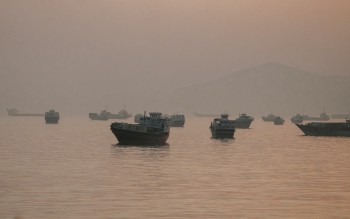
Malaysia's government is sounding the alarm on the economic risks posed by renewed geopolitical instability in the Middle East, with Economy Minister Akmal Nasrullah Mohd Nasir urging the public and business community to prepare for significant disruptions to supply chains and commodity prices. Speaking on his official TikTok account on July 15, Akmal Nasrullah cautioned against complacency even as scattered reports suggest some commercial traffic continues through the Strait of Hormuz, one of the world's most critical maritime chokepoints through which roughly one-fifth of global oil passes annually.
The minister's warning comes on the heels of Iran's declaration to close the strategic strait following a series of United States military strikes launched on July 8. Though the actual physical closure remains incomplete, with a limited number of vessels reportedly still transiting, the threat alone has roiled global markets and heightened uncertainty for economies heavily dependent on energy imports and international supply networks. For Malaysia, a nation that derives substantial revenue from oil and gas exports while simultaneously relying on imported energy and raw materials for manufacturing, the implications are particularly acute.
Akmal Nasrullah's central message emphasised that Malaysia cannot afford to underestimate the economic consequences of prolonged Middle Eastern instability. He specifically identified oil prices as the first pressure point, a concern that reverberates throughout Malaysia's economy given its reliance on petroleum for both domestic consumption and export earnings. Beyond crude costs, the minister highlighted transportation expenses as a secondary shock, noting that disruptions to shipping routes force vessels to take longer, more expensive detours around Africa, significantly increasing transit times and associated logistics costs for importers and exporters alike.
The domino effect extends further into the realm of raw material inputs and food security. Global commodities markets, already sensitive to supply shocks, would face additional upward pressure if Hormuz closure persists. For Malaysia, which imports substantial quantities of agricultural products, foodstuffs, and industrial raw materials, even modest price increases multiply across the economy and ultimately reach consumers through higher costs at the supermarket and for essential goods. This inflationary pressure becomes particularly problematic in a period when household budgets are already stretched by previous economic challenges.
What distinguishes Akmal Nasrullah's analysis from routine government warnings is his articulation of supply chain interconnectedness—the complex web of dependencies that makes modern manufacturing vulnerable to seemingly distant disruptions. He illustrated this principle through the example of plastic manufacturing, explaining how pressures on this single sector cascade outward to contaminate multiple downstream industries simultaneously. Food packaging, electrical and electronics components, automotive manufacturing, medical devices, construction materials, agricultural inputs, and export-oriented manufacturing all depend directly or indirectly on stable plastic supply and pricing.
This supply chain perspective holds particular relevance for Malaysia, which functions as a regional manufacturing and export hub with deep integration into global production networks. Malaysian electronics manufacturers, for instance, rely on complex supply chains sourcing components from multiple continents. A disruption in one material input can halt production lines, delay shipments to international customers, and damage Malaysia's reputation for reliable delivery. Automotive suppliers, medical device manufacturers, and agricultural processors face analogous vulnerabilities, meaning the Hormuz crisis threatens not merely consumer prices but employment and manufacturing competitiveness across multiple sectors.
The minister's emphasis on vigilance and preparedness suggests the government recognises the limits of policy intervention in the face of geopolitical events beyond Malaysia's control. Rather than presenting false assurances, Akmal Nasrullah effectively communicated that Malaysian institutions must adopt a defensive posture—stockpiling critical materials where feasible, diversifying supplier networks, and exploring alternative logistics routes. Businesses must stress-test their operations against extended supply chain disruptions and identify vulnerabilities before they become acute crises.
For Malaysian consumers, the minister's message carries an implicit warning about potential price pressures across a broad spectrum of goods. Governments typically attempt to shield citizens from commodity shocks through subsidies or price controls, but prolonged disruptions can exhaust fiscal resources and create counterproductive market distortions. The more realistic scenario involves selective price increases for imported goods and domestically produced items dependent on imported inputs, creating new pressures on household budgets and potentially requiring government assistance targeted at vulnerable populations.
The government's communication strategy itself merits analysis. By using TikTok—a platform dominated by younger Malaysians—to deliver this economic warning, Akmal Nasrullah attempted to reach constituencies who may not consume traditional news media. This approach acknowledges that supply chain disruptions and inflation affect young workers and consumers particularly sharply, making their awareness and adaptation critical to national economic resilience. The message also implicitly calls upon businesses to invest in contingency planning and supply chain redundancy, investments that require lead time and advance coordination.
Looking forward, Malaysia's response to Middle Eastern geopolitical risks will likely involve a combination of strategic stockpiling of critical materials, accelerated efforts to diversify trading partnerships and sourcing locations, and possibly increased domestic production of critical inputs to reduce vulnerability to external shocks. Regional cooperation through ASEAN and partnerships with other Southeast Asian nations could enable joint buffer-stocking arrangements and coordinated logistics solutions that reduce individual nations' exposure to Hormuz-related disruptions.
The Hormuz closure threat ultimately exposes a fundamental vulnerability in Malaysia's integration into global supply chains—a vulnerability shared by virtually all developing and emerging market economies. While deep international economic integration offers substantial benefits through specialisation and comparative advantage, it also creates exposure to geopolitical risks. Akmal Nasrullah's warning, therefore, serves as both immediate caution and longer-term reminder that economic resilience requires deliberate investment in supply chain diversification and domestic capabilities, particularly in sectors critical to food security, energy supply, and manufacturing competitiveness.

