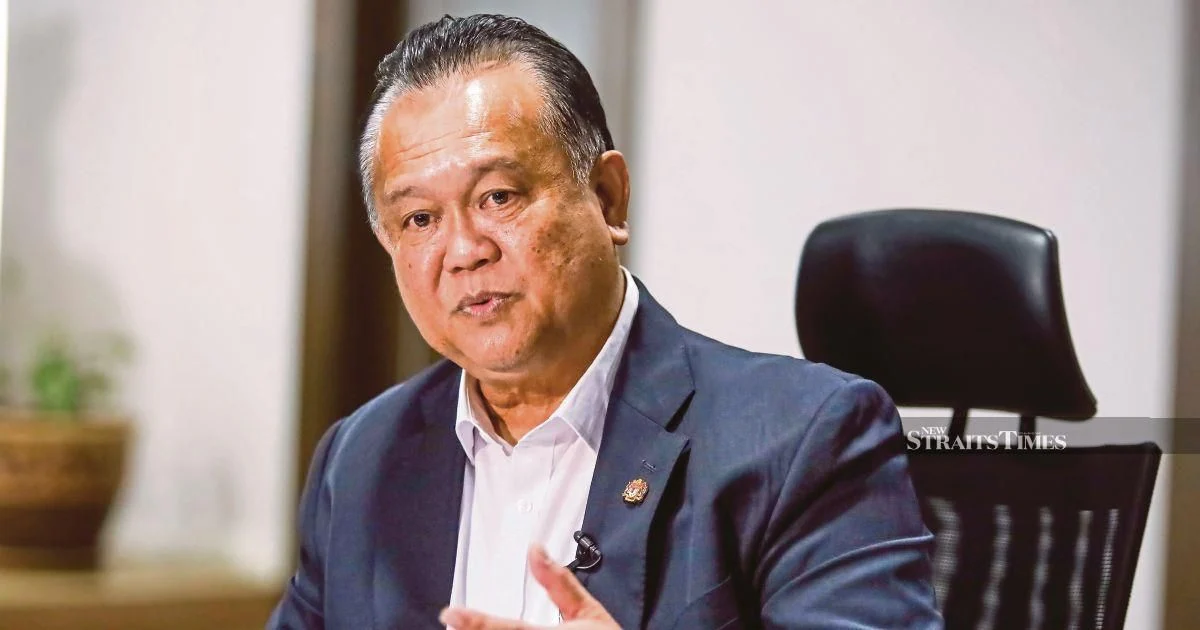
Datuk Seri Alexander Nanta Linggi, Malaysia's Works Minister, has outlined a fundamental reorientation of the nation's transport policy, signalling that the era of continuous highway proliferation is drawing to a close. Speaking in Kuala Lumpur, Nanta emphasized that while road networks will remain a cornerstone of Malaysia's infrastructure, the approach to building and managing them must change substantially. The emphasis will shift from simply constructing more lanes and new routes toward creating intelligent systems that operate more efficiently within existing frameworks.
The Works Minister's statement reflects a growing recognition across Southeast Asia that traditional highway-centric development models have reached their practical and environmental limits. In Malaysia's context, where traffic congestion continues to plague major urban centres despite decades of road expansion, evidence increasingly suggests that merely adding more asphalt does not proportionally resolve congestion. Instead, the focus must turn inward to maximizing the utility of what already exists. This represents a departure from the conventional approach that dominated Malaysian infrastructure planning from the 1990s through the early 2010s, when new expressway projects frequently dominated transport budgets and political announcements.
Under Nanta's vision, existing highways and road networks will require technological upgrades and operational improvements. Smart traffic management systems, real-time data collection, and adaptive signalling represent the frontier of road infrastructure evolution. These systems enable highways to adjust capacity dynamically based on traffic flow, reroute vehicles around congestion, and provide drivers with better information for navigation decisions. Rather than building a new highway to relieve pressure on a congested route, the focus becomes optimizing the existing route through intelligent systems that can increase its effective capacity without physical expansion.
Crucially, Nanta's framework envisions highways not as standalone arteries but as integral components within a broader, interconnected transport ecosystem. This integration extends particularly toward public transport systems, which in Malaysia have historically been treated as secondary infrastructure elements. The minister's position suggests a strategic rebalancing, where buses, trains, and rapid transit networks are positioned as first-class components deserving comparable investment and coordination with road infrastructure. This represents significant policy evolution in a country where private vehicle ownership has long been prioritised by both government policy and consumer preference.
The implications for Malaysia's major metropolitan areas are substantial. The Klang Valley region, encompassing Kuala Lumpur and surrounding districts, currently struggles with coordination between the various public transport operators and agencies. Multiple rail lines, bus networks, and taxi systems operate with minimal integration, forcing commuters to navigate complex connections and incomplete route coverage. Nanta's emphasis on better connection suggests a future where these fragmented systems operate as cohesive units, reducing friction for users and encouraging modal shifts away from private vehicles. Such integration could fundamentally reshape urban commuting patterns across the region.
Regional transport connectivity also gains prominence under this framework. Malaysia's position as the economic hub of Southeast Asia means that improved transport networks benefit not only domestic commerce but facilitate cross-border movement of goods and people throughout the region. Smart, integrated systems that connect Malaysia's port facilities, airports, and logistics hubs to a coherent transport backbone would enhance competitiveness and efficiency across supply chains that extend throughout Southeast Asia. The minister's vision thus extends beyond internal Malaysian concerns to broader regional economic dynamics.
Financial implications warrant careful consideration. Building new highways demands enormous capital investment, from land acquisition through to full construction and completion. By contrast, intelligent upgrades to existing networks and public transport integration often require smaller individual outlays, though they may involve substantial total spending across many projects. For a government managing competing budget priorities, this shift could free resources for other development areas while still improving transport outcomes. However, it also demands a fundamental restructuring of how transport agencies operate and coordinate, which historically has proven challenging in Malaysia's bureaucratic environment.
The transition also carries significant environmental dimensions. Malaysia has committed to climate targets that require reducing transport sector emissions. Private vehicle usage generates substantially higher per-capita emissions than public transport modes. By designing systems that genuinely encourage and facilitate public transport usage through seamless integration and reliable service, the country can progress toward cleaner transport without requiring coercive measures that restrict individual mobility choices. This carrot-based approach may prove more politically viable than attempting to heavily regulate private vehicle use.
Challenges in implementation should not be understated. Achieving genuine integration among Malaysia's fractured public transport operators requires resolving jurisdictional disputes, aligning different technical standards, and creating unified fare systems. The private sector involvement in various transport modes adds another layer of complexity, as profit incentives may not always align with integration goals. Political will and sustained commitment across multiple administrations will prove essential, as transport transformation operates on timescales that extend beyond typical election cycles.
Nanta's articulation of this transport philosophy positions Malaysia to learn from regional peers and global best practices. Cities like Singapore and Hong Kong have demonstrated how integrated systems can reduce traffic congestion and environmental impact while improving quality of life. As Malaysian urban areas continue expanding, adopting this integrated model earlier in the development cycle, rather than attempting retrofits later, could yield superior outcomes at lower ultimate cost.
The minister's vision ultimately reflects a maturation of transport thinking in Malaysia. Rather than viewing transport infrastructure as separate silos competing for budget allocations, the integrated approach recognizes that true progress requires symphonic coordination. Highways remain important, but they function most effectively as parts of comprehensive systems where all modes serve complementary roles. This philosophical shift, if translated into concrete policy and sustained investment, could reshape how Malaysians move across their country and throughout the region for decades to come.
%22%2F%3E%3C%2Fpattern%3E%3C%2Fdefs%3E%3Crect%20width%3D%22100%25%22%20height%3D%22100%25%22%20fill%3D%22url(%23ph243big)%22%2F%3E%3Crect%20width%3D%22100%25%22%20height%3D%22100%25%22%20fill%3D%22url(%23ph243bip)%22%2F%3E%3Ctext%20x%3D%2250%25%22%20y%3D%2250%25%22%20text-anchor%3D%22middle%22%20dominant-baseline%3D%22central%22%20fill%3D%22rgba(255%2C255%2C255%2C0.95)%22%20font-family%3D%22Georgia%2C%20'Times%20New%20Roman'%2C%20serif%22%20font-weight%3D%22700%22%20font-size%3D%22272%22%20letter-spacing%3D%22-0.02em%22%3EAnwar%3C%2Ftext%3E%3C%2Fsvg%3E)
%22%2F%3E%3C%2Fpattern%3E%3C%2Fdefs%3E%3Crect%20width%3D%22100%25%22%20height%3D%22100%25%22%20fill%3D%22url(%23ph50glvg)%22%2F%3E%3Crect%20width%3D%22100%25%22%20height%3D%22100%25%22%20fill%3D%22url(%23ph50glvp)%22%2F%3E%3Ctext%20x%3D%2250%25%22%20y%3D%2250%25%22%20text-anchor%3D%22middle%22%20dominant-baseline%3D%22central%22%20fill%3D%22rgba(255%2C255%2C255%2C0.95)%22%20font-family%3D%22Georgia%2C%20'Times%20New%20Roman'%2C%20serif%22%20font-weight%3D%22700%22%20font-size%3D%22136%22%20letter-spacing%3D%22-0.02em%22%3EDemocratic%3C%2Ftext%3E%3C%2Fsvg%3E)