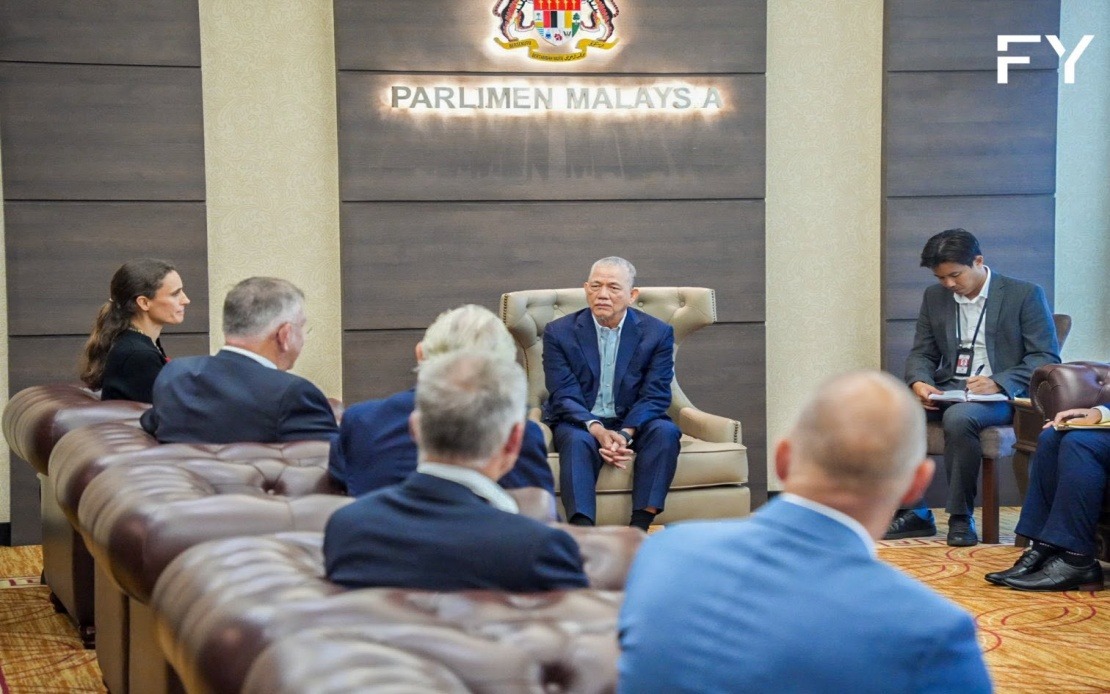
Malaysia has signalled its intention to deepen economic ties with Germany by actively pursuing investment from the country's small and medium-sized enterprises, particularly those operating in environmental technology and sustainable development fields. Deputy Prime Minister Datuk Seri Fadillah Yusof made the overture during a meeting with German Ambassador to Malaysia Silke Riecken-Daerr and representatives from the German SME Business Association at Parliament House on June 24, emphasising that such inflows align with the nation's longer-term sustainable development objectives.
The focus on green technology, renewable energy, and water management reflects Malaysia's pivot toward addressing environmental challenges whilst maintaining economic growth. These sectors have become increasingly critical as regional governments grapple with water scarcity, rising energy demands, and pressure to meet climate commitments. For German firms—many of which possess sophisticated environmental engineering capabilities—Malaysia represents both a substantial market opportunity and a testing ground for technologies that could be scaled across Southeast Asia. The deputy prime minister's explicit invitation signals that Kuala Lumpur is prepared to facilitate regulatory pathways and support frameworks for companies willing to invest in these strategic areas.
Germany's economic footprint in Malaysia is already substantial, with Fadillah noting that over 800 German companies currently operate across various sectors of the Malaysian economy. This established presence provides an infrastructure of supply chains, skilled personnel, and business relationships that makes Malaysia an attractive destination for further German investment. The mechanical engineering and manufacturing technology sectors have historically dominated German corporate activity in Malaysia, but the government's current push suggests a deliberate effort to diversify investment patterns toward sustainability-focused industries that promise both economic returns and environmental benefits.
The bilateral relationship between the two nations has matured considerably, with Germany consistently ranking among Malaysia's top trading partners. This foundation of mutual economic interest provides policymakers on both sides with incentive to explore new avenues of cooperation. The timing of the investment overture is significant, coming as global investor sentiment toward Southeast Asia strengthens and competition among regional economies to attract foreign direct investment intensifies. Malaysia's proactive approach demonstrates awareness that remaining attractive to capital requires not only stability but also clear strategic positioning in growth sectors.
Beyond immediate investment opportunities, the meeting underscored an emerging focus on human capital development through technical and vocational education partnerships. Germany's dual education system—which combines classroom instruction with apprenticeship training—has gained international recognition for producing a workforce that balances theoretical knowledge with practical skills. Malaysia's recognition of this model suggests policymakers are concerned about the quality and relevance of technical workforce training in preparing citizens for employment in advanced manufacturing and technology sectors. By studying and potentially adapting German approaches, Malaysia could enhance the competitiveness of its workforce and reduce skills mismatches that have constrained productivity growth.
The vocational training discussion carries particular relevance for Malaysian economic development strategy. As the nation seeks to transition toward higher-value manufacturing and technology services, the demand for skilled technicians, engineers, and process managers continues to outpace supply. A partnership with Germany's established TVET institutions could facilitate knowledge transfer, curriculum development, and perhaps even direct training for Malaysian instructors and students. This would represent a longer-term investment in human capital that complements direct foreign investment in physical infrastructure and technology.
Fadillah's public endorsement of the bilateral relationship emphasises that strategic cooperation benefits both partners in addressing shared challenges. For Germany, engagement with Southeast Asian economies provides access to growing markets, supply chain diversification, and opportunities to establish regional hubs for environmental technology distribution. For Malaysia, German investment brings capital, technical expertise, and access to global supply networks that can elevate the country's position in sustainable technology sectors. This mutually advantageous framing is essential for sustaining political support for investment promotion efforts on both sides.
The emphasis on green technology and renewable energy also signals Malaysia's responsiveness to evolving investor preferences and international climate commitments. Multinational investors increasingly scrutinise potential host countries' environmental performance and sustainability commitments when making location decisions. By actively promoting Malaysia as a destination for green investment, the government can strengthen its credentials with ESG-conscious capital while simultaneously advancing domestic environmental objectives. German SMEs, many of which operate under stringent European environmental regulations and sustainability mandates, may find Malaysia an attractive market for exporting technologies developed for compliance with European standards.
Water management and treatment emerge as particularly strategic sectors in this investment appeal. Southeast Asia faces mounting water stress driven by population growth, industrialisation, and climate variability. Malaysia, whilst water-rich relative to some regional neighbours, nonetheless confronts challenges in water infrastructure development, treatment efficiency, and sustainable resource management. German expertise in water technologies could address these gaps whilst creating commercial opportunities for both local and foreign investors. A successful partnership in this domain could serve as a model for broader German-Southeast Asian engagement across multiple countries facing similar challenges.
The government's explicit welcome to German SMEs rather than exclusively targeting large multinational corporations reflects a strategic recognition that smaller enterprises often possess specialised capabilities, greater agility in technology adoption, and willingness to establish long-term operations in new markets. SMEs frequently become anchors for industrial clusters and supply chain ecosystems that generate broader economic spillovers. By cultivating German SME investment, Malaysia could accelerate development of specialised industrial clusters in green technology and advanced manufacturing that attract complementary suppliers and service providers.
Looking forward, the success of this investment promotion effort will depend on translating diplomatic courtesies into concrete policy measures. This might encompass expedited visa processing for German business investors, targeted tax incentives for renewable energy and environmental technology projects, regulatory sandboxes permitting experimentation with new technologies, and facilitated access to financing through development banks. Clear communication of these facilitating measures through Malaysian embassies and business associations in Germany will be essential for converting interest into actual investment commitments.
The bilateral dialogue also hints at Malaysia's broader positioning within global value chains as they reconfigure in response to geopolitical tensions and supply chain vulnerabilities. German companies seeking to diversify away from Chinese manufacturing or reduce dependence on traditional European suppliers may view Malaysia as a strategically located alternative. By offering complementary advantages in location, labour costs, and regulatory environment alongside growing technical capabilities, Malaysia can position itself as a destination for investments motivated by both market access and supply chain resilience.

