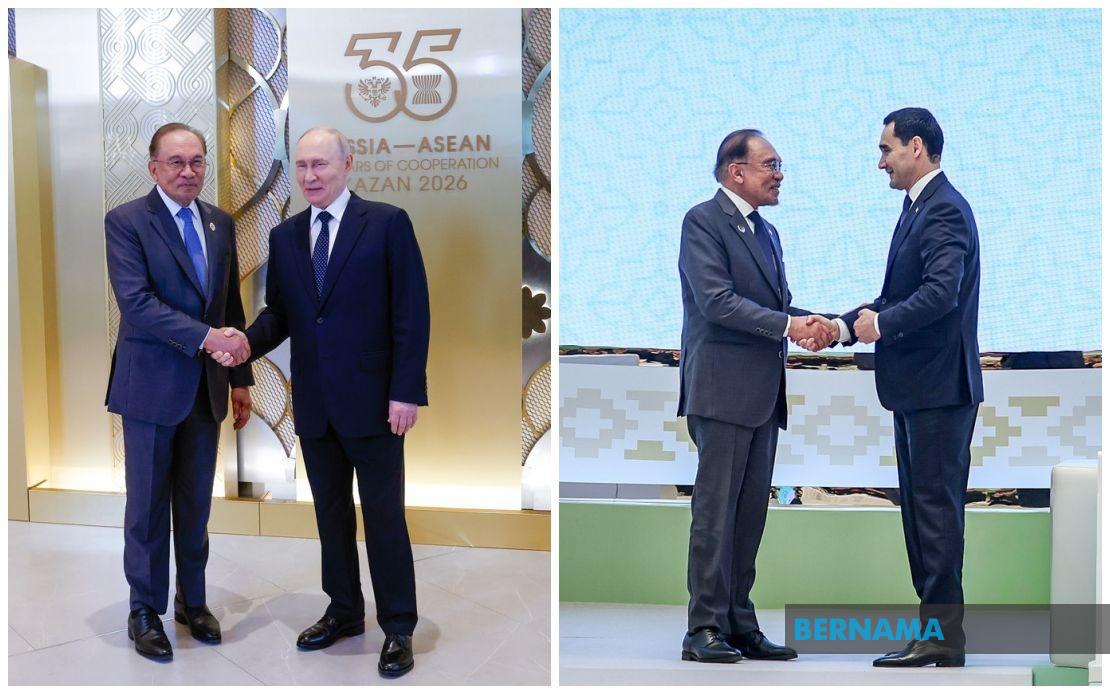
Prime Minister Datuk Seri Anwar Ibrahim's recent diplomatic missions to Russia and Turkmenistan have been widely praised by Malaysia's cabinet as a watershed moment for the country's energy security and global economic positioning. The two-day working visit to Kazan, the capital of Russia's Republic of Tatarstan, followed by engagement with Turkmenistan's leadership, represents a carefully calibrated strategy to diversify Malaysia's energy sources and deepen bilateral partnerships in a complex geopolitical landscape where energy sovereignty remains paramount.
A cornerstone achievement from the Russia leg involves securing a landmark commitment for long-term petroleum supplies spanning two decades. Housing and Local Government Minister Nga Kor Ming characterised this arrangement as transformative for Malaysia's energy independence, emphasising that multi-year agreements provide far greater stability than the traditional approach of negotiating annual or seasonal renewals. This extended supply corridor addresses longstanding concerns about energy price volatility and availability disruptions, challenges that have periodically strained Malaysia's domestic economy and fiscal position. The stability afforded by such arrangements enables more predictable planning across the energy sector and downstream industries reliant on consistent fuel availability.
The domestic implications of this energy agreement extend directly to consumer welfare and government fiscal management. The government's BUDI MADANI RON95 subsidy programme, which maintains petrol prices at RM1.99 per litre, depends on affordable feedstock availability to remain economically viable. By securing long-term supply commitments at negotiated rates, Malaysia reduces its exposure to international crude price shocks that have historically forced difficult policy adjustments. Minister Nga emphasised that the broader MADANI Government strategy deliberately pursues energy source diversification, recognising that overreliance on any single supplier or region introduces unacceptable systemic risk. The Russia arrangement, alongside existing partnerships, strengthens Malaysia's negotiating position and reduces supply-chain fragility.
Equally significant is the breakthrough securing Petronas's appointment as operator of a major gas field in Turkmenistan, one of the world's largest natural gas reserves. This development carries implications far beyond Malaysia's borders, positioning the national oil company as a globally competitive enterprise capable of managing world-class infrastructure projects. Human Resources Minister Datuk Seri R. Ramanan noted that Petronas, currently ranked 139th among Fortune Global 500 companies, possesses genuine potential to advance significantly up international rankings through effective stewardship of such high-value assets. The assignment reflects international confidence in Malaysian technical expertise, corporate governance standards, and political stability—intangible assets increasingly prized by foreign partners evaluating long-term project partnerships.
The Turkmenistan gas field opportunity also crystallises how Malaysia has repositioned itself within global energy markets over the past decade. The country has transformed from a primarily extractive economy into an increasingly sophisticated energy management actor, with Petronas demonstrating capability to compete against oil majors and state-owned enterprises from larger, wealthier nations. This evolution carries particular significance for Southeast Asian observers, as it establishes a template for how smaller regional economies can leverage technical competence and institutional credibility to punch above their weight in high-stakes international infrastructure negotiations. The precedent potentially opens similar opportunities across the region's energy sector.
Minister Ramanan highlighted that the Turkmenistan development extends beyond direct energy production into broader economic ecosystems. The project is anticipated to catalyse collaboration in technology transfer, skills development, and workforce training in advanced energy sector disciplines. These complementary benefits address Malaysia's ongoing challenge of cultivating sufficient high-skilled talent pools to support sophisticated industrial operations. By positioning Malaysian workers and companies within cutting-edge operational contexts, the arrangement contributes to human capital development strategies that Malaysian policymakers have prioritised increasingly in recent years.
The diplomatic approach evident in both visits demonstrates sophisticated strategic thinking about Malaysia's positioning in an increasingly multipolar geopolitical environment. Rather than remaining passively dependent on established energy partnerships, Prime Minister Anwar has actively cultivated relationships with diverse suppliers across different geopolitical zones. Engaging with both Russia and Turkmenistan simultaneously reflects recognition that energy security increasingly depends on maintaining pragmatic partnerships across ideological and geopolitical divides. For Malaysia, a non-aligned country navigating tensions between major powers, this approach preserves strategic flexibility while advancing concrete national economic interests.
The bilateral frameworks emerging from these visits address multiple sectors beyond energy. Both visits emphasised trade, investment, tourism, and technology cooperation as complementary pillars of strengthened Malaysia-Russia relations. This multifaceted approach generates resilience by creating numerous interdependency channels rather than concentrating the relationship narrowly around single commodities or sectors. Diversified partnership architecture proves more durable when individual sectors face cyclical pressures, as energy markets inevitably do. By embedding energy cooperation within broader economic and cultural frameworks, both governments create constituencies within each nation with vested interests in partnership sustainability.
The timing of these diplomatic initiatives reflects Malaysia's broader strategic recalibration following shifts in regional and global power dynamics. Traditional energy suppliers have diversified their customer bases and become less dependent on individual markets, increasing competition among purchasing nations. Malaysia's proactive approach to securing long-term commitments preemptively addresses potential future supply pressures. Similarly, the Petronas appointment indicates forward-thinking positioning ahead of global energy transition trajectories that will increasingly reward companies with established operational portfolios and technical expertise in diverse extraction and production environments.
For Malaysian policymakers and observers, these agreements signal tangible validation of the MADANI Government's strategic vision emphasising pragmatic international engagement and institutional capacity-building. The outcomes depend not simply on political will but on sustained execution of complex technical and commercial arrangements over extended timeframes. The twenty-year petroleum commitment and the Turkmenistan gas field operation will require continuous attention from multiple Malaysian agencies and companies to deliver promised benefits and demonstrate reliable partnership to international counterparts.
The diplomatic missions also contribute importantly to Malaysia's soft power trajectory and international reputation management. By successfully concluding high-stakes negotiations with major energy-producing nations, Prime Minister Anwar reinforces perceptions of Malaysia as a capable, stable, and serious international economic actor. This reputational dimension carries intangible but significant value, as countries evaluating potential partnerships consistently factor in track records of successful deal execution and institutional reliability. Malaysia's demonstrated ability to negotiate and implement major energy infrastructure agreements enhances its attractiveness as a potential partner for other bilateral and regional initiatives.
Looking forward, the practical implementation of these agreements will determine their ultimate success and establish precedents for future Malaysian international engagement. Petronas's performance operating the Turkmenistan gas field will either validate or challenge perceptions of Malaysian technical excellence and project management capabilities. Similarly, the twenty-year Russian supply relationship will be tested by market fluctuations, geopolitical developments, and evolving consumer requirements. Malaysia's capacity to navigate these challenges successfully while maintaining partnership stability will substantially influence the country's positioning within regional and global energy architectures throughout the coming decade.

