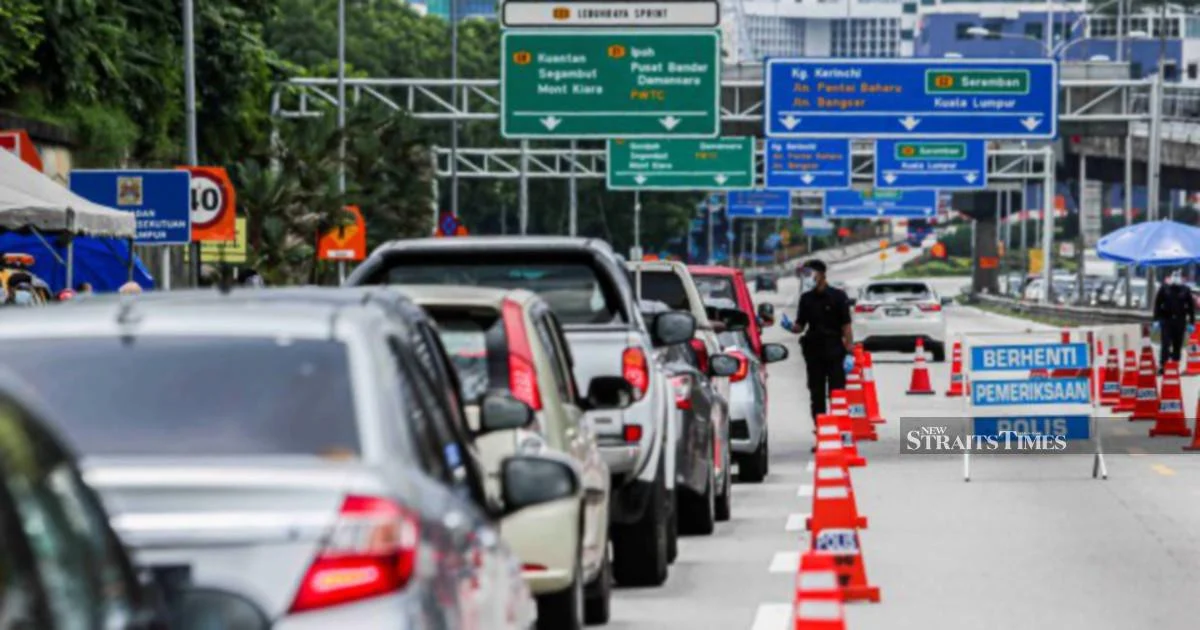
Malaysian motorists face potentially steeper financial penalties if parliament approves planned amendments to the Road Transport Act 1987, which would establish RM500 as the new maximum compound fine for more than 700 categories of road traffic violations. The proposed changes represent a significant shift in the enforcement landscape as authorities seek to tighten compliance with traffic regulations across the country.
The breadth of offences covered by this increase underscores the comprehensive nature of the legislative overhaul. Rather than targeting specific high-risk violations, the amendments would apply uniformly across a vast spectrum of traffic-related infractions, suggesting policymakers view the adjustment as a systematic recalibration of penalty structures that have remained largely unchanged for an extended period. This approach reflects a recognition that existing fine levels have lost effectiveness as inflation has eroded their deterrent impact over successive years.
For Malaysian road users, the RM500 ceiling represents a material shift in the cost of non-compliance. Current compound rates for many traffic violations have remained modest by contemporary standards, creating minimal financial incentive for drivers to modify behaviour. The proposed increase would substantially alter the calculation that motorists make when deciding whether to risk parking violations, speed limit breaches, or other infractions. Particularly for those who drive professionally or frequently, accumulating multiple compounds could result in significant annual expenses.
The timing of these amendments reflects broader regional trends in traffic enforcement. Across Southeast Asia, countries have been progressively increasing penalties in recognition that static fine structures lose effectiveness over time. Malaysia's move aligns with this pattern while remaining calibrated to local economic conditions and penalty structures in comparable jurisdictions. The RM500 figure appears designed to serve as a meaningful deterrent without crossing into punitively severe territory.
Implementation of such amendments would place additional responsibility on enforcement authorities to ensure consistent application across states and federal territories. Malaysia's decentralised traffic enforcement system—where local police, municipal authorities, and federal agencies all issue compounds—could face coordination challenges in harmonising penalties across different jurisdictions. Drivers might perceive inconsistency if similar violations result in different fines depending on which authority conducts the enforcement.
The financial implications extend beyond individual motorists. Commercial transport operators, taxi and ride-hailing services, and delivery companies would likely see increased operational costs if their fleets incur compounds at higher rates. These businesses might respond through rate adjustments passed on to consumers, potentially affecting logistics costs and service prices across the economy. Small operator margins, particularly in competitive industries, could face compression from accumulating traffic-related expenses.
Parliamentary approval remains a necessary step before these amendments take effect, and the legislative process provides an opportunity for debate about their proportionality and necessity. Supporters would likely argue that enforcement effectiveness has diminished and that penalty increases align with inflation and changing road conditions. Critics might raise concerns about disproportionate impact on low-income drivers or question whether higher fines achieve better compliance outcomes compared to other enforcement approaches.
The amendments arrive amid ongoing discussion about road safety outcomes in Malaysia. While increased penalties aim to deter violations, evidence from other jurisdictions suggests that certainty of enforcement matters at least as much as fine magnitude in influencing driver behaviour. The Road Transport Act revision therefore raises questions about whether simultaneous investment in enforcement capacity and surveillance infrastructure would accompany the penalty increases to ensure credible threat of detection.
International road safety research indicates that context-specific violations may merit calibrated responses rather than blanket increases. For instance, excessive speed in residential areas carries greater public safety implications than minor parking violations. The proposed amendments' application across 700 categories suggests a one-size-fits-all approach that might not optimally address Malaysia's specific road safety priorities. Differentiated penalties reflecting violation severity could potentially achieve better outcomes.
For interstate travellers and cross-border commerce, harmonised penalty structures offer certain advantages in clarity and predictability. Truck drivers, courier services, and regional logistics operators would benefit from knowing that traffic violations incur consistent consequences regardless of whether infractions occur in Selangor, Johor, or other states. This standardisation could reduce gaming of enforcement disparities between jurisdictions.
The proposed changes also intersect with emerging mobility trends in Malaysia. As ride-hailing services expand and shared mobility becomes more prevalent, the enforcement framework must accommodate diverse vehicle categories and operational models. Increases to compound rates affect these emerging sectors alongside traditional personal vehicle use, raising questions about whether penalties should differentiate between commercial and non-commercial drivers.
Parallel to penalty increases, observers suggest that authorities should simultaneously address public perceptions of enforcement fairness and consistency. Motorists in Malaysia frequently report frustration with perceived arbitrary application of traffic rules and selective enforcement. Implementing higher compounds without reinforcing transparent, consistent enforcement practices risks generating compliance resistance rather than acceptance.
As parliament considers these amendments, broader contextualisation matters for understanding their likely impact. Malaysia's road safety performance relative to comparable economies, the effectiveness of previous enforcement initiatives, and potential alternative measures all warrant consideration alongside simple penalty escalation. The RM500 ceiling marks a notable policy inflection point that will reshape the cost-benefit calculations shaping millions of daily driving decisions across the country.

