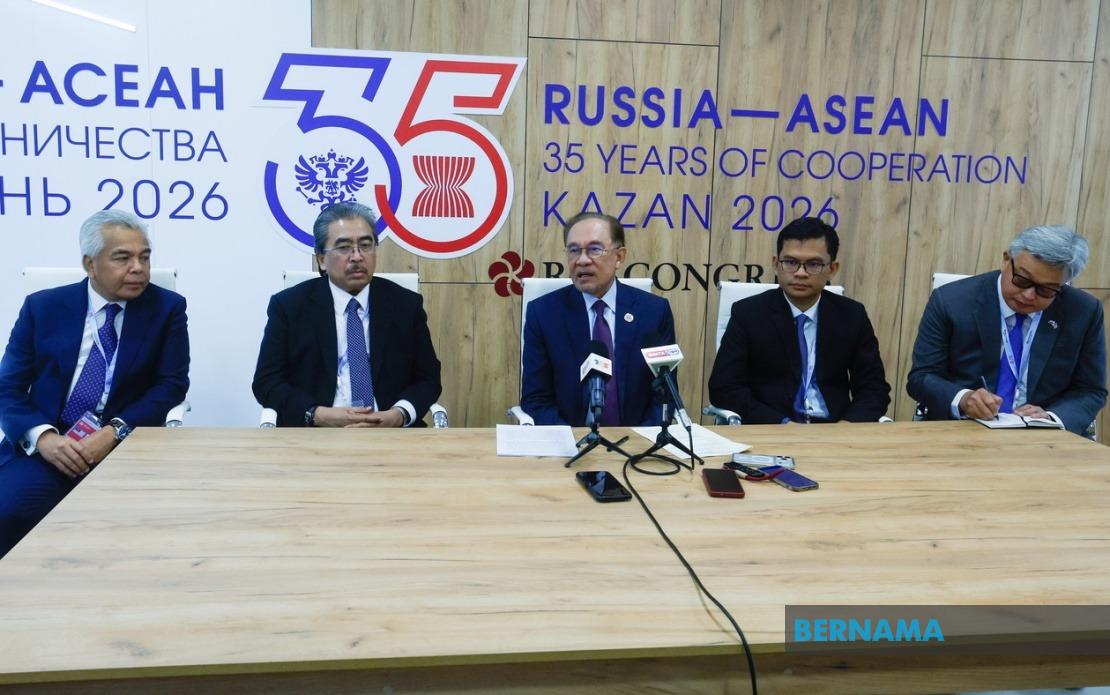
Prime Minister Datuk Seri Anwar Ibrahim has called for Malaysia to move swiftly on establishing visa-free travel and launching direct flight connections with Russia, measures he argues are essential for reversing the country's lagging performance in attracting Russian tourists. Speaking to journalists in Kazan following his attendance at the ASEAN-Russia Commemorative Summit, Anwar highlighted the stark disparity between Malaysia's visitor numbers from Russia and those achieved by regional competitors, noting that the gap reflects systemic barriers rather than lack of interest from the Russian market.
The Prime Minister pointed to concrete figures to underline the scope of the opportunity being missed. Russia sends approximately five million tourists annually to Türkiye and two million to Thailand, yet Malaysia receives only around 100,000 visitors from Russia each year. This three-to-fifty-fold difference cannot be attributed to Malaysia's attractions or hospitality sector capacity, but rather to the practical obstacles that Russian citizens encounter when planning trips to the country. Anwar's remarks suggest frustration with the pace of institutional reform within Malaysia's tourism and immigration frameworks, systems he characterised as antiquated and resistant to modernisation.
The Prime Minister identified multiple friction points that deter Russian travellers. Flight connectivity stands as a primary constraint; without direct air services between major Russian cities and Malaysian hubs, the journey becomes cumbersome and costly, particularly for price-sensitive leisure travellers. Equally significant are payment mechanisms, which Anwar described as unnecessarily restrictive. Russian tourists often use banking and digital payment systems that are not seamlessly integrated with Malaysian merchant infrastructure, forcing them to navigate complex currency conversion processes or carry large amounts of physical currency. These technical and financial hurdles compound the visa requirements already in place, creating a cumulative disincentive that channels Russian tourist spending toward more accessible destinations.
Anwar's diagnosis of the problem extends beyond mere logistics to encompass what he views as institutional overcautiousness within Malaysia's policy establishment. He suggested that some government agencies and decision-makers remain constrained by concerns about how other countries, particularly major Western powers, might perceive or react negatively to closer economic and travel integration with Russia. This concern has become more pronounced since Russia's 2022 invasion of Ukraine, which prompted various international sanctions regimes and created an informal stigma around deepening bilateral ties with Moscow. However, Anwar's implicit argument is that Malaysia's national interests—particularly in diversifying its tourism revenue streams and expanding economic partnerships—should not be held hostage to geopolitical anxieties generated elsewhere.
The Prime Minister drew a parallel with Iran, noting that similar barriers and hesitations affect Malaysia's relationship with that country as well. Both Russia and Iran have been subjected to international sanctions frameworks led by Western nations, yet both represent substantial untapped markets for Malaysian tourism and services. Anwar's reasoning suggests that Malaysia should assess its own strategic interests independently and pursue economic opportunities that benefit its citizens, rather than adopting a reflexive posture of deference to the preferences of external powers. This stance reflects a broader theme in Anwar's recent rhetoric about Malaysia charting its own diplomatic course while maintaining pragmatic engagement with all nations.
The ASEAN-Russia Commemorative Summit, which provided the platform for Anwar's comments, itself underscores the importance that Southeast Asian governments place on their Russian relationships. Despite geopolitical tensions elsewhere, ASEAN nations have deliberately maintained diplomatic engagement with Russia, avoiding the kind of wholesale isolation that some Western governments have attempted to impose. Malaysia's participation in this summit, coupled with Anwar's direct advocacy for deepening bilateral ties, signals that the government views Russia as a significant long-term economic and political partner deserving of institutional accommodation.
Implementing Anwar's agenda would require coordination across multiple agencies. Immigration authorities would need to streamline or eliminate visa requirements for Russian nationals, a decision that must be balanced against security and border management considerations. Malaysia Airlines and other carriers would need to conduct route viability assessments for direct services between Russian cities—likely Moscow, St. Petersburg, and possibly others—and Malaysian airports in Kuala Lumpur, Penang, or Johor Bahru. Banking regulators and payment system operators would need to establish clearer protocols for Russian financial instruments and digital wallets. Each of these reforms faces bureaucratic inertia and, in some cases, institutional resistance rooted in post-2022 geopolitical anxieties.
For Malaysia's tourism sector, which has struggled with revenue volatility and over-dependence on regional visitors from Singapore, China, and Indonesia, the Russian market represents genuine diversification potential. Russian tourists, particularly those from Moscow and other major urban centres, tend to have relatively high disposable incomes and long holiday periods, particularly during winter months when Malaysia's weather is most appealing. Direct flights would slash travel times and costs, making Malaysia competitive with Thailand and Türkiye. Visa-free arrangements would eliminate a significant administrative burden that deters impulse or leisure travel. The cumulative effect could realistically double or triple Russian visitor numbers within two to three years, generating substantial foreign exchange earnings and employment in hotels, restaurants, tour operations, and retail sectors.
Anwar's intervention also carries implications for Malaysia's broader positioning within ASEAN and the Indo-Pacific region. By explicitly calling for closer economic ties with Russia despite geopolitical pressures, he is reinforcing the principle of strategic autonomy—the idea that Southeast Asian nations should not allow themselves to be pressured into alignments that conflict with their economic interests. This posture has become increasingly important as the region navigates great power competition between the United States and China, and as Russia seeks to maintain influence in Asia despite Western sanctions. Malaysia's willingness to facilitate tourism and economic exchange with Russia, within appropriate security and regulatory frameworks, demonstrates that ASEAN countries are unwilling to become proxies in broader geopolitical conflicts.
The practical timeline for implementing Anwar's proposals remains uncertain. Establishing visa-free travel typically requires bilateral negotiations and domestic legislative changes, processes that can take many months. Direct flights depend on airline commercial assessments and may require government incentives or subsidies if routes prove initially unprofitable. Payment system integration with Russian banks necessitates coordination with international financial networks that operate under sanctions compliance regimes, adding a further layer of complexity. Nevertheless, Anwar's public commitment to this agenda signals that the government views it as a priority, and bureaucratic machinery typically accelerates when political leadership applies sustained pressure. Over the medium term, his call for expedited action may catalyse the institutional reforms necessary to unlock Malaysia's dormant potential in the Russian tourism market.

