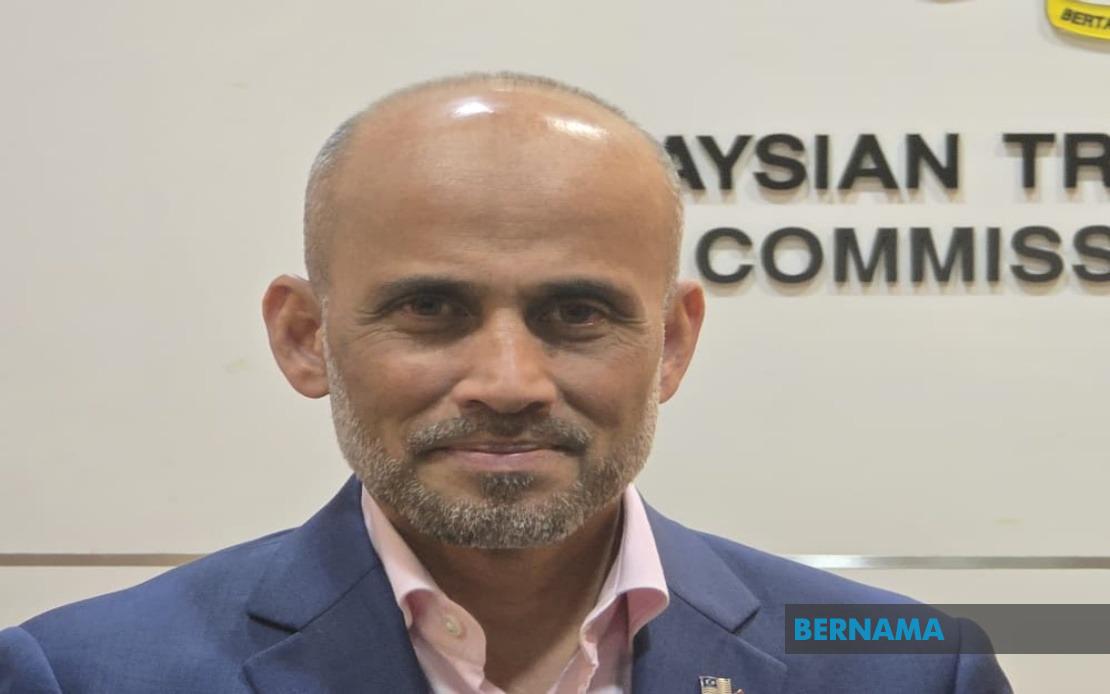
Datuk Dr Azfar Mohamad Mustafar, Malaysia's High Commissioner to Singapore, has praised the resilience of bilateral relations between the two neighbouring countries, highlighting how collaborative efforts have fortified ties during a period marked by unprecedented disruptions and international instability. Speaking ahead of his departure to take up the role of High Commissioner to the United Kingdom from July 1, Azfar reflected on his five-year tenure in the city-state, a period that tested the foundations of the Malaysia-Singapore partnership in ways both nations had not previously experienced.
When Azfar assumed office in June 2021, the world remained in the grip of the COVID-19 pandemic, which presented immediate and complex challenges to cross-border relations. The closure of land borders, implemented as a containment measure, disrupted the movement of tens of thousands of Malaysian workers and business professionals who rely on daily commuting to Singapore to earn their livelihoods and maintain economic connections. This situation created a cascade of difficulties beyond simple logistical inconvenience. Consular services became strained as the volume of Malaysian citizens requiring assistance in Singapore remained substantial despite travel restrictions. Azfar highlighted that navigating these issues demanded swift and coordinated responses from both governments, underscoring the importance of maintaining functional diplomatic channels even when borders were physically sealed.
The economic dimension of Malaysia-Singapore relations has demonstrated considerable strength in the period following the worst phases of the pandemic. Trade and investment flows between the two countries have not merely recovered to their pre-pandemic levels but have shown signs of acceleration. Singapore remains firmly positioned among Malaysia's most significant trading partners, a status built over decades of integration across multiple economic sectors. This trading relationship provides substantial direct benefits to Malaysian businesses and workers while serving as a pillar of regional economic stability in Southeast Asia.
Beyond traditional merchandise trade, the investment relationship holds particular strategic importance for Malaysia's development ambitions. Singapore investors have consistently channelled capital into Malaysian enterprises and infrastructure projects, recognizing opportunities for profitable investment whilst contributing to job creation across the country. Azfar noted that the recent establishment of the Johor-Singapore Special Economic Zone represents a new frontier in bilateral economic cooperation, offering structured opportunities for enterprises from both sides to benefit from an integrated economic corridor. The High Commissioner expressed confidence that this initiative, coupled with other emerging partnership opportunities, would attract even greater Singaporean investment into Johor in the coming years, potentially transforming the state into a major hub for cross-border commercial activity.
Looking toward the future architecture of regional integration, Azfar highlighted two significant areas where Malaysia and Singapore are positioned to work in tandem. First, Singapore's assumption of the ASEAN chairmanship in 2025 presents an opportunity for Malaysia to support its neighbour's agenda of deepening economic integration across the ten-member bloc. Malaysia recognizes that a well-coordinated ASEAN, with Singapore providing strategic direction during its chairmanship year, ultimately benefits all member states by creating a more cohesive and competitive regional bloc capable of negotiating effectively with major powers and managing shared challenges.
The second major collaborative initiative involves the ASEAN Power Grid, an ambitious project designed to create an interconnected electricity network across Southeast Asia. This infrastructure initiative carries profound implications for energy security, economic efficiency, and environmental sustainability across the region. By working closely with Singapore on the realization of this vision, Malaysia contributes to a long-term structural transformation that transcends bilateral concerns and addresses the collective energy needs of member states. Such infrastructure projects historically generate significant economic activity, create employment opportunities, and position participating nations as pioneers of regional integration.
Azfar's career trajectory reflects the depth of Malaysia's diplomatic engagement with the world. Since joining the Foreign Ministry in 2001 after a decade in the Administrative and Diplomatic Officer cadre, he has represented Malaysia in strategic locations, including a posting as Ambassador to France from 2018 to 2021. His appointment as High Commissioner to Singapore represented a natural progression in his diplomatic career, given that Malaysia's relationship with Singapore carries outsized importance relative to the city-state's size, owing to geographic proximity, economic interdependence, and historical significance.
The diplomatic language employed by Azfar in reflecting on his tenure should not obscure the genuine complexity of Malaysia-Singapore relations. Whilst the two nations have undoubtedly achieved remarkable economic integration and developed sophisticated mechanisms for managing bilateral affairs, the relationship remains subject to periodic tensions rooted in longstanding historical grievances, resource management disputes, and differing strategic perspectives. The fact that both governments have managed to navigate these structural tensions whilst simultaneously expanding cooperative frameworks in trade, investment, and regional initiatives speaks to the maturing of bilateral diplomacy.
For Malaysian readers and businesses, the stability and growth of the relationship with Singapore has direct practical implications. The more than two million Malaysian workers who cross into Singapore regularly depend on a functioning, predictable bilateral framework. Malaysian companies with supply chain operations in Singapore require confidence in the regulatory and political environment. Investors in joint ventures spanning both countries need assurance that disputes can be resolved through established mechanisms rather than descending into political crisis. Azfar's assessment, delivered at the conclusion of his tenure, suggests that these foundational conditions remain intact and are indeed strengthening.
The departure of an experienced diplomat like Azfar from the Singapore posting represents a routine element of career progression in foreign services, yet it also marks a natural moment for assessment of bilateral relations. His successor will inherit a partnership that, by his account, has weathered extraordinary challenges and emerged stronger. The investments both nations are making in new economic zones, infrastructure cooperation, and regional institutional roles suggest a mutual commitment to deepening rather than merely maintaining the relationship, an orientation that should provide Malaysian stakeholders with reasonable confidence about near-term prospects.

