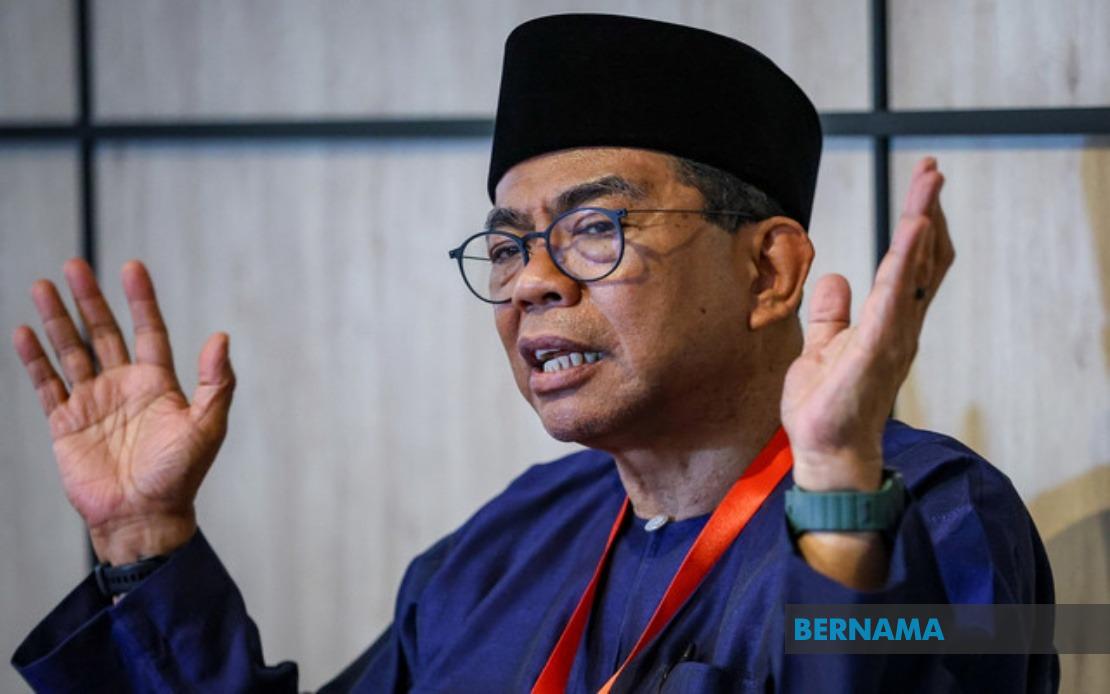
Malaysia's Defence Minister Datuk Seri Mohamed Khaled Nordin has reaffirmed the government's resolute position regarding Israeli nationals, asserting that enforcement actions taken this month are consistent with the country's decades-long policy of non-recognition. Speaking in Johor Bahru on July 25, Mohamed Khaled underscored that Malaysia maintains an uncompromising stance on the matter, with security measures applied uniformly to ensure compliance with existing regulations.
The recent expulsions stemmed from allegations that Israeli nationals had entered Malaysia under assumed identities, with connections to the Network School incident in Forest City. Mohamed Khaled clarified that preventive measures were necessary to maintain the integrity of this policy, emphasising that the government had no intention of permitting such individuals to remain within Malaysian territory. The administration, he stressed, continues to enforce borders strictly in accordance with longstanding directives that prohibit Israeli entry regardless of circumstances or claimed justifications.
These developments have prompted diplomatic tension with Washington. On July 21, eight members of the United States Congress issued a formal letter to Secretary of State Marco Rubio expressing concern about Malaysia's actions and threatening consequences for bilateral relations. The lawmakers specifically called for a review of security and economic partnerships between the two nations, signalling potential repercussions for Malaysia's participation in regional defence arrangements and trade frameworks that have underpinned regional stability.
Most pointedly, the congressional group demanded that Malaysia reverse its position within a fifteen-day window or face suspension of funding for the International Military Education and Training (IMET) programme, which has historically provided Malaysian military personnel with professional development opportunities in the United States. This ultimatum represents a significant escalation, linking Malaysia's domestic policy decisions to tangible consequences affecting defence cooperation and military modernisation efforts that have long been cornerstones of Malaysia-US strategic engagement.
Mohamed Khaled, however, dismissed these threats with remarkable equanimity, suggesting that the dispute remained fundamentally a matter between the United States Congress and its own administration. He stated categorically that Malaysia's principled stance would not shift based on external pressure, nor would the government reconsider a policy that has remained intact across multiple administrations and political cycles. In his assessment, the recent IMET funding controversy represented a clash of values rather than a disagreement that could be resolved through compromise or negotiation.
Notably, Mohamed Khaled reported that IMET programme funding for Malaysia had not actually been suspended or interrupted despite the congressional demands, indicating that the administration in Washington has not yet acted on the lawmakers' recommendations. This distinction matters considerably, as it suggests that while Congress voices strong objections, the executive branch maintains greater pragmatism regarding the strategic utility of the Malaysia-US defence relationship. The gap between congressional rhetoric and executive action may provide some breathing room for diplomatic resolution, though the fundamental positions of both countries remain poles apart.
Prime Minister Datuk Seri Anwar Ibrahim has similarly hardened Malaysia's public posture on the issue. In statements made prior to Mohamed Khaled's remarks, Anwar declared unequivocally that the government would expel any Israeli national discovered within Malaysian borders, framing the commitment as non-negotiable rather than subject to reconsideration. This unified messaging from both the Defence Minister and Prime Minister signals that Malaysia's government spans the political spectrum in supporting this position, making reversal unlikely absent extraordinary circumstances.
Security agencies have launched comprehensive investigations into the Network School allegations, seeking to determine the full scope of any Israeli involvement or presence. These inquiries extend beyond the specific incident that prompted the expulsions, reflecting broader government concern about potential infiltration or espionage activities that might exploit Malaysia's openness to international education and business ventures. The thoroughness of these investigations underscores the seriousness with which the government treats breaches of its Israel policy.
The broader context for Malaysian policymakers involves balancing principles against pragmatism. Malaysia's non-recognition of Israel reflects deep historical commitments to Palestinian causes and Islamic solidarity, positions that command considerable public and parliamentary support. Simultaneously, Malaysia pursues extensive defence and economic cooperation with the United States, making confrontation costly. The current impasse reflects this fundamental tension, with neither side willing to yield ground on issues they regard as fundamental.
For Malaysia and the Southeast Asian region, this standoff carries implications extending beyond bilateral relations. As a significant defence partner in a strategically vital zone, Malaysia's defence relationship with Washington influences broader regional security architectures and military modernisation trajectories. Other ASEAN states with similar non-recognition policies but closer defence ties to the United States will observe how Malaysia navigates this challenge, potentially reshaping expectations about the compatibility of pro-Palestinian positions with Western security partnerships.
The expulsion incident also raises practical questions about enforcement and consistency. Malaysia's borders see significant movement of foreign nationals, requiring security services to identify individuals attempting entry under false documentation. The Network School case, whatever its specifics, has highlighted vulnerabilities in identity verification systems and the potential for sophisticated actors to circumvent safeguards designed to prevent prohibited individuals from entering the country.
Moving forward, Malaysia appears positioned for protracted disagreement with elements of the United States Congress. The government's public statements contain no indication of flexibility, while congressional critics show no sign of relenting in their demands. The crucial variable remains the position of the executive branch, which must ultimately determine whether funding measures or other consequences materialise. For now, Malaysian policymakers have calculated that defending their established position carries less political cost domestically than capitulating to external pressure, regardless of the diplomatic and strategic consequences.

