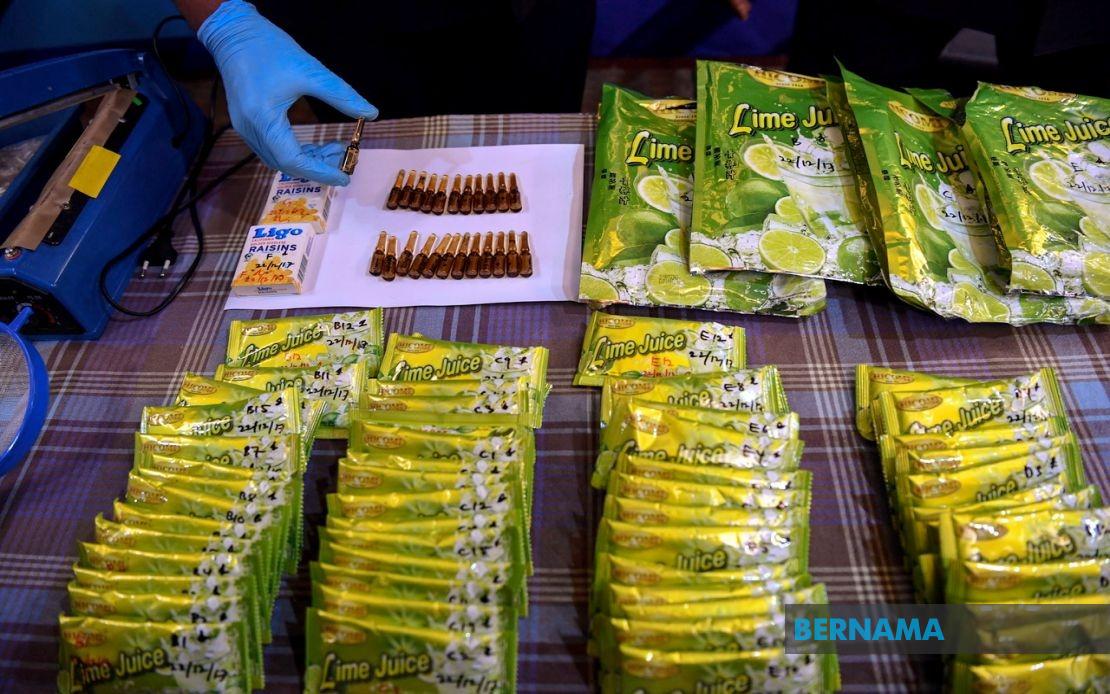
Malaysia is mounting an aggressive campaign against the proliferation of synthetic drugs, with the Home Ministry warning that methamphetamine, fentanyl, and psychoactive tablets colloquially known as "piu-piu" now represent one of the nation's most pressing security challenges. Home Minister Datuk Seri Saifuddin Nasution Ismail disclosed that these substances have recently become available in domestic markets, fundamentally altering the country's drug trafficking landscape and creating what authorities characterise as a public health emergency demanding immediate intervention at every level of government.
The scale of police activity reflects the severity with which authorities are treating the situation. Between 2023 and June 2026, the Royal Malaysia Police logged 238,704 arrests across the country stemming from various synthetic drug-related offences, underscoring the pervasiveness of the problem and the resource-intensive nature of enforcement operations. This figure encompasses dealers, traffickers, and users caught in possession, revealing that the challenge extends beyond organised crime networks to encompass widespread recreational use that poses secondary public order concerns. The steady accumulation of arrests over this three-year window suggests that despite increased police activity, supply continues flowing into communities, indicating either sophisticated trafficking networks or insufficient disruption of supply chains at critical points.
In response, police have launched coordinated operations including Op Tapis and Op Tapis Khas across multiple terrain types—urban centres, agricultural regions, and geographically isolated areas. These operations benefit from inter-agency cooperation involving the National Anti-Drugs Agency and Royal Malaysian Customs, creating a more comprehensive enforcement architecture than police efforts alone could achieve. The geographical scope is significant because it reflects recognition that synthetic drug distribution is not confined to major cities; rural communities and remote settlements equally require protective measures, a reality that complicates logistics and resource allocation for already-stretched enforcement agencies.
Technological modernisation has become integral to enforcement strategy. Authorities have deployed drones and surveillance camera networks to monitor trafficking routes and detect clandestine drug activities, particularly in areas where foot patrols prove insufficient or dangerous. These tools enable intelligence-gathering on a scale previously unattainable and provide real-time operational advantages during raids and interdiction efforts. However, technological deployment raises questions about sustainability—such systems require substantial capital investment, ongoing maintenance, technical expertise, and integration with existing police procedures, challenges that smaller regional police forces may struggle to manage effectively.
The legal framework governing enforcement is undergoing deliberation within government. Officials are weighing amendments to the Dangerous Drugs Act 1952 specifically designed to classify newly emerging synthetic drugs and New Psychoactive Substances under the legislation's schedules. This legislative approach addresses a persistent difficulty in drug enforcement: as chemists synthesise novel compounds to circumvent existing prohibitions, laws struggle to keep pace. Fentanyl analogues and other designer opioids represent particularly dangerous examples of this pattern, since they can be exponentially more potent than traditional heroin, substantially elevating overdose fatality risks. Updating legislation requires balancing speed of response against parliamentary procedure, creating inevitable windows where new substances remain technically unscheduled.
Sarawak illustrates both the territorial scope and operational intensity of current enforcement. Between January and early June this year, state authorities arrested 7,097 individuals, comprising 342 traffickers, 1,314 people detained for possession, and 5,441 documented drug users. During this same brief six-month window, seizures totalled 418.01 kilogrammes of drugs valued at RM53.73 million—figures suggesting either substantial trafficking flows through the state or particularly effective enforcement operations. The confiscation of RM1.95 million in syndicate assets indicates that authorities are pursuing financial disruption strategies alongside traditional arrests, attempting to undermine the economic incentives driving trafficking organisations.
Detention under specialised provisions demonstrates a multi-pronged approach extending beyond criminal prosecution. Thirteen individuals were detained under the Dangerous Drugs (Special Preventive Measures) Act 1985, a separate legal instrument that permits incapacitation of high-risk offenders outside standard criminal conviction procedures. Additionally, 131 individuals faced action under Section 39C of the Dangerous Drugs Act 1952, provisions typically directed at hardcore addicts. These mechanisms reflect acknowledgment that traditional prosecution alone proves inadequate for managing entrenched addiction and preventing recidivism among chronic users, even if they raise civil liberties considerations that merit ongoing scrutiny.
Prevention programming aims to address demand-side pressures that fuel trafficking. Between 2023 and June 2026, authorities conducted 1,144 drug prevention programmes nationwide, targeting public awareness and community education on synthetic drug dangers. This prevention architecture emphasises community policing approaches, seeking to transform neighbourhoods into stakeholders in enforcement rather than passive subjects of police activity. Such programmes likely include school-based education, workplace wellness initiatives, and community leader engagement, though the effectiveness of prevention messaging against the increasingly potent and accessible designer drugs remains empirically uncertain.
Enhanced forensic capabilities represent another dimension of modernisation. Laboratories are being upgraded to identify and profile emerging synthetic drugs, fentanyl analogues, and novel synthetic opioids, enabling faster detection and more sophisticated understanding of trafficking patterns and user demographics. This technical capacity generates intelligence that informs both tactical enforcement and strategic policy adjustments. However, forensic laboratory modernisation requires sustained funding, continuous staff training, and international coordination on analytical standards—commitments that may prove challenging given competing budget pressures across government agencies.
The identification of fentanyl and related opioid synthetics as priority threats reflects global trends now reaching Southeast Asia. Fentanyl's exceptional potency—measured in microgrammes rather than milligrammes—means that distribution networks require minimal physical product quantities, making detection and disruption markedly more difficult than heroin trafficking. Users often lack awareness of fentanyl's presence in street drugs, rendering overdose risks particularly acute. The appearance of such substances in Malaysia's drug markets, historically more dominated by heroin and methamphetamine, signals evolution in international trafficking patterns and the extent to which Malaysian networks have integrated into global synthetic drug supply chains.
For Malaysian policymakers and regional observers, the Home Ministry's posture reveals acknowledgment that conventional enforcement approaches require continuous refinement. Yet enforcement intensity, technological investment, and legal amendments must ultimately confront a structural reality: demand for psychoactive substances persists across all demographic and geographic segments, and supply-side disruption alone cannot resolve underlying drivers of addiction and recreational drug use. The question facing Malaysia and neighbouring states involves whether current enforcement trajectories can meaningfully reduce availability and use, or whether they represent resource-intensive management of an intractable social problem requiring complementary public health and addiction treatment investments that remain comparatively underfunded within the regional policy landscape.

