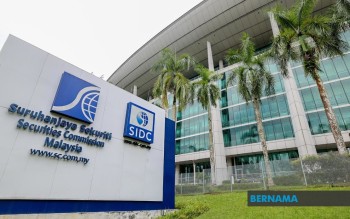
Malaysia's government and the Securities Commission are intensifying efforts to position the country as a gateway for Russian capital into the Islamic finance sector, signalling a strategic pivot toward emerging markets in Central Asia and Eastern Europe. The Ministry of Finance confirmed this week that the government remains committed to nurturing a comprehensive Islamic finance infrastructure capable of attracting foreign investors, with particular emphasis on Russia and the wider Central Asian region.
The Securities Commission has been tasked with leading several high-level cross-border initiatives designed to explore investment opportunities and strengthen bilateral financial ties. Among the most significant is a planned exploratory mission to Central Asia scheduled for 2026 or 2027, undertaken under Malaysia's broader internationalisation agenda for its Islamic capital market. This visit represents a deliberate expansion of Malaysia's diplomatic and financial outreach beyond traditional markets, reflecting recognition that Islamic finance demand extends well beyond the Middle East and Southeast Asia.
These initiatives carry strategic importance at multiple levels. The exploratory visit will focus on assessing market readiness in the Central Asian region, identifying potential financial partnerships, and establishing networks among key stakeholders in Russia and neighbouring countries. Critically, the mission aims to construct an Islamic finance ecosystem that bridges Malaysia with the broader Eurasian market, creating new pathways for cross-border transactions and investment flows governed by shariah principles.
A particularly intriguing development emerged following May 2025 engagement with the Head of the Republic of Tatarstan, who expressed interest in adopting Malaysia's Islamic finance development model. This signals potential demand for Malaysia to export its accumulated expertise and institutional knowledge in building Islamic financial systems. Such advisory services represent a valuable source of revenue and soft power for Malaysia's financial services industry, encompassing shariah advisory work, specialised consultancy, professional training programmes and capacity-building initiatives tailored to foreign markets seeking to establish or strengthen their own Islamic finance frameworks.
Supportive infrastructure for this expansion is already developing. The Securities Commission has conducted a series of bilateral meetings with Russian counterparts, including engagements with the Central Bank of Russia and the Saint Petersburg International Mercantile Exchange (SPIMEX) in both 2023 and 2025. These meetings have created formal channels for dialogue and laid groundwork for more substantial financial cooperation. The frequency and continuity of these interactions demonstrate that Malaysia's approach is not merely rhetorical but backed by sustained institutional engagement.
The government's vision extends beyond attracting Russian foreign direct investment into Malaysia's financial markets. Instead, officials describe Malaysia's prospective role as functioning as a bridge connecting Russian investors with global markets, leveraging the country's established position as a recognised Islamic finance centre while simultaneously offering Russian capital access to opportunities across Asia and beyond. This positioning requires Malaysia to maintain competitive regulatory standards and continuously innovate its financial products to remain attractive in increasingly sophisticated global markets.
To support this ambition, the Securities Commission has embedded these objectives into Malaysia's Capital Market Masterplan 2026-2030. This five-year strategic framework emphasises strengthening regulatory competitiveness, accelerating product innovation and deepening international collaboration. The masterplan effectively institutionalises the pursuit of Russian and Central Asian investors within Malaysia's long-term financial development strategy, ensuring that these efforts receive sustained policy support and resource allocation beyond the tenure of any individual administration.
The government has also clarified its openness to Russian investment, provided such capital flows comply with Malaysia's domestic legal framework and international standards. This conditionality is important, particularly given ongoing geopolitical sensitivities surrounding Russian financial activities in Western-aligned jurisdictions. By explicitly tying Russian investment to adherence to established regulatory norms and international obligations, Malaysia signals its commitment to financial integrity while remaining commercially pragmatic about welcoming legitimate capital regardless of origin.
Understanding Malaysia's appeal to Russian investors requires recognising the unique position the country occupies within global Islamic finance. Malaysia hosts the world's most developed Islamic capital markets, including the largest Islamic bond (sukuk) market and a sophisticated ecosystem of shariah-compliant financial institutions. For Russian investors seeking exposure to Islamic finance without the operational and reputational complexities of establishing presence in the Middle East, Malaysia offers both regulatory sophistication and geographic proximity to Asian growth markets. Additionally, Malaysia's track record in translating Islamic financial principles into modern institutional practice provides a proven model that Central Asian nations, including Russia's Muslim-majority regions, are increasingly keen to adopt.
The broader geopolitical context adds depth to this initiative. As traditional Western financial channels become more restricted for certain jurisdictions, alternative financial hubs gain significance. Malaysia's positioning as a bridge between Islamic finance principles, Asian growth markets and increasingly engaged Eurasian economies could create substantial competitive advantage if executed effectively. The approach also aligns with Malaysia's wider foreign policy of maintaining balanced international relationships and presenting itself as a reliable, neutral financial hub open to responsible investors from all regions.
Success in attracting Russian capital to Malaysia's Islamic finance sector would carry symbolic importance beyond mere financial metrics. It would demonstrate that Islamic finance has transcended its regional origins to become genuinely global in scope, capable of accommodating investors from diverse religious and cultural backgrounds who recognise the commercial and ethical merits of shariah-compliant investment structures. For Malaysia, such success would reinforce its claimed status as the world's leading Islamic finance hub and generate substantial revenue through financial services exports to the Russian and Central Asian markets.

