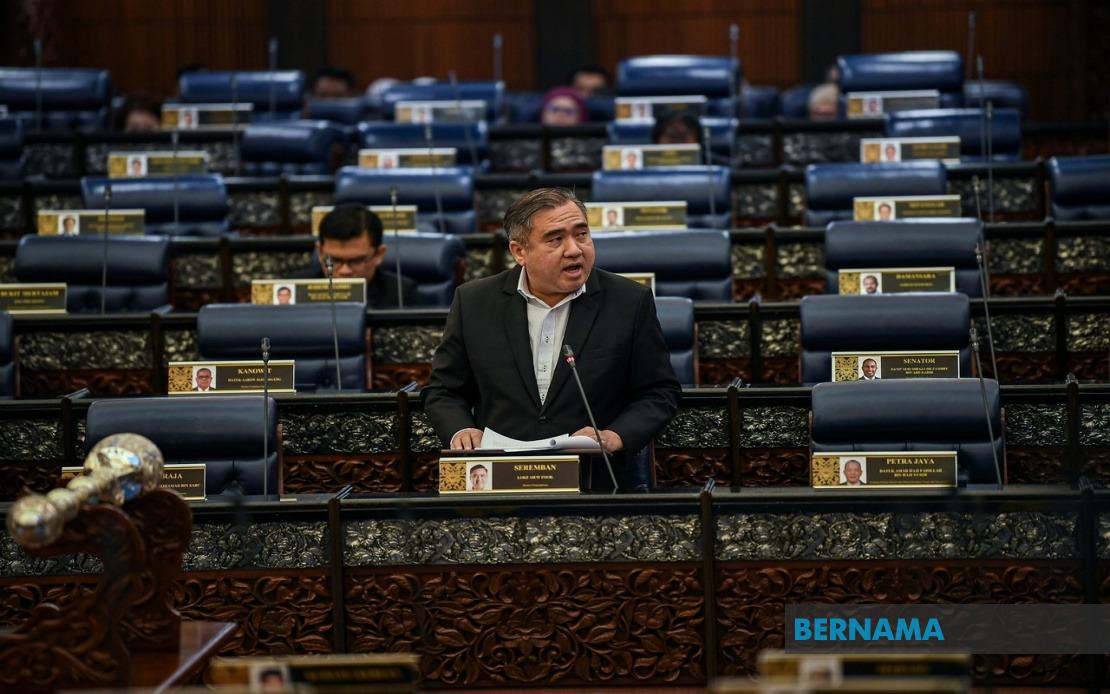
Malaysia has moved to crack down on dangerous street racing by introducing a dedicated legal framework that treats the activity as a standalone criminal offence rather than a derivative of existing traffic violations. Transport Minister Anthony Loke tabled the Road Transport (Amendment) Bill 2025 in Parliament, proposing Section 42A of the Road Transport Act 1987 to specifically criminalise racing and speed trials conducted on public roads. The new legislative approach marks a significant shift in enforcement strategy, addressing a longstanding gap that has hampered authorities' ability to intervene before accidents occur.
The escalating penalty structure reflects the government's determination to deter repeat offenders. First-time violators will face financial penalties between RM2,000 and RM10,000, imprisonment up to two years, or a combination of both. For those convicted a second or subsequent time, the consequences become considerably harsher, with fines ranging from RM5,000 to RM20,000 alongside potential incarceration stretching to five years. This graduated approach allows courts flexibility in sentencing while establishing clear thresholds that increase substantially for habitual offenders.
A central limitation of the existing legal framework has been the dependency on dangerous driving statutes, which typically require evidence of an accident, injury, or fatality before prosecution can proceed effectively. Under current provisions, authorities struggle to take preventive action against street racers who manage to complete their activities without causing harm. Loke emphasised that the proposed amendment eliminates this evidentiary barrier, enabling enforcement officers to pursue cases based solely on the racing activity itself, regardless of whether collateral damage or injuries materialised.
The practical implications are substantial for Malaysia's roads, particularly in urban areas where motorcycle and car racing has become an ongoing public safety concern. Consider a scenario where multiple motorcyclists engage in competitive speed trials on a federal route during late evening hours. Presently, law enforcement can intervene only if the activity results in a collision or injury. Under the new legislation, officers can take immediate action simply upon observing two or more vehicles racing against one another, without awaiting catastrophic outcomes. This preventive capacity addresses a fundamental enforcement challenge that has frustrated traffic police and concerned citizens alike.
Beyond street racing itself, the Bill introduces additional protective measures targeting those who facilitate illegal racing operations. Section 110B creates a new offence encompassing individuals who obstruct enforcement officers, interfere with their vehicles, assault or threaten traffic police, or—critically—share real-time information about enforcement operations to help racers evade detection. This provision extends the legal net to social media networks and communication channels through which racing communities have historically coordinated avoidance strategies. Penalties for these obstructive activities include fines between RM10,000 and RM50,000, imprisonment of one to five years, or both, with the offence classified as arrestable without requiring a warrant.
The information-sharing prohibition addresses a modern enforcement challenge exacerbated by digital connectivity. Racing enthusiasts and their networks have utilised messaging applications, social media platforms, and dedicated forums to alert participants about police checkpoints and patrol patterns, effectively undermining road safety operations. By criminalising this intelligence-sharing activity, the amendment attempts to disrupt the logistical coordination that has enabled street racing to persist across multiple locations and times.
Parallel to these core provisions, the Bill seeks to modernise penalty structures across multiple traffic offences. The government proposes revising minimum fines and compound limits for selected violations, with the baseline increasing from RM300 to RM500. However, Loke clarified that enforcement officers will exercise discretion in determining the precise compound amount, considering factors such as offence severity, timing of settlement, and established procedural guidelines. This flexibility ensures that minor infractions do not automatically incur maximum penalties while serious or repeated violations attract proportionally higher settlements.
The expanded maximum compound rates address inflation and the eroded purchasing power of penalties established decades earlier. By raising the ceiling from RM300, the amendments provide enforcement agencies greater capacity to impose meaningful financial consequences that genuinely deter violation. The implementation date of January 1, 2029, allows a transition period for public awareness and institutional adjustment. This phased approach reflects recognition that sudden dramatic increases in compound offers could generate public backlash or legal challenges if implemented immediately.
For Malaysian motorists and the broader Southeast Asian region, these amendments signal hardening governmental resolve against dangerous driving behaviours that claim lives disproportionately among younger demographics. Street racing represents not merely a traffic violation but a public health crisis, with fatality and serious injury rates among participants substantially exceeding conventional accident statistics. The legislation acknowledges that incremental enforcement under existing frameworks has proven insufficient, necessitating more robust legal architecture.
The amendments also carry implications for vehicle customisation and modification communities. Individuals who illegally utilise public roads for speed testing vehicles—whether modified cars or motorcycles—now face the same legal exposure as competitive racers. This broadening of scope targets not only organised racing activities but also individual enthusiasts who treat highways as personal testing grounds for vehicle performance enhancements. Such comprehensive coverage reflects an understanding that private speed testing generates equivalent road hazards regardless of competitive context.
Enforcement effectiveness will ultimately depend on resource allocation and police capacity to detect and prosecute racing activities. The legislative framework establishes the legal foundation, but sustained reduction in street racing requires consistent patrols, technological surveillance capabilities, and coordination with communities. Several Southeast Asian nations including Indonesia and Thailand have struggled to contain street racing despite legislative prohibitions, suggesting that legal instruments alone prove insufficient without complementary prevention strategies.
Public communication about these amendments will prove critical for both deterrence and legitimacy. Many street racing participants, particularly younger riders, may underestimate legal consequences or perceive enforcement as arbitrary. Clear, widespread dissemination of the new penalties through education campaigns, social media, and community engagement can enhance the law's preventive effect. The government has not yet announced comprehensive public awareness initiatives accompanying the Bill's implementation timeline.
Looking forward, the Road Transport (Amendment) Bill 2025 represents a decisive recalibration of Malaysia's approach to a persistent enforcement challenge. By establishing street racing as a standalone offence with escalating penalties, criminalising interference with enforcement operations, and modernising penalty structures, the legislation addresses multiple tactical gaps in current road safety frameworks. Success will require not merely legislative passage but sustained, consistent enforcement coupled with community engagement and recognition among potential offenders that Malaysia's authorities have substantially elevated the consequences of illegal racing.

