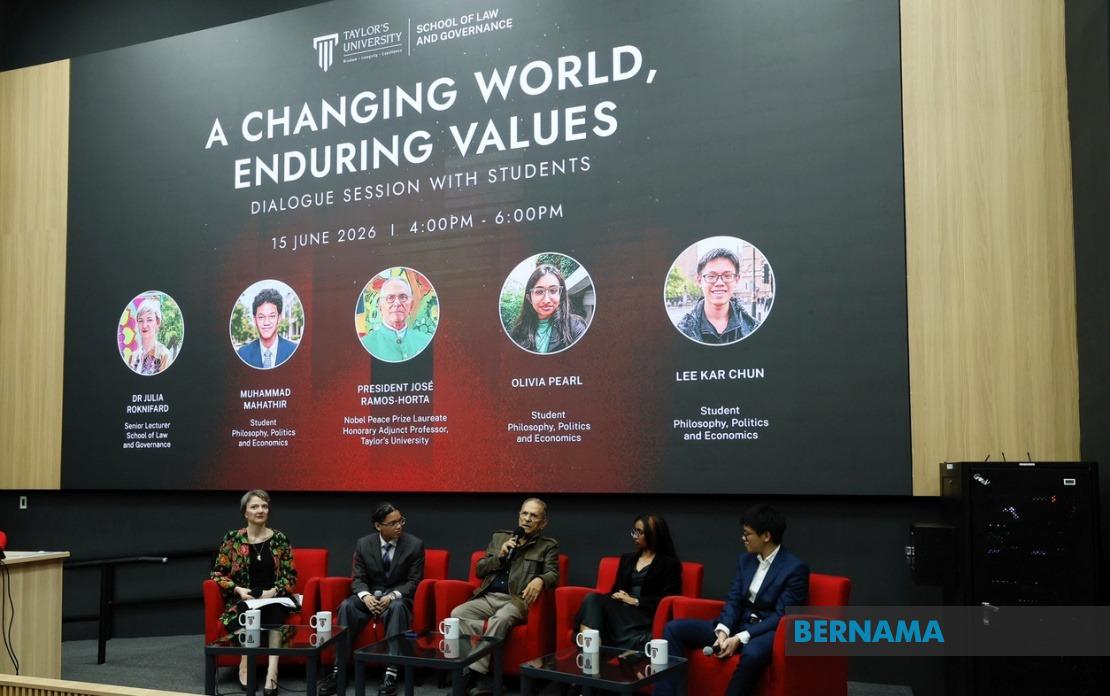
Timor-Leste President Jose Ramos-Horta has characterised relations between his Southeast Asian nation and Malaysia as exceptionally robust, offering particular commendation for Malaysia's long-standing commitment to regional stability and democratic governance. Speaking during a five-day special visit to Malaysia that concludes on Wednesday, the Nobel laureate and former journalist addressed students at Taylor's University in Petaling Jaya on Monday, reflecting on the bilateral partnership that has deepened substantially over recent decades.
Ramos-Horta's remarks underscore a relationship that extends back to the formative years of Timor-Leste's existence. When the nation emerged from Indonesian occupation and achieved independence in 2002, Malaysia played a foundational role through its participation in the 1999 United Nations-authorised peacekeeping mission, demonstrating an early commitment that has evolved into sustained diplomatic engagement. This historical context remains significant for understanding contemporary Southeast Asian security architecture, particularly as the region navigates complex geopolitical challenges involving larger powers and competing interests.
The Timor-Leste president specifically highlighted Malaysia's economic and diplomatic trajectory over the past four decades, noting the nation's consistent advancement on the global stage. He attributed recent momentum particularly to Prime Minister Datuk Seri Anwar Ibrahim's leadership, suggesting that the premier's statesmanship has catalysed Malaysia's growing international influence and economic resilience. This observation carries weight given Ramos-Horta's extensive experience in international relations and his position as a respected elder statesman within Southeast Asian circles.
Beyond bilateral pleasantries, Ramos-Horta's visit carries symbolic significance for regional institution-building. He expressed particular gratitude for Malaysia's instrumental role during its 2024 ASEAN chairmanship in facilitating Timor-Leste's accession to the regional bloc. Timor-Leste officially became the 11th ASEAN member on October 26, 2025, representing the organisation's first expansion in 26 years and reflecting shifting geopolitical alignments in Southeast Asia. Malaysia's diplomatic efforts in brokering consensus among existing members underscored its capacity to build regional consensus on significant matters.
Looking ahead, Ramos-Horta outlined ambitious plans for his nation's trajectory within ASEAN, expressing confidence that Timor-Leste will successfully host the organisation's annual summit in 2029. This responsibility carries considerable weight, requiring substantial infrastructure investment and logistical preparation. The president's optimism suggests active progress on development initiatives, with Malaysian experience in hosting major regional events potentially serving as a reference point for planning and execution.
The infrastructure challenge facing Timor-Leste reflects broader Southeast Asian development patterns, where smaller or younger nations often require international cooperation to meet regional obligations. Malaysia's own experience hosting ASEAN summits and other multilateral gatherings could provide valuable lessons for capacity-building. The timeline to 2029 affords sufficient runway for comprehensive preparation, though the commitment reflects Timor-Leste's determination to shoulder responsibilities proportionate to its new membership status.
Ramos-Horta's engagement with Malaysia's academic and journalistic communities during his visit underscores the people-to-people dimensions of bilateral relations beyond government-to-government channels. His dialogue session at Taylor's University, titled "A Changing World, Enduring Values", addressed an audience of students during formative years of their intellectual development, potentially cultivating deeper understanding of Timor-Leste among Malaysian youth and future leaders. Educational exchanges of this nature contribute to building generational bonds that sustain diplomatic relationships through political transitions and evolving circumstances.
The president's message to Malaysian journalists, delivered in advance of the National Journalists' Day (HAWANA) 2026 celebration scheduled for Penang, emphasised the critical role of independent media in sustaining democratic institutions and social cohesion. His reflection that "only a well-informed society will be able to stay together, promote unity and face challenges" articulates a fundamental conviction about media's societal function. This message resonates particularly within Malaysia's context, where robust media discourse has historically contributed to national resilience and democratic deliberation.
Timor-Leste's relatively recent emergence as an independent state means its president possesses authentic perspective on nation-building challenges that younger democracies throughout Southeast Asia confront. His observations about Malaysia's four-decade trajectory of development and the importance of informed citizenry reflect lessons distilled from his own nation's struggle for self-determination and subsequent efforts to establish institutional frameworks. Such cross-learning between Southeast Asian nations contributes to regional knowledge networks that transcend formal diplomatic channels.
The characterisation of Malaysia-Timor-Leste relations as "exceptionally good" at this historical juncture carries practical implications for regional stability and institution-building. As ASEAN evolves with its newest member, strong bilateral relationships between established members and newcomers facilitate integration and consensus-building on substantive issues. Malaysia's demonstrated capacity to support Timor-Leste's development trajectory, from historical peacekeeping contributions through contemporary ASEAN membership facilitation to prospective technical assistance with infrastructure development, illustrates how regional powers can shape constructive integration mechanisms.
Looking forward, the visit represents an opportunity to reinforce institutional cooperation mechanisms and identify areas for expanded engagement. Timor-Leste's resource wealth, particularly in maritime domains and energy sectors, alongside Malaysia's advanced economic development and technological capacity, suggests complementarities that bilateral partnerships could productively harness. The president's confidence in his nation's 2029 summit hosting prospects implicitly signals receptiveness to Malaysian technical support and sharing of organisational expertise from previous ASEAN summitry experiences.
Ramos-Horta's extended commentary on the bilateral relationship and regional affairs reflects a conscious effort to deepen mutual understanding at multiple societal levels during his Malaysian visit. By engaging students, journalists, and presumably government officials across several days, the Timor-Leste president has crafted an itinerary designed to fortify the relationship's foundations across institutional, professional, and generational dimensions. This comprehensive engagement approach suggests both nations view their partnership as foundational to broader Southeast Asian stability and institutional development.

