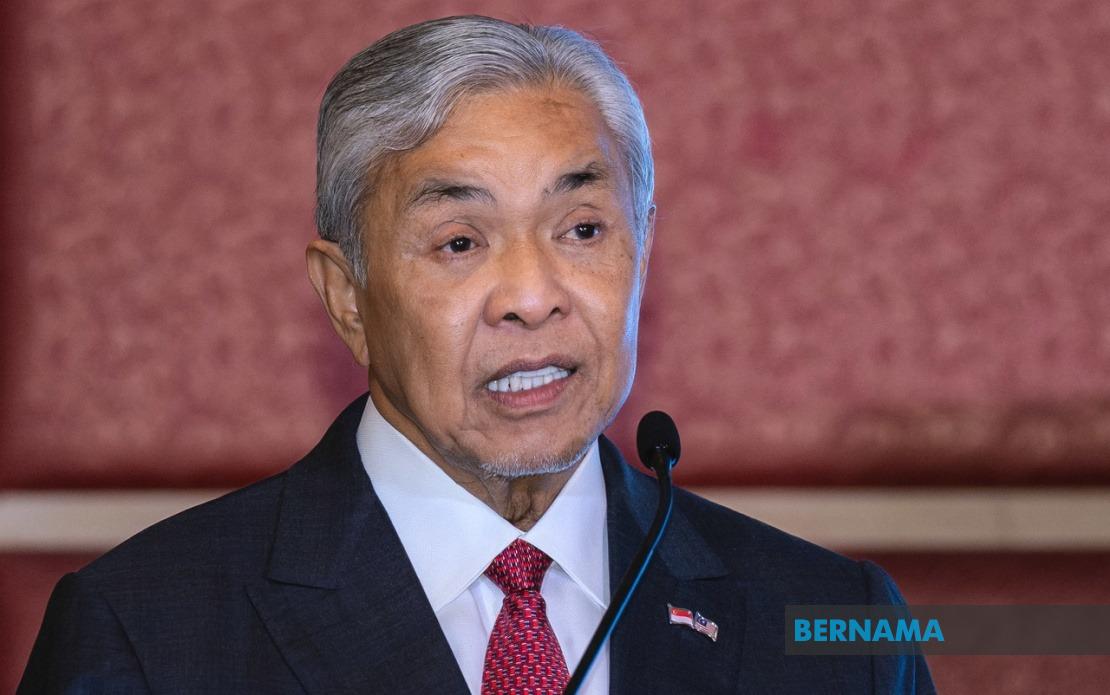
Malaysia is moving toward establishing a homegrown system for managing its refugee and asylum-seeker populations, stepping back from reliance on external entities to handle this critical governance challenge. Deputy Prime Minister Datuk Seri Dr Ahmad Zahid Hamidi confirmed this strategic shift, anchored in the recently strengthened National Security Council Directive No. 23 on refugee and asylum seeker policy. Signed by Prime Minister Datuk Seri Anwar Ibrahim on June 14, 2023, this directive represents the government's comprehensive approach to addressing one of Southeast Asia's most pressing humanitarian and security concerns.
The framework Ahmad Zahid outlined in Parliament encompasses three interlocking priorities that reflect the complexity Malaysia faces as the region's largest refugee-hosting nation. First, the mechanism prioritises operational efficiency and rigorous enforcement of existing laws governing undocumented populations. Second, it coordinates policy implementation across multiple government ministries and agencies to ensure refugees and asylum seekers who qualify can access essential social infrastructure—including healthcare, education, and employment pathways. Third, it positions national security and territorial sovereignty as non-negotiable pillars, acknowledging the legitimate security concerns that arise when managing large vulnerable populations in congested urban areas.
This dual approach of providing services while maintaining control reflects the government's attempt to navigate a delicate political and humanitarian balancing act. Ahmad Zahid's emphasis on the need to balance enforcement with community responsibility signals growing frustration within the administration about how refugee policies are undermined by local actors exploiting the system. He specifically highlighted what he termed "enablers"—Malaysian citizens and residents who profit from refugee populations through rental income, employment relationships, or other commercial arrangements. By naming this dynamic in Parliament, the government is signalling that successful refugee management cannot rest solely on formal policy; it requires addressing how Malaysia's informal economy inadvertently facilitates irregular migration and undocumented settlement.
The timing of this announcement comes as Malaysia grapples with hosting over 126,000 registered Rohingya refugees, alongside several hundred thousand other asylum seekers from Myanmar, Pakistan, Bangladesh, and other nations experiencing conflict or persecution. The introduction of the Refugee Registration Document (DPP) earlier this year marked a watershed moment in Malaysia's refugee administration, creating for the first time a standardised system for documenting and tracking protected persons. This initiative prompted parliamentary questions about whether Malaysia would now develop more comprehensive refugee legislation—a question Ahmad Zahid's response appears designed to address.
The strengthening of NSC Directive No. 23 represents the government's preference for administrative frameworks over legislative changes. Rather than pursuing new parliamentary statutes, which could invite prolonged political debate, the NSC directive allows the government to coordinate refugee management through the existing bureaucratic apparatus. This approach delegates specific functions and responsibilities to individual ministries, from the Home Ministry's border enforcement responsibilities to the Health Ministry's healthcare provision obligations. Such compartmentalisation can improve operational clarity, though it risks creating gaps where ministries interpret their mandates narrowly.
For Malaysian stakeholders concerned about refugee policy, the emphasis on "policy coordination" and access to social services suggests the government recognises that warehousing or marginalising refugee populations creates its own security and humanitarian problems. Providing refugees access to formal employment pathways, for instance, theoretically reduces desperation-driven crime and exploitation. Similarly, ensuring children receive education addresses both humanitarian imperatives and practical concerns about an uneducated, alienated youth population in overcrowded urban settlements. These provisions move beyond purely restrictive approaches, acknowledging that sustainable refugee management requires some degree of social integration.
However, Ahmad Zahid's identification of profit-seeking among Malaysian residents raises questions about enforcement capacity. If the government struggles to regulate informal rental markets, labour relationships, and commercial networks that sustain undocumented populations, a more sophisticated management framework may face practical limitations. The deputy prime minister's frank acknowledgment of this problem suggests the government recognises it cannot succeed through formal mechanisms alone—a sobering reality for policymakers expecting NSC directives to fully control complex transnational population movements.
The regional implications of Malaysia's approach merit consideration. As ASEAN grapples with Myanmar's ongoing instability and its refugee consequences, Malaysia's decision to strengthen domestic management systems rather than pursue burden-sharing agreements with regional partners reflects the current political reality: Southeast Asian nations show little appetite for multilateral refugee frameworks. Malaysia's unilateral approach, while pragmatic given this regional context, leaves it bearing disproportionate responsibility for protecting vulnerable populations fleeing conflicts it did not create.
Looking forward, the effectiveness of NSC Directive No. 23 will depend on consistent implementation across government agencies, adequate funding for welfare provision, and genuinely coordinated rather than siloed ministry responses. The directive's success will also hinge on whether the government can reshape incentive structures that make refugee communities economically attractive to local entrepreneurs and employers. Without addressing this underground economy dimension, even well-designed administrative mechanisms may struggle to achieve their intended effects on both humanitarian and security fronts.

