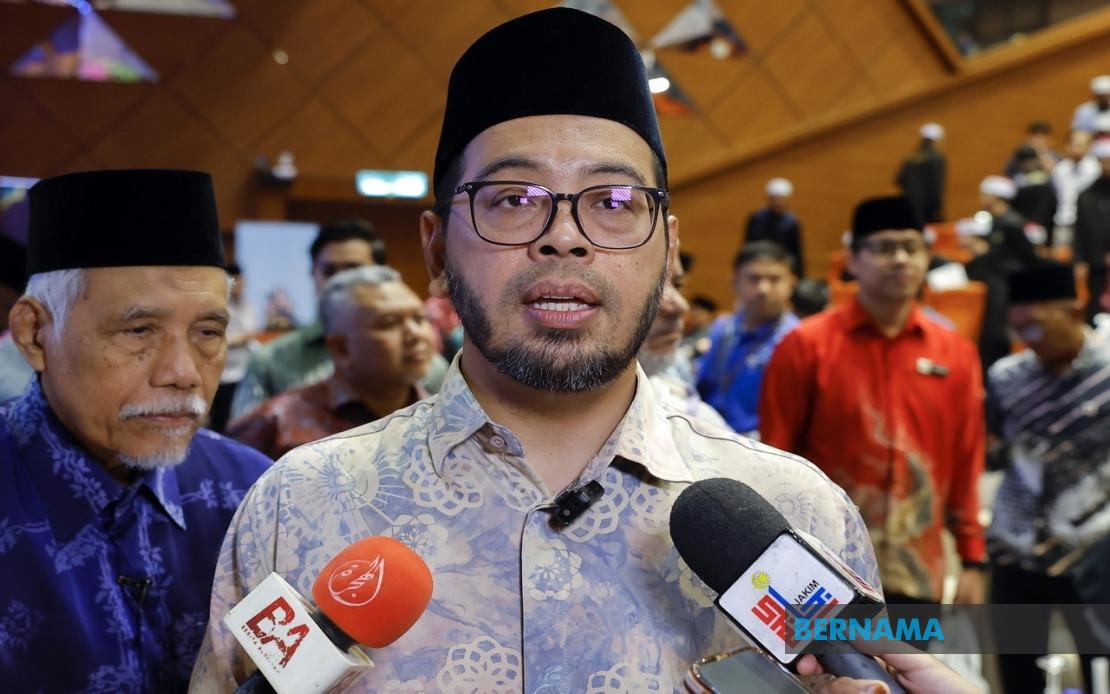
The Prime Minister's Department (Religious Affairs) has committed to intensifying its outreach to young Malaysians, adopting recommendations from Sultan Nazrin Shah that emphasise the critical role religious leaders must play in combating extremism and false information in the digital age. Minister Dr Zulkifli Hasan announced the pledge during the opening of the National and International Tokoh Ma'al Hijrah Premier Lecture 1448/2026 in Putrajaya on June 18, signalling that the government views youth disengagement and ideological vulnerability as pressing national concerns requiring coordinated intervention.
Sultan Nazrin Shah's recent address, delivered last Friday, laid out a comprehensive assessment of the contemporary challenges facing Malaysian youth. Beyond traditional concerns about religious radicalism, the Sultan identified a constellation of vulnerabilities including climate anxiety, exposure to international conflicts, economic instability, and growing fragmentation driven by digital platforms. His intervention reflects growing awareness within Malaysia's leadership that young people face unprecedented pressures that extend far beyond purely religious or ideological domains, creating conditions where extremist narratives and misinformation campaigns can gain traction.
Dr Zulkifli Hasan's response demonstrates that the religious affairs portfolio has absorbed the Sultan's message and intends to place youth engagement at the centre of its strategic direction. The minister explicitly stated that his department would integrate the royal address into its operational planning and programme development, elevating what might otherwise remain a ceremonial pronouncement into concrete policy guidance. This alignment between the religious affairs ministry and the palace reflects an institutional recognition that siloed approaches to youth radicalisation—whether purely security-focused, purely religious, or purely educational—have proven insufficient.
The timing of this initiative matters considerably for Malaysia's regional positioning. Across Southeast Asia, governments have struggled to develop effective counter-extremism strategies that avoid heavy-handed security responses that can backfire by alienating the very demographics they aim to protect. Malaysia's emphasis on engagement through religious leadership rather than through enforcement alone suggests a shift toward preventive community-based approaches that may prove more sustainable and socially cohesive than purely prohibitive measures.
The challenge of misinformation in particular has become acute across Malaysian society, where competing narratives about religion, politics, and identity circulate rapidly through social media platforms. Young Malaysians, who are both heavy consumers of digital content and often lack the historical and cultural reference points to evaluate competing truth claims, constitute a particularly vulnerable audience. Religious leaders, if properly mobilised and given appropriate platforms and resources, can offer authoritative counternarratives grounded in theological learning and social respect that official government communications sometimes lack.
Yet the scope of the Sultan's framing—encompassing climate change, conflicts, economic uncertainty, and institutional distrust—suggests that religious leaders alone cannot address the full spectrum of youth grievances. The religious affairs ministry will need to coordinate with education ministries, economic development agencies, and digital governance bodies to mount a truly comprehensive response. How effectively these institutions collaborate will likely determine whether current initiatives achieve meaningful impact or remain fragmented efforts that fail to reach alienated youth populations.
The reference to digital polarisation is particularly significant given Malaysia's experience with online communal tensions. The country has witnessed how algorithmic amplification of divisive content, combined with deliberate disinformation campaigns, can rapidly destabilise social cohesion. Young Malaysians have been both perpetrators and victims of these dynamics, sharing inflammatory content without verification or falling prey to coordinated manipulation campaigns. Religious leaders equipped with digital literacy training and equipped to engage authentically on social platforms might serve as trusted voices capable of modelling critical thinking and countering viral falsehoods.
Economic uncertainty specifically resonates with Malaysian youth experiencing structural challenges in the labour market, rising living costs, and limited access to wealth-building opportunities compared to previous generations. Extremist recruiters have historically exploited such grievances by offering a sense of purpose and belonging to economically marginalised young people. Addressing this dimension requires not just religious messaging but genuine improvements in youth employment prospects, entrepreneurship support, and economic mobility—areas where the religious affairs ministry must partner with other governmental bodies.
The institutional architecture through which these commitments will be implemented remains to be seen. Whether the religious affairs ministry will launch dedicated youth councils, establish digital engagement programmes, or fund community-based religious mentorship schemes will shape the practical impact of this announcement. Previous iterations of government youth engagement efforts have sometimes been hampered by inadequate resourcing, unclear accountability measures, and difficulty maintaining momentum over time.
For regional observers, Malaysia's approach merits attention as a potential model for balancing religious engagement with secular governance concerns. Countries throughout Southeast Asia face similar pressures from youth radicalisation, digital misinformation, and erosion of institutional trust. How Malaysia operationalises the Sultan's recommendations could offer lessons—positive or cautionary—for neighbouring governments grappling with identical challenges in their own contexts.
The coming months will be critical in determining whether this commitment translates into visible programming and measurable engagement with young Malaysians. The success of these efforts will depend not only on policy design but on whether religious leaders prove willing to embrace digital engagement, whether young people perceive such outreach as authentic and relevant rather than paternalistic, and whether coordination across government agencies enables truly integrated rather than siloed responses. The Sultan's address has set a clear expectation; the challenge now lies in delivery.