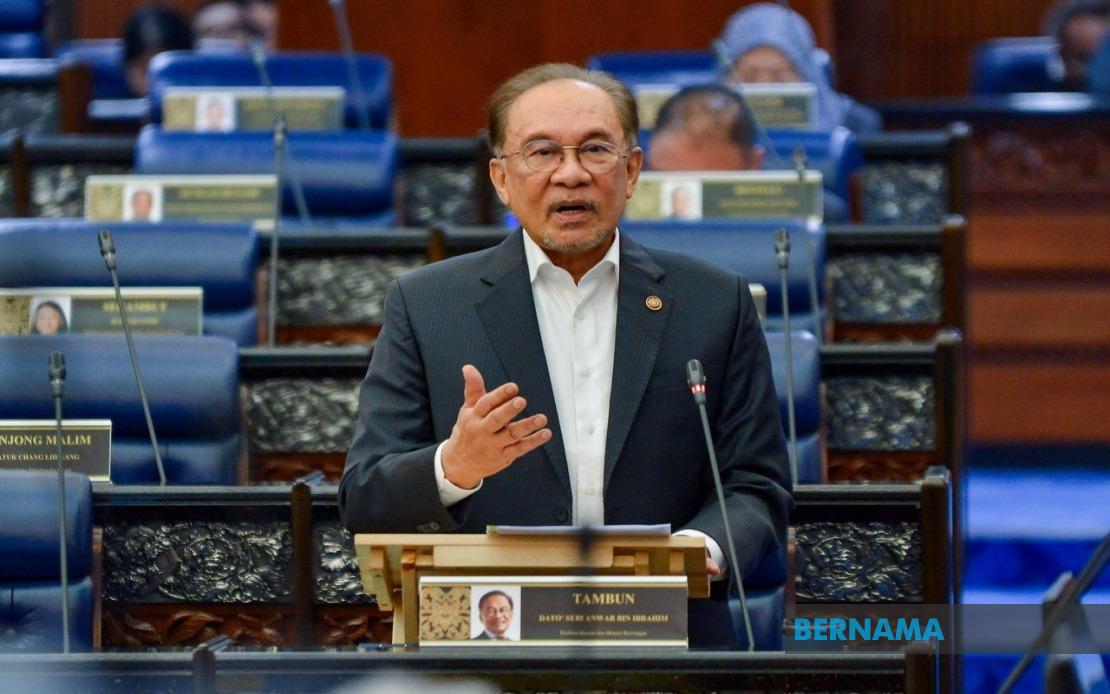
Prime Minister Datuk Seri Anwar Ibrahim has underscored Malaysia's steadfast reliance on diplomatic engagement and the 1982 United Nations Convention on the Law of the Sea (UNCLOS) to address maritime boundary disagreements with regional partners. Speaking in parliament on July 14, Anwar outlined a principled approach centred on sustained dialogue rather than confrontation, positioning Malaysia as a nation committed to rules-based maritime governance even as complex territorial questions remain unresolved across Southeast Asia and beyond.
While acknowledging the International Maritime Organization's pivotal role in maritime administration, Anwar emphasised that the IMO itself operates within the legal constraints established by UNCLOS 1982. This framing reflects Malaysia's understanding that international maritime institutions derive their authority and legitimacy from the foundational treaty that governs ocean governance globally. The convention provides participating nations with a comprehensive legal architecture encompassing exclusive economic zones, continental shelves, and dispute resolution mechanisms—principles that Malaysia views as essential to maintaining order and predictability in shared waters.
Yet the Prime Minister recognised a fundamental reality that often complicates maritime negotiations: different countries interpret UNCLOS provisions through divergent historical, geographical, and strategic lenses. This interpretive variability means that while the convention offers vital scaffolding for discussions, it cannot unilaterally resolve every boundary question that arises. Malaysia's acknowledgment of this limitation demonstrates a pragmatic understanding that legal frameworks, however comprehensive, require political will and compromise to translate into practical agreements.
Regarding the South China Sea, Anwar highlighted ASEAN's collective decision to ground negotiations with China in UNCLOS principles while advancing discussions on a Code of Conduct intended to stabilise the region and diminish the risk of accidental escalation. He noted, however, that these multilateral discussions encounter particular complications when the Philippines' historical claims intersect with broader territorial issues such as the unresolved Sabah question—a matter that tangles bilateral Malaysian-Philippine relations with regional maritime politics. This complexity underscores how Southeast Asian maritime disputes rarely exist in isolation but are instead interconnected through overlapping claims and historical grievances.
Anwar's parliamentary remarks illuminated Malaysia's operational preference for iterative negotiation even when discussions stall temporarily. Rather than abandoning talks when positions harden, Malaysia adopts a recess-and-return strategy, allowing diplomatic temperature to cool before participants resume engagement. This patient approach reflects a conviction that comprehensive maritime settlements require multiple rounds of technical discussion, political signalling, and confidence-building rather than single intensive negotiations.
The Prime Minister highlighted Malaysia's joint development arrangements with Thailand and Vietnam as proof that economic cooperation can coexist with unresolved sovereignty claims. Under these frameworks, neighbouring countries establish shared institutional structures to exploit disputed maritime zones while explicitly preserving each nation's legal position on underlying territorial ownership. The Vietnam model exemplifies this principle: the contested area remains technically disputed, yet both governments benefit from coordinated resource development without surrendering their respective claims. This pragmatic division between sovereignty assertion and practical cooperation offers a template that might eventually extend to other maritime disagreements in the region.
Acknowledging the geographic reality that Malaysia maintains maritime boundary issues with six neighbouring jurisdictions—Brunei, Thailand, Indonesia, Singapore, the Philippines, and China—Anwar reaffirmed government commitment to channelling disputes through diplomatic rather than confrontational mechanisms. Malaysia's consistent choice of negotiation reflects both its interest in regional stability and its recognition that most maritime disagreements lack quick or universally satisfactory solutions. By eschewing provocative actions, Malaysia reduces the risk that disagreement escalates into broader regional tension.
On Brunei, Anwar reported meaningful progress in bilateral boundary negotiations, with only a handful of demarcation questions remaining outstanding and certain elements requiring coordination with the Sarawak state government. This gradual advancement suggests that patient diplomacy, even when spanning years, can produce incremental movement toward comprehensive settlements. Discussions with Indonesia similarly focus on specific disputed areas touching Sabah, conducted in consultation with that state's leadership—a formula acknowledging that federal-state coordination is essential when maritime claims implicate sub-national interests and jurisdiction.
The Prime Minister's parliamentary intervention occurs as Southeast Asia grapples with intensifying great-power competition for influence in its maritime domains. China's expanding assertiveness in the South China Sea, coupled with external powers' increased naval presence, creates pressure on ASEAN nations to clarify their positions and strengthen regional cooperation. Malaysia's reiteration of commitment to UNCLOS-based negotiations and multilateral Code of Conduct discussions signals that it seeks to manage these tensions through institutional frameworks rather than military posturing or alliance-driven exclusivity.
Malaysia's approach also reflects vulnerability inherent in its maritime geography. The Straits of Malacca—through which passes a substantial portion of global seaborne trade—intersects multiple jurisdictions and remains sensitive to disruption whether from territorial disputes, piracy, or great-power interference. By anchoring maritime governance in internationally recognised legal norms and promoting cooperative development zones, Malaysia aims to protect this critical chokepoint's stability while preserving its own strategic interests and resource claims.
The diplomatic framework Anwar described—emphasising negotiation, UNCLOS compliance, and shared economic benefit—represents Malaysia's calculated bet that gradualism and institutional embedding serve its long-term interests better than confrontation. Whether this approach can sustain effectiveness as regional tensions potentially intensify remains an open question, but for now Malaysia's leadership appears convinced that patient, principled diplomacy offers the surest path through treacherous maritime waters.

