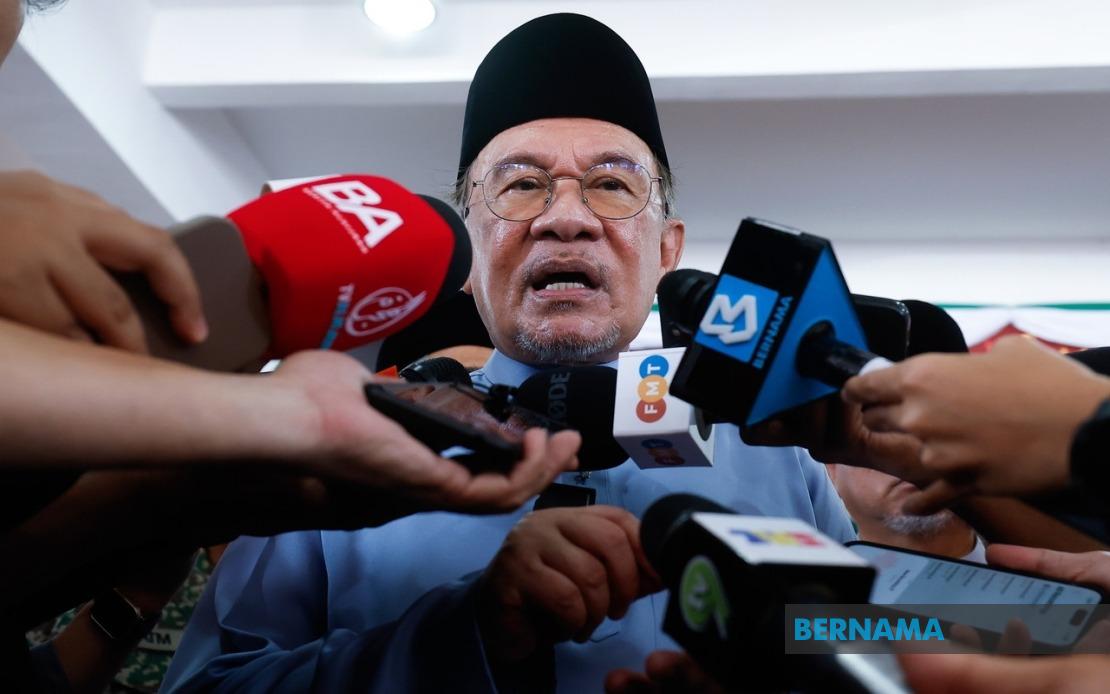
Prime Minister Datuk Seri Anwar Ibrahim has signalled that Malaysia intends to sustain diplomatic engagement with the United States over tariffs recently levied against the nation, should current discussions fail to produce satisfactory results. Speaking after an official event in Port Dickson on July 24, Anwar acknowledged receipt of the latest American tariff schedules and expressed cautious optimism that Malaysia's exposure remains manageable compared to other affected nations. The government, he stressed, will not abandon efforts to defend the country's economic interests should the current round of talks prove insufficient.
The tariff matter centres on enforcement gaps in Malaysia's approach to preventing imports of goods manufactured through forced labour. Under Section 301 of the American Trade Act of 1974, the United States Trade Representative recently concluded an investigation spanning 60 economies, determining that Malaysia—alongside Cambodia and Indonesia—had failed to adequately implement and enforce prohibitions on such imports. This finding triggered the imposition of a 10 per cent duty rate on Malaysian goods entering the American market, a relatively modest outcome according to Anwar's assessment, as most other affected nations face a steeper 12.5 per cent tariff.
Minister of Investment, Trade and Industry Datuk Seri Johari Abdul Ghani is leading the negotiating effort on behalf of Malaysia, working to establish whether further concessions or clarifications might be achieved. Anwar indicated that if discussions with American counterparts do not yield improvements, the government stands ready to escalate the matter through official channels. The measured tone suggests Kuala Lumpur recognises the tariff as a manageable penalty whilst simultaneously maintaining that the underlying allegation warrants serious attention and response.
The forced labour investigation reflects growing international scrutiny of supply chains and manufacturing practices across Southeast Asia. American policymakers have increasingly integrated labour standards into trade enforcement, signalling a shift in how Washington approaches bilateral and regional commercial relationships. For Malaysia, which has long been scrutinised over labour practices in sectors including palm oil production and electronics manufacturing, this tariff serves as a tangible reminder of external pressure to strengthen domestic compliance mechanisms.
The 10 per cent rate, whilst lower than alternatives, still carries economic weight. Malaysia's substantial textile and manufacturing sectors stand to absorb some impact, though the differential advantage over other nations may help cushion the blow relative to competitors facing higher duties. The tariff-rate quota mechanism mentioned by the US Trade Representative opens a potential pathway whereby Malaysian manufacturers who increase their sourcing of American cotton and textile inputs could access more favourable duty treatment, effectively incentivising transatlantic supply chain integration.
For Malaysian policymakers, the situation underscores a broader challenge facing the region: balancing demands from major trading partners over labour and environmental standards whilst managing domestic labour costs and competitive positioning. The forced labour prohibition, though internationally supported in principle, requires substantial investment in enforcement infrastructure, training, and workplace monitoring. Smaller manufacturers and suppliers, particularly in subcontracting networks, may struggle to meet heightened scrutiny without government support or technical assistance programmes.
The presence of high-ranking defence and government officials at Anwar's public remarks—including the Chief Secretary to the Government and military leadership—suggests the government views this commercial dispute with some gravity. Although the tariff itself is trade-focused, the underlying labour standards issue touches on Malaysia's international reputation and governance credibility. Domestic implementation of stronger forced labour prevention measures could have cascading effects across employment practices, supply chain management, and regulatory oversight.
Cambodia and Indonesia's placement in the same tariff category as Malaysia reflects a shared regional vulnerability. All three nations carry historical scrutiny regarding labour practices, and the tariff outcome, though relatively lenient compared to the global average imposed on other economies, signals that American authorities expect measurable improvement. For Malaysia specifically, this presents an opportunity to distinguish itself through proactive reform, potentially gaining competitive advantage if enhanced enforcement demonstrates tangible commitment.
The negotiating window remains open, and Anwar's public commitment to continued talks indicates the government believes productive dialogue with Washington remains possible. Whether Malaysia can achieve tariff reduction or removal will likely depend on demonstrating concrete steps to strengthen border controls, workplace inspections, and inter-agency coordination on forced labour detection. The government may also leverage its status as a key American trading partner and regional anchor to emphasise mutual interest in maintaining stable, prosperous commercial ties.

