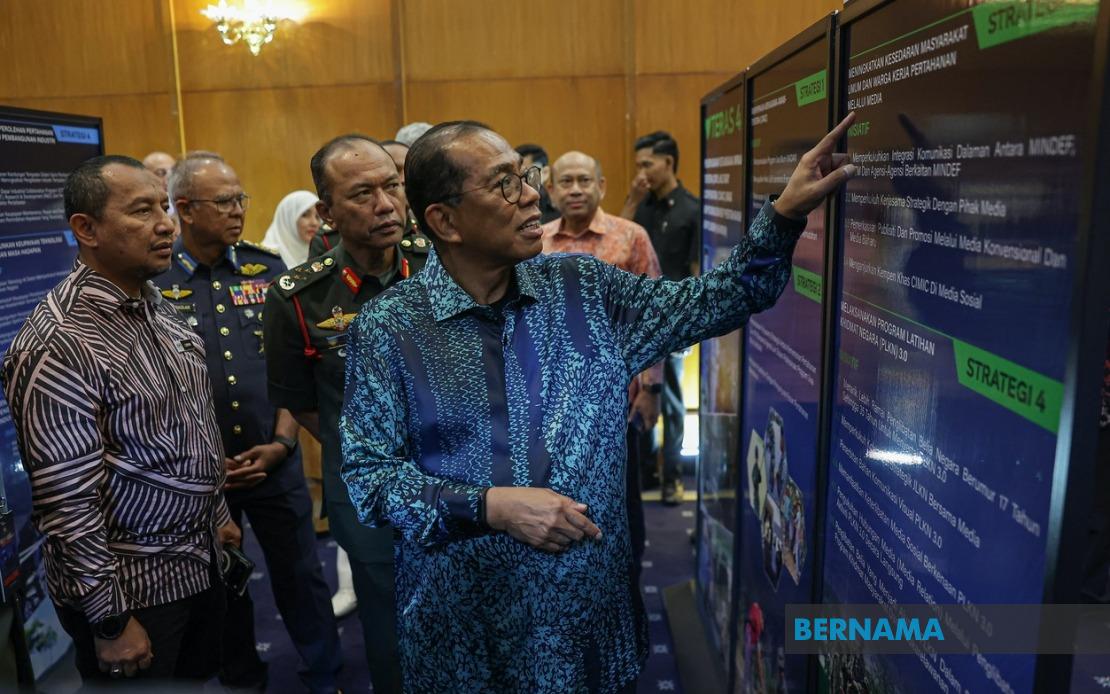
Malaysia has taken a significant step toward fortifying its defence infrastructure by simultaneously launching two complementary strategic frameworks aimed at sharpening national security posture through the remainder of the decade. Defence Minister Datuk Seri Mohamed Khaled Nordin unveiled the National Defence Strategic Plan (PSPN) and the Defence Capacity Blueprint (RTKP) 2026-2030 at a ceremony in Kuala Lumpur on June 25, positioning these documents as essential responses to mounting geopolitical pressures and technological disruption affecting regional stability.
The dual initiative represents a calibrated progression from Malaysia's existing Defence White Paper, which has served as the foundational security doctrine for the nation. Rather than replacing that framework, the minister explained that both new documents function as implementation mechanisms designed to maintain strategic relevance as the security environment shifts beneath the region's feet. This approach acknowledges that rigid long-term plans often falter when confronted with unforeseen developments, necessitating periodic recalibration without abandoning core strategic principles.
The global context shaping Malaysia's strategic recalculation cannot be overstated. Defence planners across Southeast Asia are grappling with unprecedented complexity: intensifying great-power competition in the Indo-Pacific, rapid militarisation of frontier technologies like artificial intelligence and autonomous systems, and an expanding constellation of non-state security threats ranging from transnational terrorism to cyber warfare. During the Mid-Term Review of the Defence White Paper, Malaysian defence specialists conducted a thorough assessment of these dynamics, identifying strategic gaps that required bridging through the new frameworks. This analytical foundation lends credibility to the resulting documents, which purport to address vulnerabilities exposed by this evolving threat matrix.
The PSPN itself rests upon seven strategic pillars designed to create operational coherence across Malaysia's defence establishment. These pillars encompass the readiness of the Malaysian Armed Forces for rapid response, systematic advancement of military capabilities to match regional competitors, sustainable welfare provisions for service personnel and retired veterans, and integration of cutting-edge defence technology and innovation into operational doctrine. This multi-dimensional approach signals recognition that modern defence transcends hardware procurement alone, requiring simultaneous attention to personnel retention, technological edge, and institutional adaptability. For a middle-income nation operating within budget constraints, balancing these competing priorities requires sophisticated prioritisation.
The companion RTKP essentially translates strategic ambition into fiscal and organisational reality. Defence Minister Mohamed Khaled characterised the relationship between the two instruments with a revealing metaphor: if the PSPN charts the destination, the capacity blueprint provides the fuel and vehicle to arrive there. This capacity dimension encompasses four interlocking elements. First, adequate financial resourcing remains fundamental—Malaysia must allocate sufficient defence budgets to support sustained modernisation without compromising other critical infrastructure. Second, human capital development becomes increasingly central as technological complexity escalates; the armed forces require personnel with sophisticated technical competencies in areas like cyber defence, data analytics, and advanced systems operation. Third, technological expertise and innovation capacity determine whether Malaysia can effectively integrate new platforms and weapons systems into operationally effective configurations. Fourth, inter-agency coordination ensures that Defence Ministry initiatives align with broader government security strategies and that military capabilities complement diplomatic, intelligence, and development initiatives.
What distinguishes this latest strategic framework is its explicit embrace of what defence planners term a "whole-of-government and whole-of-society" approach. Rather than confining defence responsibility solely to uniformed services and the Defence Ministry, Malaysian planners now recognise that national security emerges from coordinated action across government agencies and civilian society. This perspective acknowledges that modern threats—whether pandemics, climate-related disruptions, or sophisticated disinformation campaigns—cannot be countered through military means alone. Consequently, the RTKP seeks to establish mechanisms for cross-agency coordination that transcend traditional bureaucratic silos, a significant organisational challenge in any government but particularly in Southeast Asian contexts where institutional coordination remains underdeveloped.
Concrete manifestations of this strategic direction are already materialising in equipment acquisition. Malaysia received three ANKA Medium Altitude Long Endurance Unmanned Aircraft Systems in March 2024, which have since become operationally deployed at Labuan Air Base. These systems represent a quantum leap in the armed forces' intelligence-gathering and surveillance capabilities, enabling persistent observation over vast maritime expanses without risking pilot lives. The geographic significance warrants emphasis: Labuan's strategic location overlooking critical shipping lanes and disputed maritime zones positions these unmanned platforms as valuable force multipliers for regional awareness.
Beyond unmanned systems, Malaysia's procurement pipeline extends across multiple capability domains. The anticipated delivery of FA-50M light combat aircraft represents a capability upgrade, providing modern fighter training capacity and ground support capabilities for operations spanning the South China Sea and surrounding airspace. Maritime patrol aircraft acquisitions strengthen the Royal Malaysian Navy's ability to monitor extensive exclusive economic zones and enforce sovereignty over territorial waters, a persistent challenge given Malaysia's archipelagic geography and limited naval platforms. Complementing these platforms, the second batch of Littoral Mission Ships will expand the navy's presence across coastal zones, enhancing both deterrence and operational responsiveness in disputes involving maritime borders or transnational maritime activities.
For Malaysian defence strategists, this five-year implementation window represents a critical period for capability consolidation. The region faces mounting pressure as military spending accelerates across Southeast Asia and beyond, with several neighbouring nations undertaking their own modernisation programs. Malaysia's approach appears designed to achieve selective capability advances rather than comprehensive military transformation, a realistic acknowledgment of budgetary and industrial constraints. By concentrating investments in unmanned systems, light combat aircraft, and littoral patrol vessels, planners appear to prioritise precisely those capabilities most relevant to Malaysia's likely operational scenarios: maritime sovereignty enforcement, counter-terrorism in coastal regions, and air defence against conventional threats.
The strategic documents also carry implications for Malaysia's position within ASEAN and broader regional security architecture. A visibly capable, modernised armed forces enhances Malaysia's credibility as a regional power and strengthens its diplomatic leverage in maritime disputes and multilateral security negotiations. Conversely, capabilities alone prove insufficient without political will; Malaysia's defence posture depends critically upon how political leadership employs these military tools to advance national objectives. The emphasis on coordination across government agencies suggests recognition that military capabilities must be embedded within coherent diplomatic and strategic frameworks to prove effective.
Looking forward, the success of these strategic documents will ultimately be measured not by their comprehensiveness but by implementation fidelity. Defence White Papers and strategic blueprints have proliferated globally, yet many gather dust on ministry shelves while bureaucratic inertia perpetuates outdated practices. Malaysia's challenge will involve maintaining organisational discipline in pursuing these objectives even as political pressures and budgetary surprises inevitably intervene. The whole-of-government coordination mechanisms envisioned in the RTKP offer promise but require sustained high-level political commitment to overcome natural institutional resistance to change.

