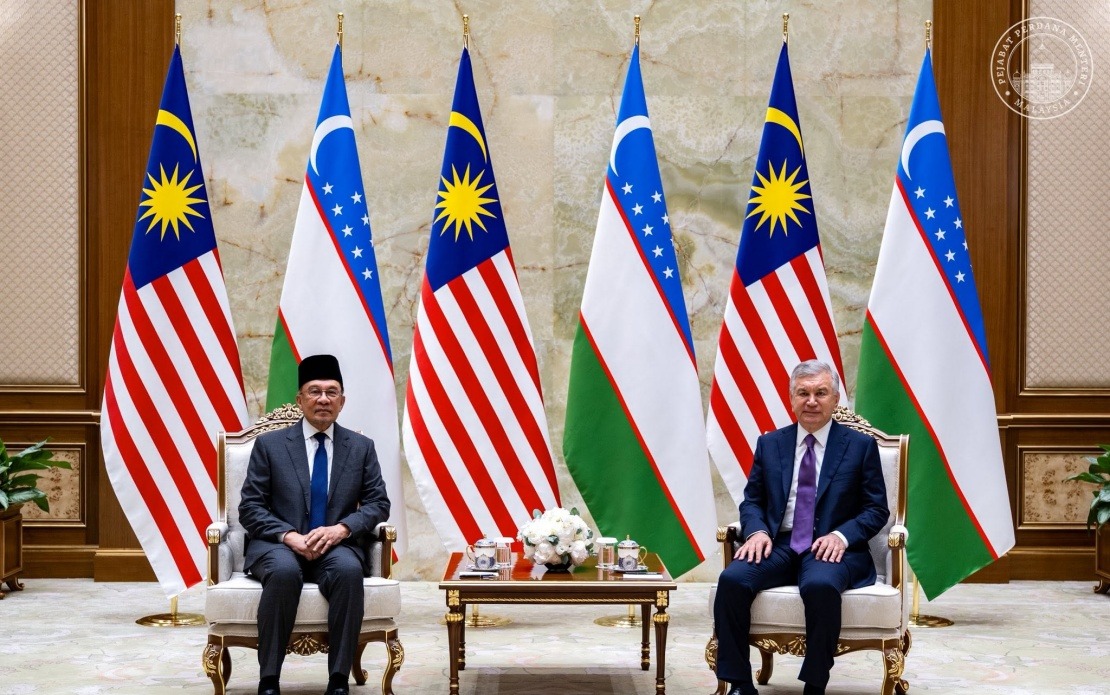
Prime Minister Datuk Seri Anwar Ibrahim has signalled Malaysia's readiness to deepen strategic partnerships with Uzbekistan across multiple economic and cultural domains. During a brief diplomatic encounter with Uzbekistan President Shavkat Mirziyoyev at Tashkent airport, where Anwar's aircraft made a scheduled stopover en route to Kazan for the ASEAN-Russia Commemorative Summit on June 17-18, the two leaders explored concrete pathways to elevate their bilateral relationship. The unscheduled yet substantive meeting underscores the Malaysian government's commitment to expanding engagement beyond traditional Southeast Asian partners into Central Asia's increasingly significant geopolitical and economic landscape.
Energy cooperation emerged as a cornerstone of the bilateral discussion, with both leaders identifying substantial untapped potential in the gas and petroleum sectors. For Malaysia, diversifying energy partnerships beyond the Middle East and Southeast Asia presents strategic advantages, particularly given Uzbekistan's substantial hydrocarbon reserves and its emerging role as a regional energy hub. Such collaboration could enhance Malaysia's energy security while offering Uzbekistan access to Malaysian expertise in liquefied natural gas processing and downstream petrochemical industries. Beyond immediate commercial benefits, the two nations recognised that energy cooperation contributes meaningfully to regional development goals and the broader sustainability agenda that increasingly shapes investment decisions in Asia.
Trade and investment frameworks represent another avenue for mutual growth that the leaders prioritised during their conversation. Malaysia's established position as a regional financial and trading centre, combined with Uzbekistan's geographic positioning as a Central Asian gateway, creates complementary economic advantages. Malaysian companies operating in Southeast Asia could potentially leverage Uzbekistan as an entry point to broader Central Asian markets, while Uzbekstani enterprises might access ASEAN supply chains and distribution networks through Malaysia. The discussion signals potential for sectoral partnerships in manufacturing, logistics and financial services that extend beyond traditional commodity exchanges.
The halal industry occupies a distinctive position in Malaysia-Uzbekistan relations, reflecting both nations' Islamic heritage and commercial pragmatism. Uzbekistan, with its substantial Muslim population and growing awareness of halal certification's market value, represents an expanding market for Malaysian halal-certified products and expertise. Malaysian companies dominating global halal certification and production standards could establish regional operations in Uzbekistan, positioning it as a halal hub for Central and South Asian markets. This dimension of cooperation intertwines commercial opportunity with soft power, as halal industry leadership enhances Malaysia's influence within Islamic-majority regions and facilitates people-to-people connections.
Educational exchange constitutes a vital yet frequently underemphasised component of bilateral ties. Malaysian universities and vocational institutions have long attracted students from across Asia, and expanding recruitment from Uzbekistan could deepen intellectual and cultural bonds between the nations. Similarly, Malaysian scholars studying Central Asian history, languages and geopolitics could access Uzbekistan's rich institutional resources. Such educational pathways generate long-term diplomatic dividends, as alumni networks cultivate advocates for bilateral cooperation within government, business and civil society across both countries.
Anwar emphasised the importance of preserving and advancing Islamic civilisational treasures and scholarly traditions, reflecting a deeper philosophical dimension to the partnership. This language resonates with Malaysia's positioning as a bridge between Southeast Asia and the Islamic world, while acknowledging Uzbekistan's historical significance as a centre of Islamic learning and cultural achievement. The reference to scholarly traditions that contributed to human advancement suggests recognition of Uzbekistan's legacy in mathematics, astronomy and philosophy during the medieval Islamic golden age. For Malaysia, this framing elevates the relationship beyond transactional commerce into a realm of civilisational dialogue and knowledge preservation.
Tourism cooperation offers both nations tangible and measurable benefits. Uzbekistan's Silk Road heritage sites, architectural treasures in Samarkand and Bukhara, and increasingly sophisticated tourism infrastructure attract growing numbers of international visitors. Malaysian tourists represent an untapped demographic, particularly given cultural and religious affinities that ease travel and enhance visitor satisfaction. Conversely, Central Asian visitors to Malaysia could explore Southeast Asian Islamic heritage, natural attractions and business opportunities. Enhanced flight connections and visa facilitation would be prerequisite steps that both governments might reasonably consider.
Anwar's expression of appreciation for Uzbekistan's commitment to strengthening ASEAN relations reflects a broader strategic calculus. Uzbekistan's growing engagement with Southeast Asia signals a rebalancing of Central Asian foreign policy away from exclusive focus on Russia and China toward greater regional diversification. For ASEAN, deepening ties with Central Asian nations expands the bloc's strategic flexibility and creates additional counterweights to great power dominance. Malaysia, as ASEAN's largest Muslim-majority economy and a significant diplomatic player, serves as a natural bridge facilitating these connections.
The reference to human dignity, knowledge empowerment and inclusive development underscores Anwar's vision of cooperation transcending narrow economic interests. This language reflects the Malaysian government's development philosophy, emphasising stakeholder capitalism and shared prosperity over extractive partnerships. For Uzbekistan, such framing aligns with President Mirziyoyev's own modernisation agenda and reform initiatives undertaken since assuming office. The convergence of developmental outlooks between the two leaders suggests sustained cooperation prospects extending beyond the immediate economic sectors.
Anwar's well-wishes to Uzbekistan's national football team competing in World Cup qualifiers injected a lighter diplomatic note into the discussion while subtly reinforcing the breadth of bilateral engagement. Sports diplomacy, though occasionally dismissed as peripheral, cultivates goodwill and public affinity between nations. Malaysian football fans will observe Uzbekistan's performance with heightened interest, while the gesture itself demonstrates Anwar's accessibility and interest in areas beyond traditional statecraft.
The timing of this engagement carries significance within broader geopolitical currents. As great powers vie for influence throughout Central Asia, Malaysia's cultivation of independent partnerships with regional actors like Uzbekistan demonstrates ASEAN's commitment to maintaining balanced relationships and preventing regional subordination to external powers. The stopover in Tashkent, though described as brief, represented strategic diplomacy of considerable consequence for Malaysia's longer-term positioning within continental Asian affairs.

