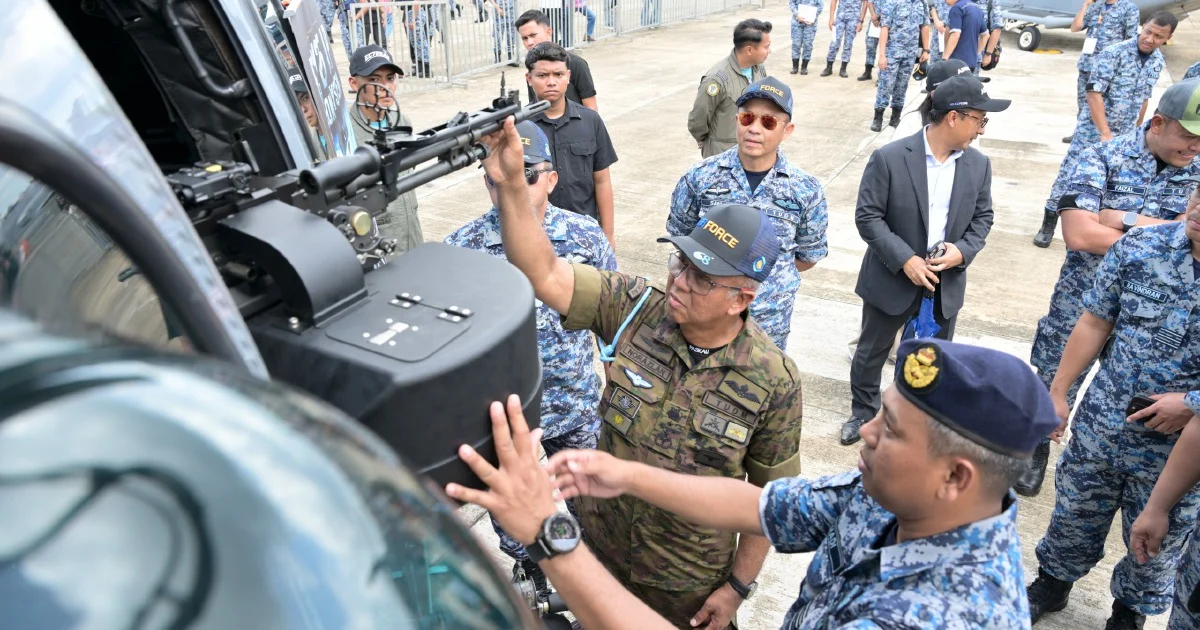
The Royal Malaysian Air Force has significantly expanded the operational scope of its EC725 helicopter fleet by integrating upgraded armament systems designed specifically for combat search and rescue missions in hostile and unpredictable environments. This enhancement represents a strategic shift in Malaysia's approach to personnel recovery operations, particularly in scenarios where recovery teams face armed opposition or operate in zones with elevated security risks.
The EC725, manufactured by European helicopter specialists, has long served as a cornerstone of regional air-mobility operations throughout Southeast Asia. The airframe's proven reliability and capacity for carrying personnel have made it a preferred platform for numerous armed forces conducting expeditionary operations. The addition of enhanced firepower capabilities transforms these aircraft from primarily transport-focused platforms into more versatile systems capable of providing suppressive fire and self-defence during extraction scenarios.
Combat search and rescue operations represent one of the most complex and dangerous military undertakings, requiring rapid insertion into contested areas, often under fire, to recover downed aviators or isolated personnel. These missions demand platforms that balance speed, range, payload capacity, and defensive capabilities. The upgraded EC725 configuration addresses these multifaceted requirements by integrating armament systems that enable crew chiefs and dedicated gunners to provide covering fire while rescue teams conduct their operations on the ground.
The firepower enhancements to the Malaysian fleet reflect broader international trends in military helicopter development, where sophisticated nations increasingly blur the distinction between transport and attack platforms. Modern doctrine emphasises versatility and rapid response, and the EC725 modifications position Malaysia to conduct more ambitious rescue operations that would previously have been constrained by insufficient defensive capability. This doctrinal evolution acknowledges the reality that contemporary conflict zones present asymmetric threats requiring flexible response options.
From a regional security perspective, the upgrade carries significance beyond Malaysia's borders. Southeast Asian nations increasingly operate in complex security environments where transnational threats, maritime piracy, and insurgent movements create demands for capable personnel recovery systems. The Malaysian enhancement demonstrates confidence in advancing indigenous military capabilities and sets a template that other regional forces may evaluate for their own fleet modernisation programmes.
The technical integration of additional weaponry into existing EC725 airframes requires careful engineering to maintain aircraft balance, stability, and performance envelopes. These upgrades typically involve modifications to mounting systems, ammunition handling infrastructure, sighting and fire-control systems, and electrical architecture. The Eurocopter-manufactured airframe's modular design permits such enhancements while preserving the fundamental reliability characteristics that have made the platform valuable across decades of international service.
Operationally, crews conducting combat search and rescue missions will benefit from enhanced situational awareness and defensive response options when navigating high-threat areas. The firepower upgrade allows these helicopters to suppress ground fire, provide armed overwatch for extraction zones, and engage threats that might otherwise pin down or endanger recovery teams. This capability elevation directly translates into improved mission success rates and enhanced personnel survivability during extraction operations under fire.
The timing of this modernisation initiative reflects Malaysia's strategic assessment of evolving security challenges in its operating environment. As regional maritime tensions persist and transnational security threats diversify, maintaining capable personnel recovery assets becomes increasingly important. The decision to upgrade the EC725 fleet demonstrates commitment to sustaining operational effectiveness across the full spectrum of military operations, from conventional warfare to counterinsurgency to maritime security missions.
Training requirements accompany any significant weapons integration programme. Royal Malaysian Air Force personnel must develop proficiency with new systems, establish tactical procedures for their employment, and conduct integration exercises to ensure seamless coordination between aircrew and ground forces. These training investments represent a necessary foundation for operationalising the enhanced capabilities effectively and safely.
The upgraded EC725 helicopters will assume expanded roles within Malaysia's broader defence architecture, particularly supporting regional expeditionary operations and joint operations with regional partners. The enhanced capability strengthens Malaysia's capacity to conduct autonomous or allied operations across Southeast Asia, contributing to regional stability and demonstrating technological advancement in the defence sector.
International defence partnerships typically accompany such capability enhancements. Technical support arrangements with European partners, supply chain relationships for ammunition and spare parts, and information-sharing protocols regarding tactics and procedures all require management and coordination. These partnerships reinforce Malaysia's integration into broader security architecture while building professional relationships that yield broader strategic benefits.
Looking forward, the upgraded EC725 programme demonstrates that even mature platforms can gain significant operational relevance through thoughtful modernisation. This approach offers cost advantages compared to entirely new acquisitions while extending platform service life and maintaining force structure effectiveness. The Malaysian programme exemplifies pragmatic defence planning that balances capability requirements against budgetary constraints while advancing national security interests.
%22%2F%3E%3C%2Fpattern%3E%3C%2Fdefs%3E%3Crect%20width%3D%22100%25%22%20height%3D%22100%25%22%20fill%3D%22url(%23ph243big)%22%2F%3E%3Crect%20width%3D%22100%25%22%20height%3D%22100%25%22%20fill%3D%22url(%23ph243bip)%22%2F%3E%3Ctext%20x%3D%2250%25%22%20y%3D%2250%25%22%20text-anchor%3D%22middle%22%20dominant-baseline%3D%22central%22%20fill%3D%22rgba(255%2C255%2C255%2C0.95)%22%20font-family%3D%22Georgia%2C%20'Times%20New%20Roman'%2C%20serif%22%20font-weight%3D%22700%22%20font-size%3D%22272%22%20letter-spacing%3D%22-0.02em%22%3EAnwar%3C%2Ftext%3E%3C%2Fsvg%3E)
%22%2F%3E%3C%2Fpattern%3E%3C%2Fdefs%3E%3Crect%20width%3D%22100%25%22%20height%3D%22100%25%22%20fill%3D%22url(%23ph50glvg)%22%2F%3E%3Crect%20width%3D%22100%25%22%20height%3D%22100%25%22%20fill%3D%22url(%23ph50glvp)%22%2F%3E%3Ctext%20x%3D%2250%25%22%20y%3D%2250%25%22%20text-anchor%3D%22middle%22%20dominant-baseline%3D%22central%22%20fill%3D%22rgba(255%2C255%2C255%2C0.95)%22%20font-family%3D%22Georgia%2C%20'Times%20New%20Roman'%2C%20serif%22%20font-weight%3D%22700%22%20font-size%3D%22136%22%20letter-spacing%3D%22-0.02em%22%3EDemocratic%3C%2Ftext%3E%3C%2Fsvg%3E)