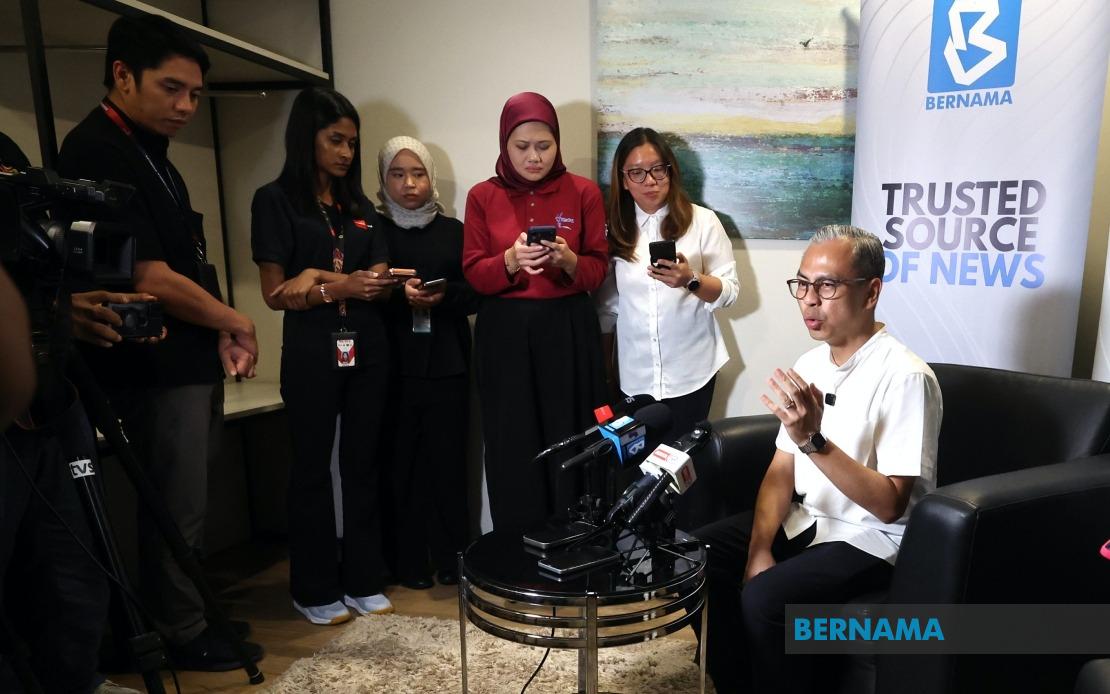
The Malaysian Media Council must be reinforced as an effective self-regulatory mechanism to protect the integrity of the country's media landscape and foster ethical journalism practices, according to Communications Minister Datuk Fahmi Fadzil. Speaking during an official visit to Bernama's operations centre in Johor Bahru on July 7, Fahmi underscored the government's commitment to supporting the fledgling council during its critical early operational phase, while simultaneously urging established media organisations and social media platforms to expand their membership within the body.
The minister's remarks come as part of a broader policy shift designed to place media accountability squarely within industry hands rather than relying solely on government intervention. By strengthening the MMM as an independent arbiter of media conduct, Malaysian authorities hope to create a framework where journalistic standards are upheld through professional consensus rather than regulatory coercion. Fahmi indicated that the government would provide necessary resources during the establishment period, recognising that newly created institutions require institutional scaffolding to function effectively. The approach reflects international best practices whereby media bodies exercise self-regulation to maintain public trust and professional credibility.
Expanding the council's membership base emerges as a critical priority for achieving the council's full potential. Fahmi emphasised that broader industry participation would enable the MMM to address media-related concerns through channels designed specifically for the profession, thereby creating more context-sensitive and industry-aware resolutions. When journalists and media organisations operate under a mutually agreed code of conduct administered by their peers, the decision-making process becomes more transparent and accountable to the industry itself. Such an arrangement potentially reduces tensions between media practitioners and government bodies, as disputes are resolved through professional discourse rather than adversarial legal processes.
Prime Minister Datuk Seri Anwar Ibrahim has already signalled transformative changes to how complaints against journalists are handled. Under the new protocol, allegations against practitioners from recognised media organisations will no longer trigger automatic investigation or prosecution. Instead, all such grievances must first be channelled through the Malaysian Media Council for assessment and handling. This mechanism represents a significant departure from previous approaches, as it introduces a fairness and transparency safeguard by requiring independent professional review before any formal action proceeds. The arrangement aims to insulate journalists from capricious investigation while ensuring that legitimate concerns about journalistic conduct receive proper scrutiny within an appropriate professional forum.
Social media platforms represent a critical blind spot in Malaysia's current media governance architecture, a challenge that Fahmi specifically identified as requiring urgent attention. While traditional media organisations generally adhere to established ethical standards and professional codes, the landscape of user-generated content and algorithmic content distribution on digital platforms operates under minimal local oversight. Platforms including Facebook, TikTok, Instagram, and X maintain their own community guidelines, yet these universal policies frequently lack nuance regarding Malaysian cultural sensitivities, legal frameworks, and specific social contexts. The unfiltered dissemination of sensitive information through these channels has become a mounting concern for policymakers and community safety advocates alike.
A recent tragic incident in Banting illustrated the practical dangers of unregulated social media content sharing. When a teenager stabbed a fellow student, graphic images of the victim's injuries and details from ongoing police investigations circulated rapidly across digital platforms without regard for privacy, dignity, or the integrity of law enforcement operations. Such incidents demonstrate how the absence of platform accountability mechanisms can amplify harm in real time, particularly affecting vulnerable individuals such as minors. The pervasive sharing of investigative details can compromise criminal proceedings, traumatise victims and their families, and undermine public safety objectives. These challenges extend beyond individual cases to encompass broader concerns about misinformation, false rumours, and content that exploits local sensitivities for engagement metrics.
Incorporating social media platforms into the Malaysian Media Council framework would fundamentally reshape how digital content is governed within the country. Rather than operating under generic global guidelines, platforms would need to engage with local experts, community leaders, and regulatory bodies to develop context-specific policies. Such engagement could address how platforms handle sensitive content related to religion, ethnicity, and security matters, all of which carry particular significance in Malaysia's multicultural society. The presence of platform representatives within the council would create direct communication channels between technology companies and local stakeholders, enabling more responsive policy adjustments and reducing the lag time between identifying problems and implementing solutions.
Fahmi explicitly connected the strengthening of media self-regulation to Malaysia's positioning on the international Media Freedom Index, a globally recognised metric that assesses press freedom conditions across nations. Malaysia's current ranking reflects concerns about government interference in journalism, inadequate protections for journalists, and perceived limitations on editorial independence. By demonstrating that the country can effectively manage media accountability through professional self-regulation rather than state control, policymakers aim to signal international observers that Malaysia respects media pluralism and professional standards. Improved rankings in global indices carries tangible benefits, including enhanced international credibility, potential economic advantages through improved investment sentiment, and stronger standing within regional and international forums focused on democratic governance.
The government's supportive role in the council's early development marks an important distinction from true independence, yet recognises practical realities about institutional capacity building. New organisations typically require financial resources, administrative infrastructure, and initial legitimacy-building support to become operational and effective. By providing this foundational assistance, the government acknowledges that self-regulation cannot flourish in a vacuum. However, the eventual trajectory must lead toward genuine autonomy, whereby the council's decision-making, funding mechanisms, and governance structures operate independently from political influence. This transition from government-supported launch to sustainable independence will test whether Malaysian stakeholders genuinely embrace media self-regulation or view it primarily as a cosmetic reform.
For Malaysian and Southeast Asian readers, these developments carry substantial implications for how information circulates and how journalists operate across the region. The Malaysian model, if successfully implemented, could influence how other ASEAN nations approach media regulation and platform accountability. Southeast Asia encompasses diverse democracies and governance systems, yet most struggle with similar tensions between protecting national interests, managing misinformation, and preserving journalistic freedom. A functional Malaysian Media Council demonstrates that industry self-regulation represents a viable middle path, potentially attractive to governments seeking international legitimacy while maintaining control mechanisms. Conversely, if the council becomes merely a vehicle for indirect government pressure on media outlets, it could reinforce scepticism about self-regulatory claims across the region.
The timeline for achieving meaningful participation from social media platforms remains uncertain, particularly given the resistance these companies typically demonstrate toward localized regulation. Global technology firms generally prefer uniform policies that can be applied across markets rather than negotiating distinct arrangements with individual countries. However, Fahmi's framing suggests that MMM participation serves platform interests by enabling them to address contentious issues proactively rather than facing reactive government pressure or legislative mandates. This positioning the council's invitation as an opportunity rather than a burden might gradually shift platform calculations. The success of this outreach effort will significantly determine whether the Malaysian Media Council evolves into a genuinely comprehensive body capable of addressing contemporary media challenges or remains primarily focused on traditional journalism.

