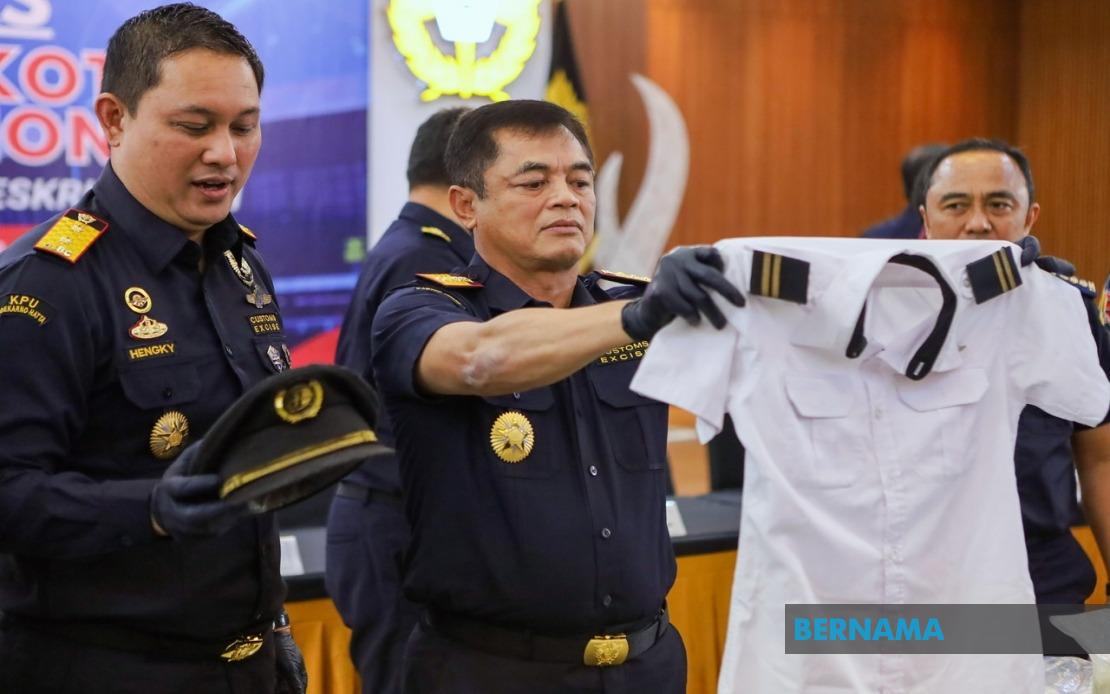
A Malaysian commercial pilot has been arrested in Jakarta after customs authorities intercepted what Indonesian officials describe as a major drug smuggling operation at the country's primary international gateway. The 39-year-old suspect, who had just completed piloting a passenger aircraft from Kuala Lumpur carrying approximately 170 travellers, was detained upon arrival at Soekarno-Hatta International Airport on July 29 with substantial quantities of illegal narcotics concealed in his personal baggage.
According to Indonesia's Director General of Customs and Excise Djaka Budi Utama, the seizure represents one of the more significant interceptions at the Jakarta facility in recent months. Authorities recovered 14 packages containing roughly 70,114 ecstasy tablets with a combined net weight of approximately 25.15 kilogrammes. The estimated street value of the ecstasy alone reached approximately Rp60 billion. Beyond the primary haul, investigators also found approximately four grammes of crystal methamphetamine, indicating the suspect may have been transporting multiple drug types simultaneously.
The circumstances surrounding the arrest have raised considerable concerns within Indonesian law enforcement circles. Awaludin Amin, head of the narcotics subdivision within the Criminal Investigation Agency's narcotics directorate, revealed that laboratory analysis of the suspect's urine tested positive for MDMA, methamphetamine, and cocaine—suggesting active personal consumption or recent handling of multiple controlled substances. This finding compounds suspicions that the individual occupied a more sophisticated role within trafficking operations than a mere courier.
During initial questioning, the suspect admitted to transporting illegal drugs into Indonesia on at least three previous occasions, with two shipments entering through Jakarta and one through an alternative regional port of entry. This pattern of repeated activity strongly suggests that the arrest may represent only a single thread in a more expansive smuggling operation. Awaludin Amin indicated that investigative teams suspect the pilot operates as part of a structured international network rather than acting as an independent operator, though establishing definitive connections requires substantial additional fieldwork and intelligence gathering.
The involvement of aviation personnel in large-scale drug trafficking represents a particular vulnerability that both Indonesian and Malaysian authorities now acknowledge requires closer attention. Flight crew members traditionally benefit from expedited processing at international airports and are generally classified as low-risk travellers who pass through dedicated crew channels, substantially reducing the time and scrutiny applied during standard inspections. Soekarno-Hatta Customs Head Hengki acknowledged this systemic advantage while simultaneously emphasizing that Indonesian Customs applies identical inspection standards to all individuals regardless of professional status.
The case also highlights the specific operational advantages that commercial aviation provides to trafficking networks. A pilot maintaining legitimate access to international routes can transport contraband with considerably reduced detection risk compared to conventional passengers, effectively transforming each flight into a potential smuggling opportunity. The suspect's occupation as a commercial pilot—rather than, for instance, a ground worker or administrative employee—provided substantially greater freedom of movement and fewer procedural obstacles.
Indonesian and Malaysian authorities have already initiated formal coordination protocols in response to the arrest. The Directorate General of Civil Aviation in Indonesia has begun liaison activities with Malaysia's aviation regulatory authorities, while the Royal Malaysia Police and Royal Malaysian Customs Department have established direct communication channels with their Indonesian counterparts. These diplomatic steps reflect acknowledgment that transnational drug smuggling requires synchronized investigation and intelligence sharing across borders, particularly given the frequent movement of personnel and goods between the two countries.
Investigators have begun tracing additional individuals potentially connected to the broader smuggling network and attempting to identify the intended recipients of the drugs within Indonesia. The scope of these investigations remains unclear, but the suspect's admission of previous smuggling activity suggests that dismantling the complete operation may require months of coordinated effort across multiple jurisdictions. Authorities must also determine whether this case connects to other documented cross-border smuggling operations or represents an isolated network operating independently.
The arrest occurs within a broader context of persistent drug trafficking challenges affecting Southeast Asia. Despite increased regional enforcement efforts and international cooperation initiatives, the transit of synthetic drugs through major transportation hubs continues unabated. The involvement of trusted aviation personnel—individuals with legitimate professional credentials and regular international access—demonstrates how trafficking networks exploit the structural vulnerabilities inherent in modern international commerce and travel systems.
For Malaysian authorities, the case presents both investigative challenges and policy implications. The suspect's utilization of his position as a commercial pilot to facilitate drug smuggling raises questions about vetting procedures and ongoing monitoring protocols within Malaysia's aviation industry. While the pilot's involvement does not suggest systemic corruption within Malaysian Airlines or other operators, it does highlight the necessity of enhanced security procedures and information sharing between aviation authorities and law enforcement agencies tasked with drug interdiction.
The investigation's ultimate scope remains uncertain, though Indonesian investigators' explicit statements regarding suspected international network involvement suggest the operation extends considerably beyond the detained individual. The coordination between customs authorities, narcotics specialists, and international police bodies will prove critical in determining whether this arrest represents a significant disruption to organized trafficking operations or merely the temporary incapacitation of a single operator within a larger structure.

