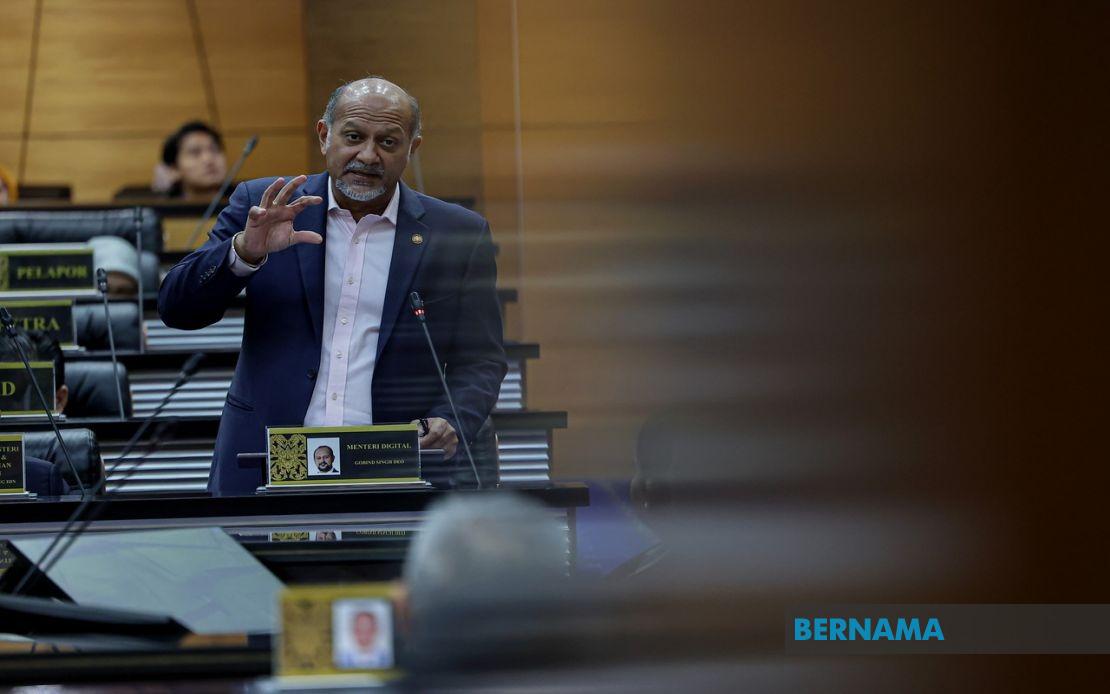
Malaysia is moving toward a comprehensive legal framework that places accountability squarely on the humans and organizations behind artificial intelligence systems, rather than on the technology itself. Digital Minister Gobind Singh Deo made this commitment during parliamentary debate on Monday, as lawmakers pressed for public assurances amid growing reliance on AI across both government and business sectors. The distinction matters profoundly: because AI systems lack the legal personality and moral agency that humans possess, responsibility for any harm or risk cannot be attributed to the algorithm alone—it must flow back to whoever developed, provided, operated, or deployed the system in question.
This foundational principle of human accountability underpins the AI Governance Bill now being drafted by the government. Gobind emphasized that accountability will extend across the entire lifecycle of any AI system, from its initial conception through development, training, deployment, modification, and eventually decommissioning. The breadth of this approach reflects a growing recognition that risk does not materialize at a single moment. A system that operated safely at launch may become dangerous once modified, repositioned into a new operational context, connected to other systems, or applied to user groups for which it was never intended. This lifecycle thinking is critical, because many AI failures result not from flawed initial design but from changes made far downstream in an application's life.
The government is studying what Gobind called a comprehensive accountability approach, though details remain limited at this stage. What is clear is the intent to avoid replacing existing sectoral regulations or creating overlapping legal jurisdictions. Instead, the AI Governance Bill is being designed as a horizontal framework that sits alongside—and complements—current laws governing consumer protection, intellectual property, criminal conduct, and industry-specific rules. If an AI system malfunctions and causes criminal harm, breaches consumer rights, or infringes intellectual property, the existing relevant laws and agencies will retain their authority. This layered approach makes sense for a developing technology where regulators must balance innovation protection against public safety.
Among the practical mechanisms being explored is an AI incident reporting requirement, which would create visibility into system failures and unintended consequences as they occur in the real world. Such a system would allow authorities to assess emerging risks, take immediate corrective action, and identify patterns that might prevent similar incidents from recurring elsewhere. This mirrors incident reporting requirements in aviation, pharmaceuticals, and financial services—mature sectors where transparency and collective learning have reduced harm. For Malaysia, establishing incident reporting early could position the country as a responsible AI adopter and build international confidence in systems developed or deployed locally.
Another innovation under consideration is a regulatory sandbox—a controlled environment where developers, industry participants, and government agencies could test and refine AI systems before they reach wider deployment. Sandboxes have proven valuable in fintech and other emerging sectors, allowing innovators to experiment with reduced compliance burden while authorities observe and learn. For Malaysia, this approach could accelerate responsible AI adoption by the private sector while gathering evidence about what governance measures work in practice. Companies benefit from clearer operational pathways; regulators gain empirical data to inform future rules.
Gobind was explicit about what the government does not intend to do: directly regulate the content or output produced by AI systems. This is a significant constraint on government power and suggests policymakers understand the difficulty and potential risks of content censorship, even well-intentioned. Instead, the focus is on governance mechanisms designed to mitigate risk before it materializes—vetting the system's training data, testing it against edge cases, ensuring transparency about its limitations, and holding operators responsible if they deploy it recklessly. This approach respects both innovation and free expression while still protecting the public.
For Malaysian citizens and businesses, the signal is clear: the government recognizes AI as a transformative force requiring thoughtful legal architecture rather than panicked prohibition. Malaysians increasingly encounter AI in daily life—from banking algorithms that assess loan applications to healthcare systems that assist diagnosis. The growing pervasiveness demands legal clarity about who answers when things go wrong. A student denied university admission by a biased AI system, a patient harmed by a faulty diagnostic tool, a worker displaced by automated decision-making—all these actors need to know whom to hold accountable and what remedies are available.
The challenge ahead is ensuring that the bill is neither so stringent that it stifles innovation nor so permissive that it leaves the public exposed. Malaysia has a window of opportunity here. Many Western democracies are still debating AI regulation with little consensus; the European Union's AI Act, for instance, has faced criticism for being either too rigid or insufficiently protective depending on stakeholder perspective. Asean nations have largely been silent on AI governance, creating space for Malaysia to establish regional leadership. A balanced framework that protects accountability without paralyzing development could attract responsible AI companies and researchers to Malaysia, positioning it as a trusted hub in Southeast Asia.
Gobind's framing also addresses a subtle but important public anxiety: the fear that AI represents a loss of human agency and control. By insisting that responsibility rests with humans, the bill reinforces the idea that AI remains a tool subject to human oversight and moral judgment. This is both legally sound and psychologically reassuring. It means that when governments or companies deploy AI, they cannot deflect criticism by blaming the algorithm—they own the consequences. This principle, embedded in law, could shift incentives toward greater caution and transparency in AI deployment across Malaysia's economy.
The government's commitment to refining the bill further, with explicit attention to protecting public interests while supporting innovation and competitiveness, suggests an iterative process ahead. Consultation with industry, civil society, academics, and the affected public will be essential. Malaysia's experience with earlier digital legislation—including data protection laws and cybersecurity frameworks—will inform this effort. The goal articulated by Gobind is ambitious: a legal system that permits Malaysia to develop and adopt AI safely, responsibly, and reliably while competing globally in the digital economy. Success on this front would strengthen public trust in both the technology and the institutions governing it.