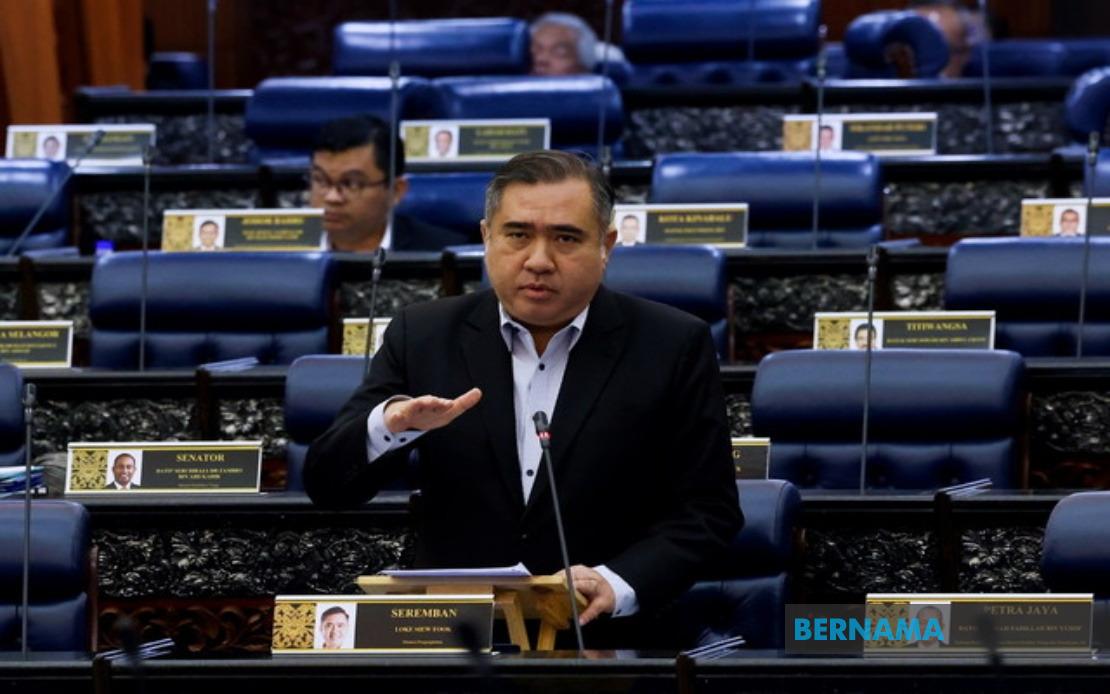
The Malaysian government is moving to create a structured compensation framework for victims of fatal and serious road accidents, signalling a significant shift in how the legal system addresses the human cost of dangerous driving. Transport Minister Anthony Loke announced before Parliament that the Ministry of Transport intends to amend the Road Transport Act 1987 to enable courts to order offenders convicted of grave traffic violations to provide monetary compensation to victims or their surviving relatives. This development represents a recognition that current traffic law, despite existing penalties, does not adequately address the financial devastation wrought upon families when lives are lost or permanently altered on Malaysian roads.
The proposed amendments would grant judicial discretion in determining compensation amounts based on the specific circumstances of each case. Courts would weigh multiple considerations when setting the level of redress, including the severity of injuries sustained or fatalities incurred, the quantifiable losses endured by victims and their dependants, and the financial capacity of the convicted offender to make payments. This tiered approach acknowledges that road deaths are not uniform in their impact, and that compensation must reflect both the gravity of harm and the realistic ability of offenders to pay. Such nuance represents a departure from standardised traffic fines that often fail to match the magnitude of suffering imposed on victims' families.
The compensation mechanism addresses a longstanding gap in Malaysian road safety legislation. Previously, those killed or catastrophically injured through another driver's recklessness had limited recourse to direct court-ordered compensation from the offender, forcing families to pursue separate civil suits—a lengthy and expensive process beyond the reach of many. By embedding compensation within the criminal justice framework, the government aims to streamline access to financial remedy and ensure that consequences for dangerous driving reflect not merely punitive intent but also restorative justice principles. This aligns Malaysia with international best practices in victim support within traffic law.
Concurrently, the government has advanced the Road Transport (Amendment) Bill 2026 through the Dewan Rakyat, establishing unprecedented legal ground to prosecute illegal racing before accidents occur. Previously, enforcement authorities could only take action following a crash; perpetrators could engage in street racing with relative impunity until their activities resulted in injury or death. The new Section 42A creates a standalone offence targeting illegal racing conduct itself, fundamentally changing the enforcement landscape. First-time offenders face fines ranging from RM2,000 to RM10,000 alongside potential imprisonment up to two years, or both penalties combined. Repeat offences carry substantially harsher consequences: fines between RM5,000 and RM20,000 with imprisonment extending to five years.
This legislative innovation reflects frustration with the persistent toll that illegal street racing exerts on Malaysian communities. The Johor accident on June 1 at Km27 of Jalan Renggam-Simpang Renggam, which killed five people, exemplifies the catastrophic consequences of uncontrolled racing behaviour. The Attorney-General's Chambers directed that investigations proceed under Section 302 of the Penal Code—a charge reserved for culpable homicide—underscoring the gravity with which government prosecutors now regard deaths stemming from racing activities. Recent enforcement operations, including a Johor crackdown that arrested 16 individuals and seized 260 motorcycles, demonstrate intensified commitment to disrupting racing networks before they cause tragedy.
For Malaysian readers, these developments carry immediate relevance. Road safety remains a public health crisis, with more than 6,000 annual deaths indicating that roughly 16 to 17 people perish daily on Malaysian roads. The country's accident rate per capita exceeds many regional peers, reflecting a complex mix of enforcement capacity, vehicle standards, road infrastructure, and driver behaviour. Proposals addressing both accountability and prevention acknowledge that legal mechanisms alone cannot solve this problem without complementary cultural shifts. Transport Minister Loke's explicit warning against politicising road safety suggests tension within government ranks regarding how aggressively to pursue enforcement and whether certain constituencies resist stricter measures.
The compensation framework carries particular importance for lower-income families, whose members are disproportionately represented among accident fatalities. A motorcyclist killed through another driver's negligence may have been the family's primary earner; without court-ordered compensation, dependants face destitution alongside grief. By establishing a mechanism within criminal proceedings, the government attempts to ensure that financial consequences reach offenders regardless of whether victims' families can afford litigation. However, effectiveness depends entirely on offenders' actual financial capacity to pay and on judicial willingness to impose substantial compensation orders rather than defaulting to traditional fine amounts.
The amendments also reflect recognition that dangerous driving represents a choice—and often a repeated pattern—rather than mere accident. Illegal racing culture among young drivers has become entrenched in certain Malaysian communities, with participants viewing street racing as entertainment despite its lethal risks to themselves and others. Prosecuting racing conduct before accidents occur acknowledges that this behaviour is inherently reckless regardless of whether a specific incident results. By criminalising the conduct itself rather than waiting for tragedy, authorities can intervene earlier and more frequently, potentially disrupting networks and deterring participation.
Yet the government's acknowledgement that behavioural change and public awareness remain crucial alongside enforcement reveals the limits of legal mechanisms. Penalties deter only those who perceive genuine risk of detection and punishment; if detection remains improbable due to limited traffic enforcement capacity, young drivers may continue viewing illegal racing as acceptable. Malaysian enforcement agencies face chronic resource constraints, particularly in evening and night hours when street racing typically occurs. Meaningful reduction in racing-related deaths requires simultaneous investment in enforcement presence, surveillance technology, and community engagement—not legislation alone.
The Transport Ministry's call for cross-ministerial collaboration and societal participation suggests that senior officials understand road safety as a systemic challenge transcending any single agency's purview. Education ministries can address driver training and safety culture among young people. Local authorities can modify road design to discourage racing. Community and religious leaders can articulate moral arguments against behaviour that endangers others' lives. Media can balance coverage that avoids glorifying illegal racing. This holistic framing contradicts political incentives that sometimes reward toughness on crime without investment in prevention and education—areas that show genuine results but lack headline appeal.
For Southeast Asian neighbours observing Malaysia's approach, these amendments offer a legislative template for addressing identical problems. Road deaths plague the entire region, with similar underlying causes: motorcycles representing a large proportion of vehicles, mixed enforcement capacity, limited victim compensation systems, and youth culture normalising dangerous driving. Malaysia's decision to create pre-accident offences for illegal racing and to embed victim compensation within criminal proceedings could inform legislative efforts across ASEAN, though each nation must adapt provisions to its legal traditions and enforcement realities.
Implementation success remains uncertain. Courts must embrace the compensation mandate rather than treating it as optional. Prosecutors must charge illegal racing offences consistently rather than resorting to lesser charges offering easier conviction. Traffic police must sustain enforcement intensity despite institutional pressures and resource limitations. Public behaviour must shift such that drivers view road safety as shared responsibility rather than something others' problem. These prerequisites extend far beyond the Transport Ministry's direct control, explaining the minister's insistence that road safety demands not merely political will but societal commitment. Without this confluence of factors, even well-intentioned legislative reform risks becoming symbolic rather than transformative.

