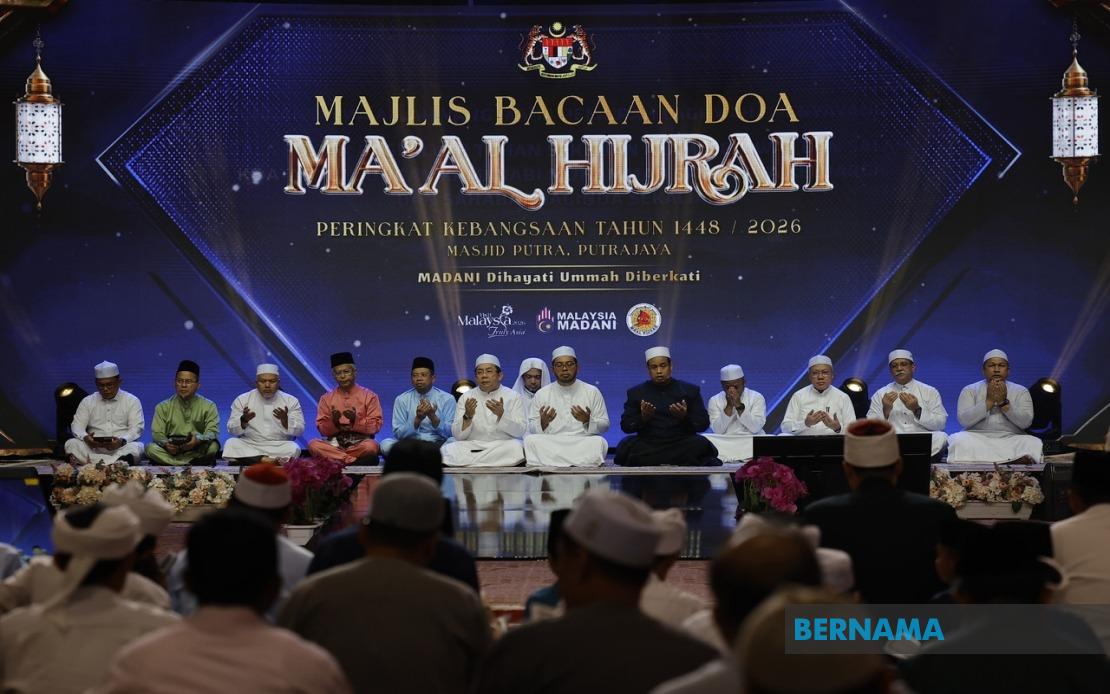
Malaysia's Minister in the Prime Minister's Department (Religious Affairs), Datuk Dr Zulkifli Hasan, has issued a resonant call for the country's youth to channel the transformative essence of Prophet Muhammad's hijrah towards driving constructive change in their lives and communities. Speaking during commemorative activities in Putrajaya, Zulkifli emphasized that young Malaysians possess tremendous latent capacity to contribute meaningfully to society, and that reflecting deeply on the historical significance of the hijrah—the migration from Makkah to Madinah—offers a powerful template for personal development and social progress.
The hijrah, which marks the Islamic calendar's pivotal turning point, transcends its historical narrative to represent a fundamental principle of renewal and purposeful migration towards betterment. For Malaysia's diverse youth population, particularly those seeking direction amid rapid social and economic transformations, the minister's message carries particular resonance. The hijrah philosophy encompasses not merely physical relocation but rather an internal commitment to abandoning negative practices and embracing virtuous principles—a concept that resonates across generational and cultural boundaries in contemporary Malaysian society.
This year's national-level commemoration deliberately departs from previous formats, adopting a more intimate and spiritually grounded approach. The principal observance will commence at Putra Mosque, deliberately chosen as the symbolic epicenter for rekindling collective memory of Prophet Muhammad's foundational work in establishing Madinah as an integrated community centered on the mosque. Zulkifli underscored the profound significance of this venue selection, noting that mosques historically served as crucibles for civilizational advancement and community cohesion, establishing institutional frameworks that addressed both spiritual and material wellbeing of societies.
The strategic emphasis on Putra Mosque as the ceremonial launching point serves multiple functions within Malaysia's contemporary religious and civic landscape. By anchoring the celebration at this prominent national institution, organizers amplify the message that spiritual renewal and institutional development remain inextricably linked. For younger Malaysians navigating questions of identity and purpose, this physical and symbolic connection between faith practice and communal infrastructure provides tangible evidence that religious commitment naturally generates social benefits and strengthens the fabric of shared community life.
Recognizing current global economic pressures and energy constraints affecting nations worldwide, organizers have deliberately scaled back the celebration to reflect principles of environmental stewardship and resource responsibility. This measured approach demonstrates how traditional Islamic principles—including wisdom in consumption and consideration for collective welfare—can inform modern responses to contemporary crises. For Malaysian youth concerned about sustainability and social responsibility, this calibration of celebration scale offers a practical model for integrating spiritual observance with environmental consciousness.
The programmatic centerpiece, scheduled for tomorrow at Putra Mosque commencing at 7 am on the first of Muharam 1448H, will feature the conferral of national and international Maal Hijrah Figure awards. This ceremony, to be officiated by the Sultan of Perak, Sultan Nazrin Shah, recognizes individuals who embody the hijrah spirit through exemplary personal transformation and substantive community contributions. The royal patronage underscores the significance accorded to this occasion within Malaysia's institutional hierarchy and demonstrates systematic national support for celebrating and incentivizing positive social change.
Complementing the central mosque-based observance, JAKIM Auditorium will host a major keynote lecture gathering on June 18, anticipated to draw approximately 1,000 participants including public figures, religious scholars, and concerned citizens. This forum will feature addresses from nationally and internationally recognized Islamic figures whose personal journeys and intellectual contributions illuminate the hijrah concept's contemporary applications. By creating space for public engagement with diverse perspectives from respected voices, the program facilitates broader societal reflection on how historical Islamic principles translate into practical guidance for modern life challenges.
The structured opportunity for Malaysians to absorb lived experiences and philosophical insights from accomplished hijrah exemplars carries significant pedagogical value, particularly for younger participants seeking mentorship and inspiration. Rather than presenting the hijrah as an abstract historical event confined to Islamic studies curricula, the programming framework positions it as an ongoing phenomenon relevant to personal decision-making, career development, and community engagement. This reframing proves especially pertinent for Malaysian youth navigating competitive labor markets, educational transitions, and evolving social expectations.
Minister Zulkifli's overarching message invites comprehensive introspection regarding how ancient principles of deliberate transformation maintain currency for societies experiencing rapid modernization. The invitation to Malaysian youth to internalize hijrah teachings suggests that meaningful progress requires neither rejection of tradition nor uncritical adoption of contemporary trends, but rather thoughtful synthesis drawing on both inherited wisdom and present-day realities. This balanced approach addresses common generational tensions between preservation of cultural heritage and embrace of innovation, proposing hijrah philosophy as the integrating framework.
For Malaysia's multi-ethnic society with significant Muslim and non-Muslim populations, the national prominence accorded to this Islamic observance reflects the constitutional role of Islam and the need for inclusive national narratives that respect religious communities while fostering shared civic values. The emphasis on community development, institutional strengthening, and positive personal transformation—central themes in this year's hijrah commemoration—resonates across religious and cultural boundaries, offering universal principles applicable to diverse groups committed to societal advancement.
The deliberate selection of Putra Mosque, the royal presence, the structured academic forums, and the explicit appeal to youth collectively constitute a comprehensive statement regarding institutional commitment to channeling spiritual resources toward measurable social benefits. For observers tracking Malaysia's capacity to integrate religious observance with modern governance priorities, this year's Maal Hijrah celebration demonstrates conscious effort to present Islam as a dynamic force for positive change rather than primarily a matter of ritual compliance or historical commemoration.

