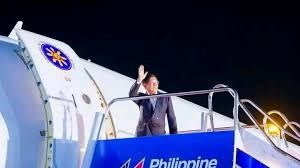
Philippine President Ferdinand R. Marcos Jr left Manila late Tuesday evening for Kazan, Russia, to preside over his nation's role in the Asean-Russia Commemorative Summit and engage in direct discussions with Russian President Vladimir Putin. The presidential aircraft departed Villamor Airbase in Pasay City shortly after midnight, carrying the chief executive and his accompanying delegation to the historically significant gathering scheduled for mid-June.
This journey holds layered symbolic importance for the Philippines and the broader region. The summit represents three and a half decades of institutional cooperation between the ten-member Association of Southeast Asian Nations and the Russian Federation, while simultaneously marking a golden milestone in bilateral relations between Manila and Moscow, which have maintained formal diplomatic ties since June 2, 1976. For Marcos, the visit constitutes his inaugural presidential trip to Russian territory, adding personal diplomatic weight to the engagement.
The timing of the summit reflects deeper geopolitical currents affecting Southeast Asia and the world at large. As energy prices remain volatile and food supply chains face persistent fragility in the wake of global disruptions and tensions, the Asean leadership recognises the critical need to strengthen partnerships addressing these fundamental concerns. The Philippines, currently serving as Asean Chair, has positioned itself as the broker of these conversations, elevating the significance of Marcos's attendance and bilateral engagement with Putin.
During bilateral discussions with the Russian president, the Philippine delegation intends to emphasise mutually beneficial cooperation in energy and food security, two sectors where the region faces genuine vulnerabilities. The Philippines, as an archipelago dependent on maritime trade and imports for staple commodities, carries particular urgency in these discussions. Energy price stability and food supply reliability directly influence domestic inflation, purchasing power for Filipino households, and the nation's overall macroeconomic health.
The broader summit agenda reveals Asean's comprehensive approach to revitalising its Russia partnership. The assembled leaders plan deliberations spanning peace and security architecture, trade and investment frameworks, technological cooperation including digital transformation initiatives, educational exchanges, tourism development, and cultural people-to-people interactions. This expansive scope underscores how regional nations view Russia not merely as a geopolitical actor but as a multifaceted partner with whom deeper institutional engagement serves diverse national and collective interests.
Marcos has explicitly framed this summit within his administration's Asean Chairmanship theme of "Navigating Our Future, Together," emphasising unity, centrality, and solidarity within the regional bloc. This rhetorical positioning matters significantly for Southeast Asian observers concerned about maintaining Asean's institutional cohesion amid great power competition. By championing Asean's collective voice and rules-based frameworks anchored in international law, Marcos signals Manila's commitment to preventing the region from fracturing along geopolitical fault lines. The summit thus becomes not merely a bilateral or Russia-focused initiative but a demonstration of Asean's capacity for independent, constructive engagement regardless of external pressures.
The substantial logistical sacrifice undertaken by the Philippine delegation underscores the perceived importance of this engagement. Despite a combined journey consuming approximately 26 hours of flight time, the president allocated only around 38 hours for the Russia visit itself, according to First Lady Liza Araneta-Marcos. Her commentary reflecting on the brevity of the stay proved instructive: every hour matters when discussions address issues fundamentally affecting Filipino families' daily lives, from dinner table affordability to fuel costs at petrol stations. This framing grounds high-level diplomacy in tangible, lived experience for ordinary citizens.
The summit documents expected to emerge from the June 17-18 gathering in Kazan will likely establish roadmaps for future cooperation between Asean and Russia across identified priority sectors. These agreements carry particular relevance for Malaysia and other Southeast Asian economies similarly vulnerable to energy price shocks and food security disruptions. Frameworks developed in Kazan could establish precedents for how the region collectively negotiates partnerships with major powers while protecting individual member state interests.
For observers tracking Southeast Asian foreign policy, Marcos's journey represents a careful diplomatic balancing act. The Philippines maintains treaty relationships with Western allies while simultaneously cultivating pragmatic engagement with Russia and China, attempting to derive maximum benefit from partnerships without surrendering strategic autonomy. This multilateral approach reflects regional consensus that prosperity and security require flexibility rather than alignment with any single external power, a principle increasingly important as global tensions persistently strain relationships between major powers.
The energy and food security focus carries immediate relevance beyond ceremony. Russia remains a significant global supplier of energy resources and agricultural commodities, whilst Asean represents a vast market and increasingly important regional hub for global supply chains. Discussions between these parties thus carry material economic consequences for billions of people throughout Asia and beyond. Should the summit produce concrete mechanisms for stabilising energy supplies or food trading relationships, the benefits would ripple throughout Southeast Asian economies vulnerable to commodity price volatility.
Marcos's commitment to advancing Asean centrality through this engagement also reflects understanding that the region's collective voice carries greater diplomatic weight than individual national positions. By leading this commemorative summit, the Philippine president demonstrates how even smaller regional actors can facilitate dialogue addressing universal challenges when they occupy institutional positions allowing convening authority. This lesson resonates throughout Southeast Asia, where strategic importance increasingly derives from positioning as constructive regional partners rather than alignment with any hegemonic power.
The bilateral dimension with Putin, whilst politically sensitive for some observers, reflects Manila's assessment that maintaining communication channels with all major powers serves Filipino interests. Dialogue does not imply agreement on all matters; rather, it enables clarification of positions, identification of common ground, and management of disagreements through established mechanisms. In an era of heightened great power competition, this approach offers Southeast Asian nations a framework for preserving autonomy and advancing national priorities without forced alignment.

