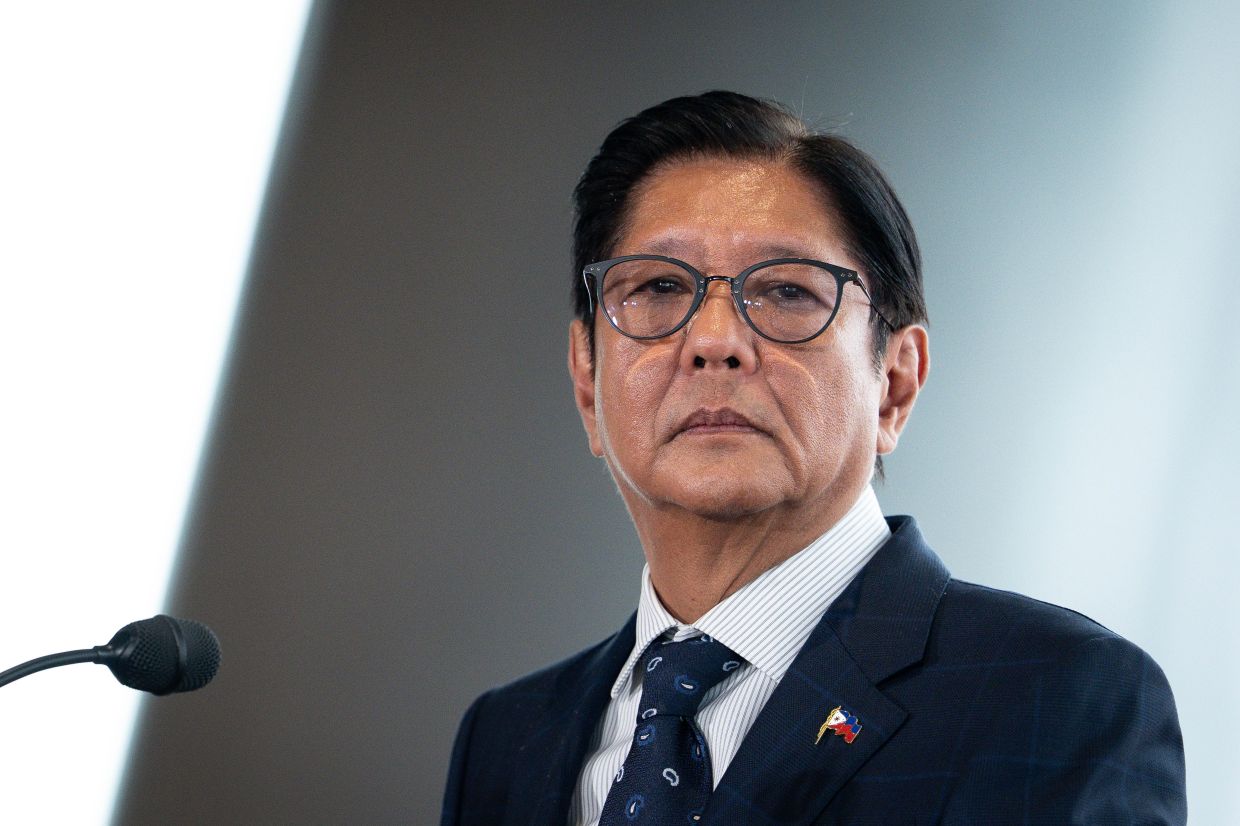
Philippine President Ferdinand Marcos Jr stands at a critical juncture as he prepares to address Congress on Monday in a speech intended to reset both his presidency and the nation's economic trajectory. The challenge is formidable: barely a year after his annual address shocked the nation by exposing billions of dollars in corruption tied to flood-control infrastructure, the fallout has rippled through the economy, dampening investment sentiment and consumer confidence alike. With only two years remaining in his term, Marcos faces mounting pressure to demonstrate that his administration can simultaneously root out systemic corruption while maintaining the economic momentum that the Southeast Asian nation desperately needs.
The 68-year-old president's predicament is particularly acute given his carefully cultivated image as a graft-buster. His late father, former dictator Ferdinand Marcos, became synonymous with large-scale theft of state assets and ill-gotten wealth—a legacy that should have positioned the younger Marcos as a reformer. Yet observers note that the administration has struggled to translate anti-corruption rhetoric into visible results. "Marcos Jr remains haunted by the lack of progress and accountability on the flood-control scandal, inflation impacts and people's still-vulnerable economic power," said Hansley Juliano, a political science instructor at the Ateneo de Manila University. The president requires "more explicit, decisive action and greater visibility," he added, capturing the sentiment of a public grown weary of empty promises.
The economic damage from the graft revelations has been substantial and measurable. Growth forecasts for 2026 have been slashed dramatically, with economists now predicting expansion between 3.5 and 4.5 percent—down from earlier projections of as much as 6 percent before geopolitical tensions in the Middle East compounded domestic challenges. The benchmark stock index has fallen 1.5 percent since last year's State of the Nation Address, while the Philippine peso has weakened nearly 8 percent against the US dollar. More tellingly, the economy expanded at a respectable 5.5 percent in the quarter before last year's speech but decelerated sharply to just 2.8 percent growth in the first three months of 2026, trailing the performance of neighbouring Malaysia and Singapore—a troubling indicator for a nation that has long aspired to catch up with its more developed regional peers.
The domestic political environment compounds Marcos's difficulties. The administration has fractured along multiple fault lines that weaken its governing coalition. His feud with Vice President Sara Duterte, who faces Senate trial on graft allegations and threats to assassinate the president (which she denies), threatens the stability of the executive branch. Even within his own family, Senator Imee Marcos has frequently distanced herself from his policies, signalling fractures at the highest levels. "The administration is currently mired in multiple political battles," said Rodel Taton, dean of the San Sebastian College-Recoletos Graduate School of Law. "These internal fractures have strained the cohesion of the ruling coalition." An acquittal for Duterte in coming months could position her as the frontrunner for the 2028 presidential election, further complicating Marcos's ability to govern effectively during his remaining time in office.
The infrastructure graft scandal has particularly inflamed public anger in vulnerable communities. A broken dike still stands abandoned in Calumpit, a village 50 kilometres from Manila, while critical flood-control projects languish in incompletion. Local officials express bitter frustration at the pace of remedial work. "At the rate it's going, our bodies will become immune to floodwaters before this project is finished," said Sergio Miranda, a local government official overseeing reconstruction efforts. For residents in typhoon-prone areas, the contrast between Marcos's anti-corruption message and the snail's pace of infrastructure delivery has become unbearable. A senator and a former public works secretary are among those facing accusations related to the schemes, but the slow march of accountability has done little to restore confidence.
On the economic front, the challenges extend beyond domestic corruption. The Philippines sources more than 90 percent of its oil requirements from the Middle East, making it acutely vulnerable to geopolitical instability and fluctuating energy prices. High oil costs have cascaded through the economy, pushing inflation higher and squeezing household budgets at a moment when real wages have stagnated. Investors and business leaders are demanding clarity on how the administration intends to restore growth momentum. The Management Association of the Philippines issued a pointed statement capturing the dilemma: "The country is tired of politics. Filipinos are feeling the pressure of high living costs, businesses are facing uncertainty. We must fight corruption decisively, but we should not let the fight against corruption become a brake on economic growth."
International analysts emphasise that addressing governance challenges is essential for attracting foreign investment. The Philippines captured less than 5 percent of investment flows to Southeast Asia last year—a reflection of investor concerns about political uncertainty and project execution capacity. "Addressing domestic governance and project execution priorities will improve the investment climate," said Radhika Rao, a senior economist at DBS Bank in Singapore. Markets want to see concrete reforms and decisive fiscal stimulus deployment, not merely rhetorical commitments. Cristina Ulang, head of research at First Metro Investment Corp, stressed the urgency: "Investors are highly sensitive to how the administration will deploy fiscal stimulus. We have to generate growth."
Marcos has promised his speech will demonstrate the effectiveness of his administration's policies and outline how the government has navigated this "very difficult period." He told reporters Friday that he would ensure "people know all of the things that we have done" in confronting external shocks and domestic challenges. Analysts anticipate he will focus on economic revitalisation, tackling the cost-of-living crisis, rooting out corruption, and demonstrating that accountability mechanisms are working. Whether such promises will move markets and restore public confidence remains uncertain, given the administration's track record on implementation.
The timing of Monday's address creates additional complications. The speech coincides with the anniversary of the founding of Iglesia ni Cristo, the religious group whose thousands of members have staged significant anti-Marcos protests that have disrupted Manila. The church's headquarters sits only kilometres from Congress, and authorities have deployed more than 21,000 police personnel to manage security. Beyond the religious group, dozens of protest groups representing marginalised communities plan demonstrations outside the legislative building. Aaron Pedrosa, secretary-general of Sanlakas, which advocates for marginalised sectors, articulated the perspective of those sceptical of the administration's messaging: "Contrary to the rosy picture being painted by the Marcos administration, the masses, workers, farmers and all basic sectors are more impoverished, more disempowered, more disenfranchised. This government is weighing down the poor."
Public trust in Marcos has reached record lows despite administration efforts to cushion citizens from external economic shocks. The disconnect between the president's anti-corruption messaging and the lack of visible progress in both punishing wrongdoers and accelerating infrastructure delivery has corroded his credibility. Citizens struggling with high inflation and stagnant real incomes see little evidence that their leader is effectively combating either the corruption that triggered the current crisis or the soaring cost of living that affects their daily survival. For Marcos, Monday's address represents both opportunity and test—a chance to articulate a coherent vision for economic recovery while demonstrating that his administration possesses the political will and administrative capacity to execute. The nation watches to see whether rhetoric will finally align with results.

