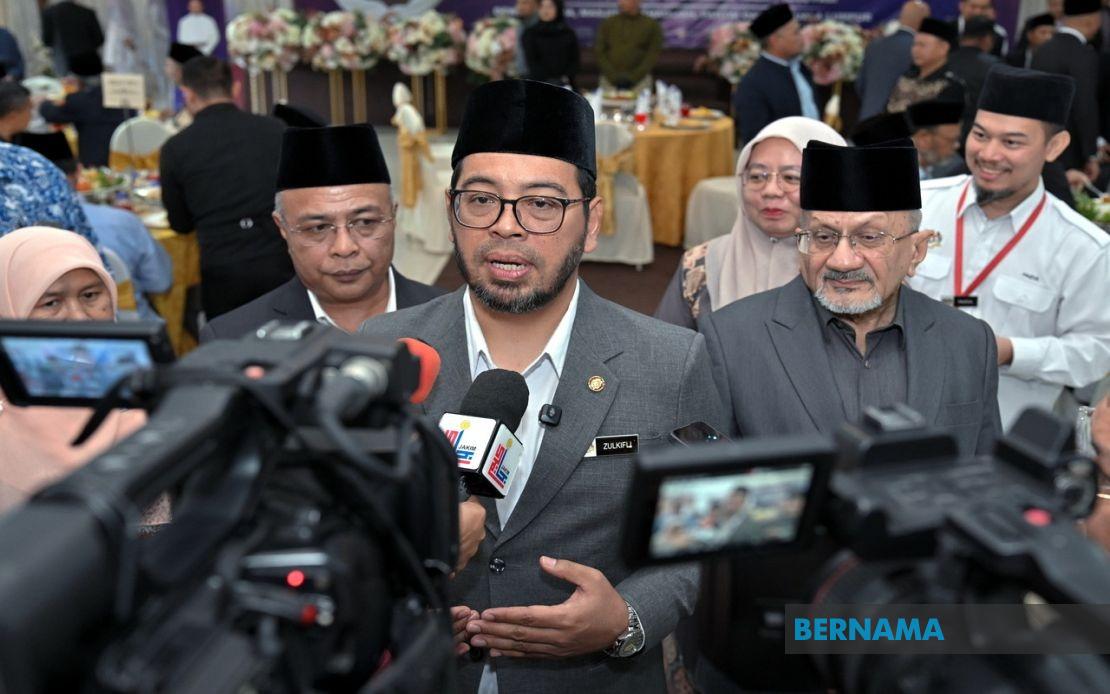
The construction of Masjid Warisan, situated in front of the Tun Razak Exchange (TRX) development, will proceed according to schedule, Minister in the Prime Minister's Department (Religious Affairs) Dr Zulkifli Hasan announced on June 23 in Kuala Lumpur. The affirmation comes as the project has drawn scrutiny from certain quarters who have questioned its necessity and raised concerns about potential social friction. Zulkifli's public commitment underscores the government's determination to move forward with what he characterised as a long-established initiative meant to strengthen the mosque's traditional function as a communal gathering point that promotes social cohesion.
The minister's remarks directly addressed mounting pressure to shelve the undertaking, with some critics contending that the mosque's construction could generate community discord and trigger public backlash. However, Zulkifli rejected these concerns as unfounded, framing the development as consistent with urban planning practices observed in major cities worldwide. He referenced the existence of mosques and the call to prayer as sources of spiritual calm in metropolises globally, implicitly suggesting that Kuala Lumpur's status as a world-class capital warrants similar facilities. This comparative argument attempts to contextualise the project within international norms rather than presenting it purely through a domestic religious lens.
For residents and stakeholders troubled by the proposal, Zulkifli directed them to the Federal Territories Islamic Religious Council (MAIWP) to seek clarification and engage in further dialogue. This suggestion indicates that the government views misconceptions as the root cause of opposition and believes that structured communication can dispel doubts. The delegation of engagement responsibility to MAIWP signals a decentralised approach to addressing public concerns, placing the onus on the religious authority to articulate the mosque's benefits and operational framework to sceptical audiences. Such a strategy may allow the ministry to maintain momentum on the project while creating a formal channel through which critics can voice and potentially resolve their grievances.
The timing of Zulkifli's announcement coincides with his official duties in the Federal Territories religious sector. On the same day, he distributed appointment letters to members of the Federal Territories Mosque and Friday prayer surau committee for the 2026-2029 term, a ceremony held at Masjid Al-Khadijah in Kampung Pantai Dalam. This ceremonial occasion provided a platform for him to simultaneously advance his ministry's institutional agenda while reinforcing the government's commitment to strengthening mosque governance and participation in the capital's religious infrastructure.
The selection process for the 2026-2029 committee underscores the thoroughness applied to institutional oversight within the religious sector. A total of 3,010 nominations were submitted from candidates seeking positions across 91 mosques and 124 Friday prayer surau establishments throughout the federal territories. The nomination process itself reflects robust civic engagement, with nearly three thousand individuals stepping forward to contribute to mosque management and religious community organisation. However, the subsequent vetting process proved considerably restrictive, with only 2,914 candidates advancing to appointment following integrity checks.
The stringent vetting procedure involved multiple government agencies including the Royal Malaysia Police, the Malaysian Anti-Corruption Commission, and the Insolvency Department. This multi-agency approach demonstrates the government's determination to ensure that those managing religious institutions meet exacting standards of personal conduct and financial probity. The involvement of anti-corruption authorities particularly signals zero tolerance for misappropriation or malfeasance in the handling of mosque funds and resources. By subjecting nearly all nominees to such comprehensive scrutiny, the authorities aim to establish credibility in mosque governance and assure the public that religious institutions operate with integrity.
For Malaysian observers, the Masjid Warisan controversy reflects broader debates about urban development, religious symbolism, and community identity in a rapidly modernising capital. The TRX precinct represents Kuala Lumpur's aspirations toward becoming a global financial hub, and the placement of a heritage mosque within this commercial zone carries symbolic weight. Proponents of the mosque view it as essential to preserving spiritual and communal values amid commercial development, while critics worry about compatibility between religious facilities and business-oriented urban planning. This tension mirrors similar discussions occurring across Southeast Asia as Muslim-majority countries balance rapid urbanisation with preservation of religious and cultural heritage.
The minister's characterisation of mosques as engines of social harmony speaks to a broader policy vision in which religious institutions serve expanded civic functions beyond prayer and worship. In contemporary Malaysia, mosques increasingly function as community centres offering counselling, education, and social assistance programmes. Positioning the Masjid Warisan within this framework suggests the government intends it to serve residents and workers in the TRX area, providing spiritual respite and community services within a high-density financial district. This multipurpose conceptualisation may address utilitarian concerns about the mosque's practical value to the surrounding urban population.
The project's continuation also reflects the government's institutional confidence in its religious affairs portfolio. Despite public opposition, Zulkifli declined to yield to cancellation demands, instead reaffirming the administration's commitment to what he described as an already-determined course of action. This resolute stance signals that the decision-making apparatus views the mosque as non-negotiable policy rather than a discretionary amenity subject to popular referenda. Such firmness may either strengthen resolve among supporters who view religious development as a government priority or entrench resistance among those who feel unheard and overruled in civic processes.
Looking ahead, the successful implementation of Masjid Warisan will depend substantially on the effectiveness of MAIWP's community engagement efforts and the government's ability to address underlying concerns about the project's impact on surrounding areas. The council must articulate a compelling narrative about how the mosque will enhance rather than disrupt the TRX ecosystem, whether through economic contributions, cultural enrichment, or social stability arguments. The project's ultimate success will likely hinge not merely on construction completion but on its integration into the financial district's daily life and the degree to which the broader Kuala Lumpur community comes to regard it as a valued civic addition rather than an unwelcome intrusion.

