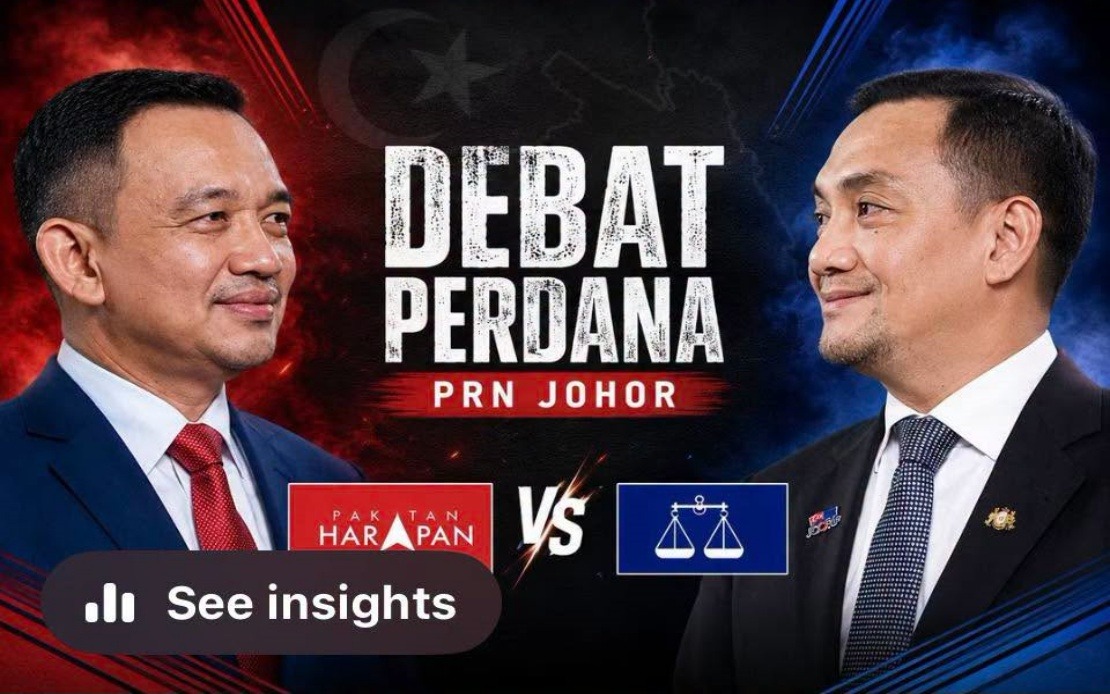
Former Education Minister Maszlee Malik has confirmed his willingness to participate in a public debate with Johor Menteri Besar Onn Hafiz Ghazi as campaigning intensifies ahead of the state election scheduled for July 11. The announcement came shortly after Pakatan Harapan unveiled its full slate of candidates, with Maszlee contesting the Puteri Wangsa seat on behalf of the opposition coalition.
Maszlee's acceptance reflects a growing appetite among Malaysian voters for direct candidate engagement during election campaigns. In a Facebook statement, the former minister framed his decision as rooted in respect for democratic principles and his conviction that televised or public debates elevate the standard of political discourse in the country. His emphasis on creating a platform for citizen education suggests an attempt to recalibrate the narrative around opposition campaigning, moving away from personal attacks toward substantive policy discussion.
The debate proposal originated from social media influencer Muhamad Harris Nasril and gained traction when shared on the Redaksi.com Facebook page. What began as a grassroots suggestion has since captured widespread public interest, with multiple individuals and groups reaching out to Maszlee to confirm his participation. This organic buildup of anticipation indicates that voters, particularly younger and digitally-engaged demographics, are demanding more transparent forums for comparing candidates' positions on state-level issues.
Pakatan Harapan's decision to field candidates across the Johor state assembly reflects the coalition's renewed confidence in the state after previous setbacks. The distribution demonstrates an agreed-upon strategy, with PKR contesting 20 seats, Amanah 19 seats, and DAP 17 seats across the 56 contested constituencies. This allocation suggests internal negotiations aimed at maximising the coalition's geographic reach while respecting each party's traditional strongholds and membership base.
The timing of Maszlee's acceptance is strategically significant. Nomination day falls on Saturday, with early voting on July 7 and the main polling day on July 11. This compressed campaign schedule means debates and public engagements will occur within a narrow window, placing heightened importance on high-visibility political moments. For Maszlee, accepting the debate challenge early demonstrates confidence and precludes any perception of reluctance or evasion—a concern that often dogs opposition candidates when they decline direct confrontation with sitting officials.
Maszlee's political profile carries particular weight in this context. His previous tenure as Education Minister under the Pakatan Harapan government from 2018 to 2020 provides him with substantive experience in governance and policy implementation. This background distinguishes him from many opposition candidates who lack ministerial-level experience, potentially giving him credibility in debates focused on state administration, education provision, and social services—domains under state government purview.
The proposed debate format, yet to be formally confirmed, represents an evolving aspect of Malaysian electoral culture. Historically, direct candidate debates have been relatively uncommon during state elections, with campaigns dominated by ceramah-style speeches, town halls, and social media campaigns. The emerging demand for structured, moderator-led debates mirrors international democratic practice and reflects Malaysian voters' increasing sophistication in evaluating candidates based on articulation of policy positions rather than party affiliation alone.
Onn Hafiz Ghazi's implicit challenge, through the social media initiative, indicates the Menteri Besar's confidence in his position and his appetite for direct confrontation with opposition leadership. As an incumbent executive, Ghazi possesses the advantage of pointing to concrete administrative achievements and development projects, factors that resonate particularly strongly in state-level races where voters often prioritize local infrastructure and service delivery over national political positioning.
For Pakatan Harapan, Maszlee's acceptance signals a broader strategic shift toward emphasizing competence and institutional credibility rather than relying solely on anti-establishment sentiment. The coalition's experience in federal government from 2018 to 2020, despite its ultimate instability, demonstrated that opposition parties can transition successfully into executive roles. Debates provide an opportunity to reinforce this message, showing voters that opposition candidates are serious, prepared administrators rather than perpetual critics from the sidelines.
The broader implications for Johor politics extend beyond this single debate. The state has traditionally been a Barisan Nasional stronghold, but recent political volatility has created opportunities for opposition parties to make inroads. A high-profile, well-conducted debate featuring articulate, experienced candidates like Maszlee could energize opposition supporters and persuade undecided voters in crucial constituencies, particularly in urban areas where education levels and demand for policy-substantive campaigning tend to be higher.
Maszlee's invocation of democratic values and mature political culture signals an attempt to elevate the tone of the campaign. Rather than engaging in personal attacks or focusing on divisive social issues, he positions himself as advocating for a more sophisticated, issues-based approach to electoral competition. This rhetorical strategy may particularly appeal to younger voters and urban professionals who feel fatigued by increasingly polarized national politics.
The countdown to July 11 will reveal whether the proposed debate materializes and, if so, what impact it exerts on voter sentiment. In an election season often marked by repetitive talking points and ritualistic campaign events, a substantive, directly-competitive debate between named candidates could reshape Johor's political landscape by demonstrating that opposition politics need not remain confined to rhetoric, but can engage directly with those holding power on substantive terms.

