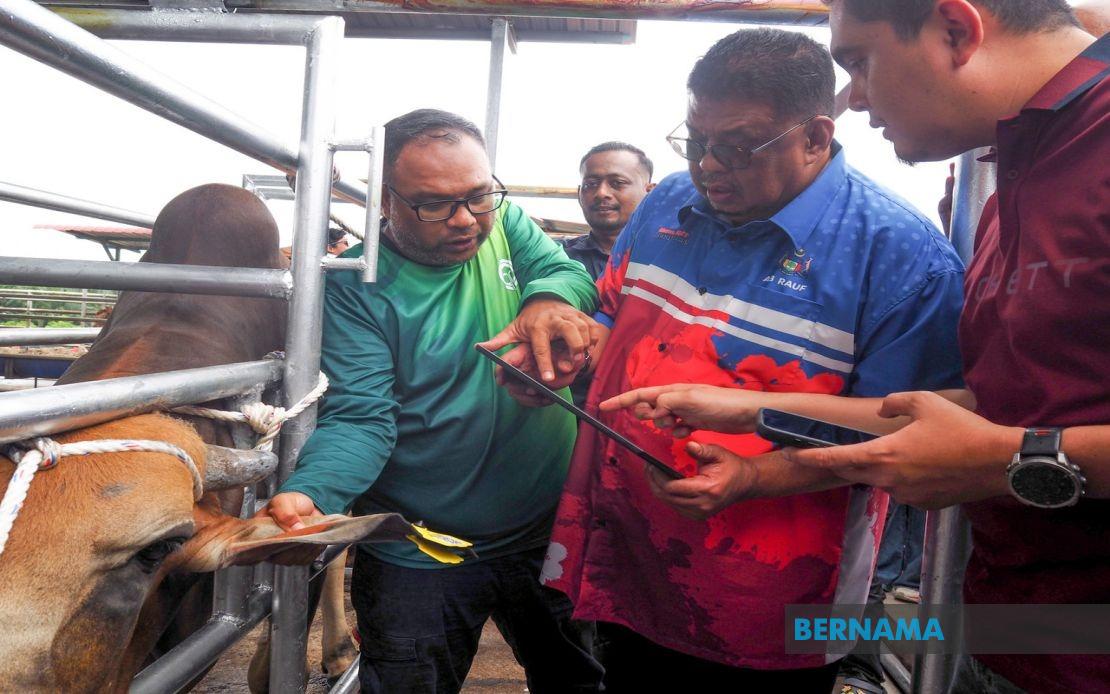
The Melaka state government is moving forward with a digital livestock identification initiative that represents a significant step in modernising the state's agricultural management infrastructure. The Livestock QR Tag system, launched in collaboration with the Melaka Veterinary Services Department, is designed to address growing public safety concerns linked to stray animals while simultaneously improving traceability across the livestock farming sector. According to Mahathir Mustafa, chief assistant secretary of the Local Government Unit within the Chief Minister's Department, the system originates from a directive by Chief Minister Datuk Seri Ab Rauf Yusoh and aligns with the broader digital transformation strategy aimed at enhancing service delivery and administrative efficiency across government operations.
The technology operates through a straightforward scanning mechanism that transforms livestock management from a manual, labour-intensive process into a modern, data-driven system. Each animal receives a physical tag embedded with a unique QR code and identification number, enabling authorities and relevant stakeholders to access essential farming data instantly via smartphone. This approach eliminates the traditional delays associated with manual record-checking and enables faster identification of animal owners when incidents occur. The information stored within the QR code includes the breeder's name, premises identification, and farm location details, creating a comprehensive digital profile for each tagged animal.
As of early June this year, approximately 2,000 livestock across Melaka had been equipped with these tags, though this figure represents only a fraction of the state's total registered cattle and buffalo population, estimated at over 32,000 animals. The state government has outlined a gradual expansion plan to eventually cover the entire registered livestock population, demonstrating commitment to comprehensive coverage despite the logistical and financial implications of such a large-scale rollout. This phased approach allows for system refinement based on initial implementation feedback while building institutional capacity to manage the expanded database.
The impetus for this initiative stems from a documented increase in livestock-related incidents affecting public safety and community wellbeing. Between 2023 and the time of the announcement, Melaka recorded 835 accidents involving livestock, alongside more than 50 formal complaints concerning stray animals roaming urban and semi-urban areas. These statistics underscore a genuine problem that extends beyond mere nuisance complaints—stray livestock pose tangible hazards to motorists and pedestrians alike, particularly on busy roads where unexpected animal encounters can precipitate serious accidents. The QR tag system directly addresses this problem by enabling rapid identification of animal owners, facilitating swift contact and removal of strays before further incidents occur.
Beyond immediate incident response, the technology facilitates multiple overlapping regulatory functions that strengthen overall livestock management quality across the state. The system enables authorities to monitor livestock movement patterns, track disease control measures more effectively, and enforce regulations against irresponsible animal husbandry practices. By creating a permanent, immutable identity record for each animal that persists throughout its entire lifespan, the system establishes accountability mechanisms that extend beyond individual transactions or changes in ownership. Even when livestock change hands, the original QR tag remains intact and continues to serve as the authoritative identity marker, ensuring authorities maintain continuous tracking capability.
Ownership changes are managed through the eVetPermit Malaysia system, a digital platform that records updates without requiring physical tag replacement. This separation of the immutable identity function from the updatable ownership records demonstrates thoughtful system design that balances security with practical administrative flexibility. The approach encourages breeders to maintain accurate registration information, knowing that failures to update ownership records create significant complications for authorities when incidents occur. In effect, the system creates mutual incentives: breeders benefit from streamlined administrative processes and protection of their legitimate interests, while authorities gain reliable information access essential for effective enforcement.
The financial structure supporting initial adoption reflects deliberate policy design intended to maximise farmer participation during the crucial launch phase. The Melaka state government is absorbing the complete cost of tag installation, charged at RM6.50 per unit until the end of 2024, effectively providing tags free to registered breeders who complete the necessary registration with the Melaka Veterinary Services Department. This subsidy strategy removes immediate financial barriers to adoption that might otherwise slow uptake among smallholder farmers operating at tight margins. After the introductory period concludes, responsibility for replacement or new installation costs transfers to breeders at a reduced rate of RM5 per animal, a pricing structure that accounts for operational sustainability while remaining affordable relative to overall farming costs.
Farmer response to the initiative has been largely positive, with breeders recognising the system's potential to protect their economic interests while elevating the professional image of Melaka's livestock industry. The ability to demonstrate responsible herd management through digital records appeals to farmers concerned about regulatory enforcement and reputational standing. Additionally, the rapid identification capability provided by QR tags offers breeders immediate notification if their animals stray, enabling faster recovery and minimising loss exposure. This alignment of farmer and government interests around a common technology platform facilitates smoother implementation compared to enforcement-focused schemes that might encounter resistance.
Successful rollout depends critically on sustained coordination among multiple government entities, particularly the Local Government Unit, Veterinary Services Department, and local municipal authorities responsible for day-to-day animal control operations. These agencies must develop standardised procedures for tag installation, QR code scanning during incident response, and database updates following ownership transfers. Training programmes ensuring consistent technical capability across operational personnel become essential infrastructure supporting the system. The acknowledgement by officials that close cooperation among these entities constitutes an important success factor suggests awareness that technological systems alone, without supporting human and institutional capacity, cannot deliver intended benefits.
The Melaka QR tag initiative reflects broader regional trends toward digital agriculture and precision livestock management technologies gaining adoption across Southeast Asia. Countries including Thailand and Vietnam have explored similar identification systems for disease control and market traceability purposes. For Malaysia more broadly, the Melaka model provides a scalable template that other states facing comparable stray animal and road safety challenges might adapt to their contexts. The system demonstrates that digital transformation in agriculture need not require sophisticated infrastructure or cutting-edge technology; smartphones and basic QR code systems deliver substantial functional improvements when properly implemented.
From a wider economic perspective, improved livestock traceability creates downstream benefits for the regional meat and dairy industries by enabling faster disease response, reducing contamination risks, and potentially improving market access by providing credible assurance regarding animal provenance and health status. International buyers increasingly demand traceability documentation, and the eVetPermit Malaysia integration suggests Melaka's system can contribute to meeting such requirements. The digital records generated through widespread QR tagging create valuable data resources for agricultural planning, epidemiological monitoring, and evidence-based policymaking at the state level.
The success of this initiative will likely be measured through multiple metrics beyond simple tag deployment numbers. Authorities will track changes in stray livestock complaint frequencies, patterns in road accidents involving animals, and response times when incidents occur. Equally important will be adoption quality—whether breeders genuinely maintain accurate ownership records in the eVetPermit system and whether veterinary and local authority personnel consistently scan tags during incident response. These operational metrics will determine whether the QR tag system achieves its potential as a transformative livestock management tool or remains an underutilised technological investment. As the state government pursues its ambitious goal of eventually tagging the entire registered livestock population, ongoing monitoring and refinement of implementation procedures will be crucial for maximising the initiative's community safety and administrative efficiency benefits.

