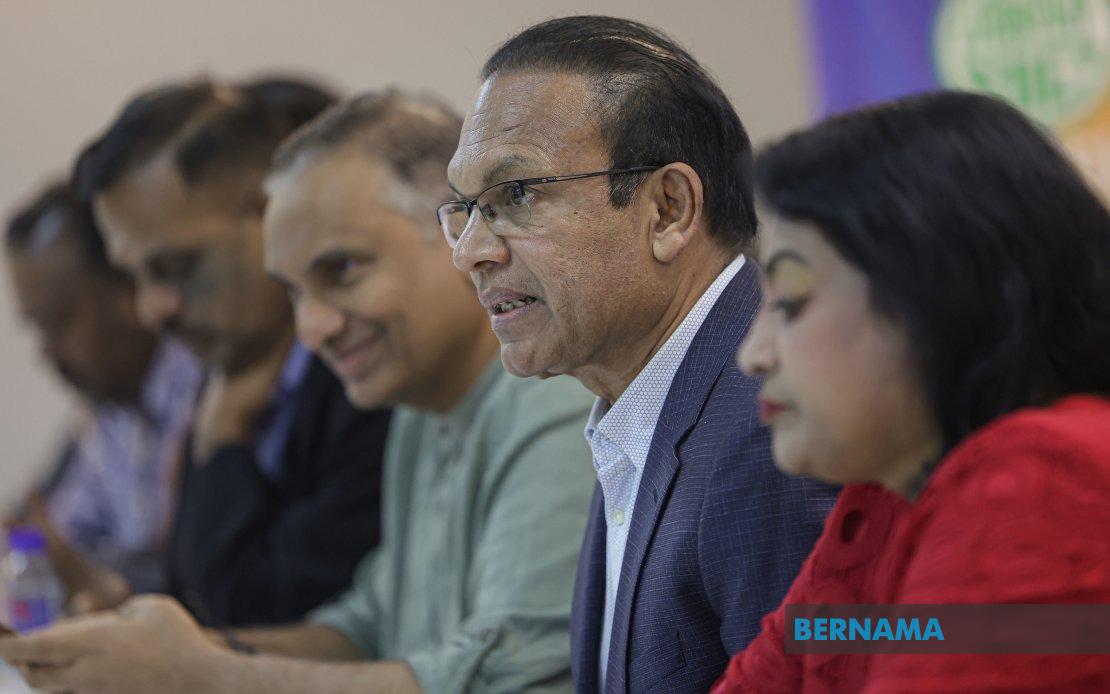
The Malaysian Indian Congress (MIC) has secured four electoral seats to contest in the forthcoming Johor state election, according to party vice-president Datuk T. Murugiah, who confirmed the allocation during a press conference at party headquarters in Kuala Lumpur on Tuesday. The decision was ratified by MIC president Tan Sri SA. Vigneswaran following recent coordination meetings with other Barisan Nasional coalition partners regarding electoral arrangements for both Johor and Negeri Sembilan.
Murugiah indicated that while the Johor allocation remains settled at four seats, final negotiations over the party's representation in Negeri Sembilan are still underway. The party is currently in the operational planning phase to ensure an effective campaign presence across multiple constituencies. This allocation represents a continuation of MIC's role within the BN machinery, though the party is preparing for what may be a reshuffled slate compared to its previous contest.
To maximise electoral impact, MIC is investing substantially in grassroots mobilisation. The party will conduct an intensive two-day training programme for approximately 150 speakers this weekend in Johor Bahru, equipping them with campaign messaging and public speaking skills. These cadres will subsequently be deployed across all 56 state constituencies that the BN alliance is contesting in Johor, with specific focus on communicating directly with the Indian community—a historically important constituency for MIC within the broader Malay-Muslim dominated coalition.
The training initiative underscores MIC's strategic priority of maintaining influence among Indian voters, who comprise a significant minority within Johor's electorate. By positioning speakers in every BN-contested seat rather than solely in the four seats MIC directly contests, the party aims to amplify its reach and messaging across the state campaign. This approach reflects broader coalition dynamics where component parties work to support the overall BN electoral strategy while advancing their own community interests.
Looking back to the 2022 Johor state election, MIC achieved a respectable performance by winning three of four seats it contested. The party successfully retained Kemelah, Kahang, and Tenggaroh, though it lost the Bukit Batu seat. That result positioned MIC as one of the more competitive components within BN's multiethnic coalition structure. The coming contest appears designed to build on that foundation while adjusting the electoral map to reflect broader coalition negotiations.
Insiders familiar with BN's seat allocation discussions indicate that MIC is likely to field candidates in Kemelah, Kahang, and Bukit Batu—potentially providing the party an opportunity to reclaim the seat lost in 2022. The Tenggaroh seat, which MIC retained previously, is expected to be transferred to UMNO in exchange for UMNO surrendering the Perling constituency to MIC. Such arrangements exemplify the complex internal negotiations required to maintain coalition cohesion while respecting each party's electoral competitiveness in particular areas.
The anticipated introduction of fresh faces to MIC's candidate slate represents another significant development. Party sources suggest that approximately half of the party's candidates in this election will be first-time contenders, signalling an organisational emphasis on renewal and generational transition. This refresh could energise the party's campaign while also reflecting wider patterns within Malaysian politics of established component parties gradually introducing younger leadership.
The electoral calendar is now firmly established. The Election Commission has scheduled polling day for Johor on July 11, with candidate nominations taking place on June 27. This compressed timeframe between nominations and polling—just two weeks—creates an intense campaign period where effective grassroots organisation becomes particularly valuable. MIC's advance training of speakers positions the party to activate quickly once nominations are formalised.
Meanwhile, the Negeri Sembilan electoral process follows a slightly different schedule, with nominations set for July 18 and polling day on August 1. While Murugiah declined to confirm final seat allocations for Negeri Sembilan, party sources have suggested MIC could contest two seats in the state, potentially expanding its overall footprint within BN's coalition contests. The finalisation of these seats remains subject to ongoing negotiations among coalition partners.
Beyond the immediate electoral calculations, MIC is leveraging its 80th anniversary celebrations to reinforce party identity and community engagement. The concurrent organisation of sports competitions across 152 areas nationwide this weekend—featuring football, badminton, bowling, carrom, and hiking—serves a dual purpose: commemorating the party's institutional milestone while constructing grassroots social bonds with voters. By explicitly inviting participation from all races, MIC positions itself as an inclusive political force rather than a narrowly communal organisation.
For Malaysia's Indian minority population, which faces ongoing concerns regarding educational access, economic opportunities, and cultural representation, MIC's electoral participation represents a critical channel for minority political voice within the dominant two-party system. The party's ability to secure four seats in Johor reflects its continued relevance despite long-standing accusations of weak advocacy for Indian community interests. Whether these contests yield electoral victories and subsequent influence over state governance will significantly affect the party's trajectory and credibility among its base.
The Johor contest thus occupies broader significance within Malaysian politics beyond simple seat mathematics. As the first major electoral test since the 2022 general election and recent shifts in coalition dynamics, the Johor result will offer insights into whether BN has successfully stabilised its previously fractious coalition, whether the Indian electorate continues supporting MIC representation, and whether the party's grassroots mobilisation approach can effectively compete against opposition parties increasingly active in multiethnic politics.

